You’re Doing It Wrong: What to Automate in Marketing—and What You MUST Write Yourself
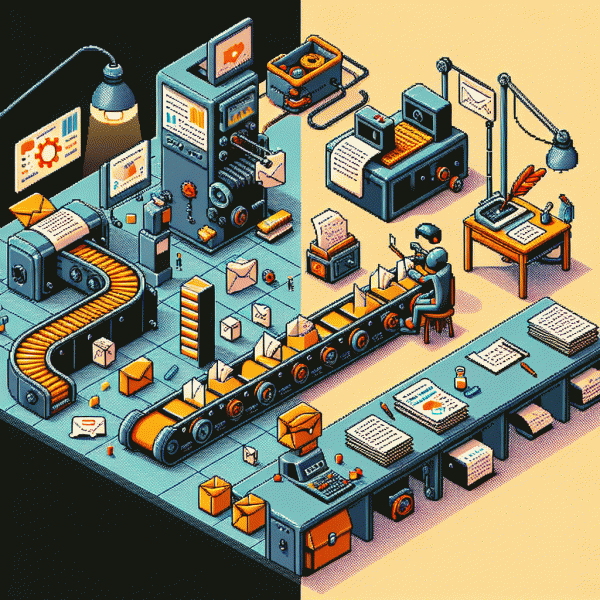
Automate the Grind: Triggers, drips, and segments that work while you sleep
Think of automation like a night shift intern: it files tasks, nudges prospects, and sorts audiences while you sleep, but it will never craft the one line that makes someone laugh. Turn every meaningful action into a trigger — page view, download, purchase, time idle — and map a tiny response for each. Keep each automated message single minded: one outcome, one CTA, one metric to watch.
Build drips that escalate with taste. Start soft, then add value, then ask. For clarity, design three evergreen sequences that you can clone and tweak:
- 🆓 Welcome: an intro drip that sets expectations and offers a high value resource on day zero and day three.
- 🐢 Abandonment: a gentle recovery path that demonstrates value, shows social proof, and includes a time limited nudge.
- 🚀 Reengage: a progressive winback series that surfaces new features, FAQs, or a bold offer to restart the loop.
Segment by behavior, not by guesswork. Create micro segments for intent signals and use them to prioritize manual writing: the first email in a welcome series and the headline for a cart recovery must be handcrafted; the follow ups can be templated and iterated. If you need a quick example of social proof as part of a drip, try buy instagram likes for low friction growth testing. Audit your triggers monthly, prune noise, and invest time where empathy matters most.
Hands on the Heart: Brand voice, stories, and subject lines that need a human
Automation can tidy inboxes, schedule posts and trim the obvious fat from processes, but the parts that persuade, surprise or comfort need flesh-and-bone judgment. Think of automation as your sous-chef: perfect for prep, dangerous if asked to plate the signature dish alone. Reserve the creative brief, the personality rules and final edits for humans.
Brand voice isn't a template you feed into a machine; it's a set of choices about rhythm, risk and empathy. Start by writing three real sentences a human would say in crisis and three in celebration. Capture concrete dos and don'ts, vivid adjectives, and examples of what sounds off. Store those examples where writers can read and argue over them.
Stories hinge on meaning, not metrics. Collect messy customer anecdotes, messy failures and the one awkward hero moment that proves the point. Write the first draft of case studies and testimonials yourself, then let tools help tighten punctuation and length. Machines can polish tone, but only people can salvage nuance, contradiction and moral surprise.
Subject lines and microcopy are tiny emotional detonators. Write at least a dozen by hand before letting AI propose variations. Favor verbs, specific details and readable risks over vague optimism. Use personalization tokens, but craft the lead phrase so the token feels meaningful. If your subject line could apply to any brand, rewrite it.
AI as Your Rough Draft, You as the Editor: A workflow that actually saves time
Think of AI as your over-eager intern who churns out usable clay—rough, malleable, and fast—so you can spend time sculpting the face. Start each batch with a micro-brief: audience, purpose, tone, and one non-negotiable line the copy must include. Ask the model for three distinct directions (human interest, data-led, and snappy one-liner) and set constraints: 60–90 words, active voice, avoid jargon. The variety gives you choices instead of a single, flawed draft to grind through. If one direction flops, learn why and fold that insight into your prompt next time.
Adopt a simple assembly-line workflow: generate -> triage -> refine -> finalize. Triage quickly: dump anything that misses brand voice, keep the rest. For refining, work in layers—first fix clarity and facts, then sharpen hooks, then tune rhythm and cadence. Use short, explicit prompts like "Make it warmer and 10% shorter" rather than vague edits. Save those micro-prompts as templates; they cut revision time from minutes to seconds.
Use a compact editor's checklist every time: Is the opening promise clear? Is there a single CTA? Does the tone match current campaign assets? Are numbers and names correct? Replace bland AI verbs with precise verbs, swap stock phrases for brand-specific shorthand, and whenever possible, reuse your best-performing microcopy snippets. This turns editing from freeform rewriting into targeted swaps and amplifications. Track which edits drive better click-throughs and save those patterns.
Let AI do the grunt drafting, but keep the crown: context, judgment, and empathy. A polished human edit increases conversions and avoids robotic clichés. In practice, that means keeping a "swiss-army" prompt drawer, measuring which AI drafts seed the fastest wins, and treating machine output as raw material—not a publication-ready end product. You save time, and your audience gets copy that actually sounds like a human wrote it.
Where Automation Backfires: Cringe moments to avoid at all costs
Automating routine messages is brilliant—until the robot sends a "Dear [FirstName]," to "Valued Customer" or auto-sends an "I miss you" DM an hour after a purchase. Cringe is not a metric, but it kills open rates fast. Think tone-deaf follow-ups, misplaced emojis, and subject lines that scream "39 other people got this too."
The problem is not automation itself; it is automation without context. Bots cannot hear sarcasm, detect nuance, or judge whether a joke will land. When language feels generic or misaligned with the recipient, trust erodes. That gap is where a human should step in—especially for complaint handling, pricing objections, or any message meant to build long-term loyalty.
Practical fixes: Human-in-the-loop: route flagged replies to a real teammate; Guardrails: blacklist risky tokens and set timing rules; Micro-personalize: combine small data points into short, custom lines. Also create a fast review step for high-impact campaigns so automation drafts but humans sign the final send.
To keep automation as your ally, automate the boring but write the soul. Draft templates for logistics, schedule reminders, and scale confirmations. Write your own subject lines, VIP replies, and story-driven welcome sequences. Simple rule: if a message must persuade, surprise, or apologize, type it yourself—then let tech handle the rest.
Metrics That Matter: How to tell if you automated too much (or not enough)
If your campaigns feel like a factory conveyor belt, the first thing to inspect is motion versus emotion. Start with engagement rate and reply quality: high opens with low replies mean the machine is talking but not connecting. Watch sentiment trends in comments and messages; a drop toward neutral or negative is a red flag that automation lost the human spark.
Look for clear signals of over-automation: steady click volume but declining conversion, rising unsubscribe or complaint rates, or repeated customer questions that never get escalated. Quantify this with simple thresholds: if conversion rate drops by more than 15 percent versus baseline, or if complaint volume grows by 20 percent in a month, pause and investigate the automated touchpoints.
Under-automation shows up differently. Long first-response times, missed upsell opportunities, and inconsistent follow ups all increase cost per acquisition and slow lead velocity. Track time to first human touch, backlog size in support queues, and manual rescue rate. If manual interventions account for more than 10 percent of resolved cases, automate smarter, not more.
Set guardrails you can measure: automated flows with embedded quality checks, a weekly sample audit of messages, and A/B tests that compare humanized templates versus fully automated ones. If your metrics trip the thresholds, switch to a hybrid path where humans handle nuance and automation handles volume. That way you get scale without sounding like an emotionless bot.