We Took Shoppable Content Off Instagram: Here's What Really Happened
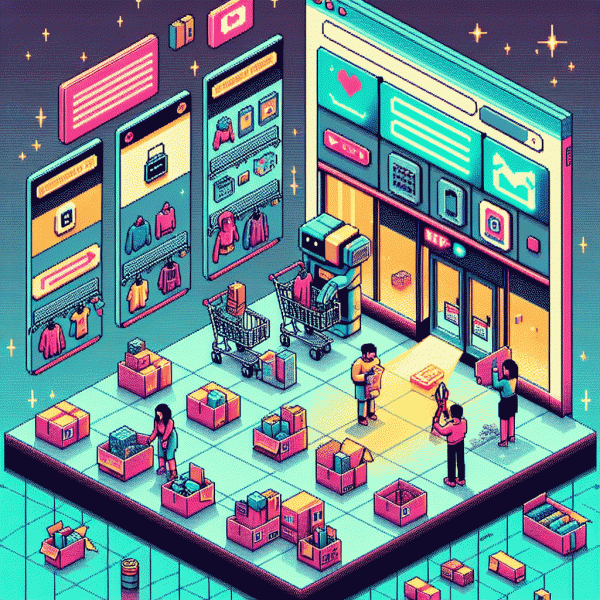
From Scroll to Checkout: Why Your Website Might Be the Real Storefront
Pulling shoppable tags off Instagram forced a confession: the feed was a teaser, not the cash register. Moving commerce back to your website isn't a retreat—it's upgrading to a proper storefront where you own the aisles, the signs, and the receipt. With full design freedom you can craft buying flows that don't rely on another app's rules, and that alone lifts conversion math in surprisingly fast ways.
Start with the hard ROI wins: faster pages, one-click payment options, and a single cart that remembers customers across channels. Add data capture—email and behavioral events mean you can retarget smarter instead of shouting into the void. Plus, search and content keep pulling traffic long after an Instagram post expires, which translates into compound returns on work you already did.
Make product pages work harder: prioritise mobile UX, surface reviews and size guidance, and use bold imagery that sells without the caption. Sprinkle social proof and scarcity signals, then test: headline variations, price presentation, and checkout steps. Connect analytics to measure micro-conversions so every tweak becomes a learnable growth lever instead of a guess.
This isn't a lecture—it's a playbook. Start by auditing your top five product pages for speed and clarity, then map a checkout that reduces taps. If you want help turning your site into the storefront it can be, we've got templates, audits, and hands-on support that take the guesswork out of migration. Own the experience, own the margin, and make Instagram the marketing stage, not the checkout.
Email, Blogs, and QR Codes: The Unsocial Channels Driving Surprising Sales
Pulling shoppable tags off Instagram forced us to rethink where purchases actually happen. Instead of chasing likes, we built pathways that convert: email sequences that behave like tiny boutiques, blog posts that sell without being pushy, and QR codes that bridge the physical and digital. The surprise: these unsocial channels drove repeat purchases and higher average order value once we treated them like owned real estate.
For email, focus on segmentation and micro-commitments. Send a welcome series with a simple product pick quiz, use behavioral triggers for cart reminders, and put a single clear CTA above the fold. Test subject lines and preview text like they are conversion levers. Add product images that link directly to vanity landing pages so the click to cart is a straight line, not a maze.
Treat your blog as a soft-sell storefront: write long-form how-to guides that naturally include product pairings, embed shoppable images and clear purchase links, and optimize each post for longtail search intent. Internal linking and user reviews amplify trust, while UTM-tagged CTAs make ROI obvious. Over time, organic posts turned into reliable discovery funnels—less flash, more steady income.
QR codes are the secret handshake between offline moments and online conversion. Put dynamic codes on packaging, receipts, and shelf tags that open tailored landing pages, capture email, and unlock instant discounts. Track scans and swap destinations without reprinting. Combine a QR-driven landing page with a short email capture form and you get a two-step funnel that outperforms an impulsive tap on a vanished Instagram tag.
Tech Stack Shopping List: PDP Links, UTM Breadcrumbs, and Embedded Carts That Convert
When we yanked shoppable stickers off Instagram, the real work began: making every outbound tap act like a scalpel, not a hammer. The tech stack becomes a shopping list of small, surgical tools — deep PDP links that land customers on the exact SKU, UTM breadcrumbs that tell you which visual pushed them, and embedded carts that keep momentum instead of sucking it out. Think of links as promises: keep them fast, precise, and unambiguous.
Start with predictable link architecture: canonical PDP URLs with SKU parameters, and a consistent UTM scheme (utm_source=instagram, utm_medium=shoppable_card, utm_campaign=summer_drop, utm_content=card_42). Add server-side touchpoints so you can stitch clicks to conversions even when pixels fail. For a quick growth lever, pair that with tools that boost visibility like free instagram engagement with real users — use it to steer reliable initial traffic while you calibrate attribution and creative.
Embedded carts deserve love. Use lightweight, headless embeds or the platform Buy SDK to avoid context switches; persistent carts, saved shipping estimators, and one-step checkout shave major drops off abandonment. Instrument micro-conversions (add-to-cart, start-checkout, payment-attempt) and fire them to both client and server endpoints so analytics match payment provider reports. Small UX wins — autofill, clear shipping badges, trust marks — compound into big conversion lifts.
Run a three-way QA: links, tags, and payments. Verify every PDP link lands on the right SKU, confirm UTMs survive redirects and are visible in GA4 or your BI, then reconcile purchases to payment webhooks. Create a lightweight dashboard that highlights the leakiest funnel stage, and iterate. When you treat shoppable exits like experiments instead of losses, the tech stack stops being a guessing game and starts being a profit center.
Show Me the Money: Costs, Conversion Rates, and When to Ditch the Buy Button
We pulled the buy button off Instagram and the first thing people ask is: did revenue crater or quietly improve? Short answer—both can happen. Removing shoppable posts forces you to think like a serious salesperson, not an impulse merchant. You trade impulse taps for trackable clicks, clearer funnels, and control over acquisition costs.
Numbers matter. In our tests, Instagram's native buy flow gave higher click-to-purchase on mobile but at a higher cost per order and fewer upsell chances. Routing users to a landing page cut impulse buys ~30% but raised average order value and tracking. Use three metrics: CPC, CR, and AOV. Compare channels by revenue per click = CR×AOV.
- 🆓 Free: organic link-in-bio tests—fast insight, low cost, high variance.
- 🐢 Slow: nurture funnel—email + retargeting builds AOV over weeks, predictable but patient.
- 🚀 Fast: paid acquisition—immediate scale, clear CAC, needs close monitoring.
Decision rule: if the buy button's conversion rate times AOV yields less revenue per click than your alternative funnel, remove it. Practical break-even: revenue per click = CR×AOV; if that ≤ CPC, the channel loses money.
Quick playbook: run A/B for 2–4 weeks, measure revenue per click and repeat rate, then favor the funnel with better profit. Cut or keep the buy button based on margins, not feelings.
The Playbook: 5 Shoppable Formats to Test This Quarter (With Metrics to Watch)
Think of this as your shoppable lab notes: five formats you can spin up off-platform, each tuned to a different buyer mindset and measurement focus. The aim is not to replicate Instagram paste for paste but to repackage what worked there into environments that answer two questions buyers always ask: "Can I learn fast?" and "Can I buy fast?". Below I map formats to the primary metric you should watch.
Format one: product grid landing pages that mirror a curated feed. KPI: click-through rate to product page and add-to-cart. Format two: themed editorial lookbooks with embedded product hotspots. KPI: engagement time and assisted conversions. Format three: shoppable emails with single-click checkout. KPI: conversion rate and revenue per send. Format four: livestream shopping hosted outside the app. KPI: peak concurrent viewers converted and average order value. Format five: influencer-curated microstores (UGC first). KPI: referral conversion rate and cost per acquisition. Run each as a light A/B with the control being your standard product page or shop link.
Set a 6–8 week test window per format, but batch three formats at a time if resources are tight. Start with traffic parity: send similar audience sizes and creatives so performance differences reflect format, not reach. Track leading and lagging indicators: CTR, add-to-cart, checkout conversion, AOV, and ROAS. If a format improves CTR by 20% but kills conversion, iterate on friction points rather than abandon immediately.
Quick experiment pacing to pick from:
- 🆓 Free: audience discovery tests — low spend, high reach creative to learn interest pockets.
- 🐢 Slow: long-form lookbook pilots — expect steady engagement, measure assisted sales over weeks.
- 🚀 Fast: shoppable email bursts — quick revenue feedback and easy scaling.
Wrap each run with a single sheet summary: winner format, top metric delta, three optimizations for scale. Treat this playbook as living; iterate fast, kill what wastes ad budget, and double down where the funnel tightens. That is how you turn the off-Instagram experiment into repeatable revenue.