Visual Trends in 2025: What Really Goes Viral (and How to Hack It)
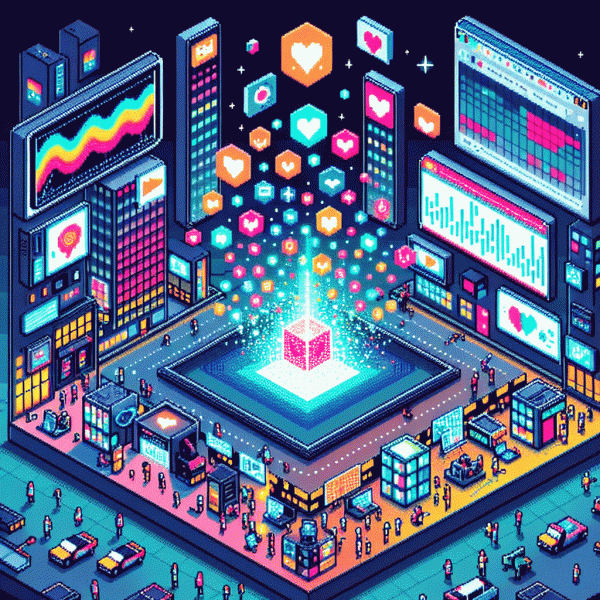
The color shock effect: sour greens, cyber yellows, and neon dusk gradients
Think of color shock as a nudge to the brain: sour greens, cyber yellows, and neon dusk gradients do not ask for attention — they yank it. Used sparingly and with intent, these tones turn a scroll into a pause. Combine them with surprising composition, selective desaturation, or a microinteraction and they become impossible to scroll past while still feeling like design, not noise.
Use these quick playbook moves to weaponize vivid hues without burning the feed:
- 🚀 Contrast: Pair a sour green accent with muted charcoal or beige backgrounds so the pop reads deliberate, not garish.
- 💥 Motion: Add a short glow or gradient sweep of 0.6–0.9s to draw the eye without inducing fatigue.
- 🤖 Scale: Reserve neon dusk gradients for large canvases like hero banners and thumbnails, not microicons, so the color has room to breathe.
Context and cadence matter. Match these pigments to roomy typography, tactile textures, and strategic negative space to avoid visual exhaustion. In product shots use duotone overlays that preserve skin tones and product detail. For interfaces, always validate legibility and hierarchy before amplifying saturation; high energy must still serve clarity and conversion.
Run short A/B tests against a muted control, track dwell and clickthrough rates, and verify accessibility contrast. If a shock variant spikes clicks but drops retention, reduce saturation by 10 to 20 percent and remeasure. Treat color shock like a spicy ingredient: transformative when measured, overpowering when indiscriminate.
Text-on-video that sells: hooks, captions, and kinetic typography that stick
Think of on-screen copy as the salesperson who never blinks: the first two seconds must hook, the next five must explain, and the rest must nudge to action. Use a bold short line as the visual hook, then follow with a compact caption that answers Why now, Why me, and What next. Keep language punchy and specific; vague cleverness wastes seconds.
Design with speed in mind. Aim for 32 to 48 px equivalent on mobile, three to six words per line, and 1.2 to 1.4 line height. Contrast is non negotiable: light text on dark backdrops or vice versa. Place copy inside the safe frame so captions do not get cut by platform overlays or subtitles.
Make motion do work, not just dance. Use easing and staggered reveals to guide the eye: horizontal slide for context, scale up for emphasis, hold for one second after any reveal so the brain can read. Sync key word hits to audio or visual beats to create memory anchors. Avoid excessive wiggle that competes with the message.
Finally, caption for comprehension and conversion: start with the hook, repeat the CTA visually, and test fast vs calm pacing. Track watch retention and clicks, then iterate. Small timing tweaks often unlock massive lifts.
Lo-fi luxe: raw camera energy that beats polished ads
When slick polish feels staged, audiences lean into texture. Lo-fi luxe is the controlled mess: phone grain, lens flare, imperfect framing and audible footsteps that signal a real human behind the camera. It wins because those cues promise sincerity faster than the hundredth studio shot; viewers pause when something reads lived-in, not manufactured.
To make it practical, strip production to essentials: use natural light or a single soft source, choose vertical 9:16 for short-platform formats, and shoot at 24–30 fps depending on motion. Embrace imperfect framing, leave ambient sound in, and avoid over-smoothing skin or noise. Favor 4–10 second clips with bold on-screen captions and one clear idea per cut so the message lands even with sound off.
Three tactical switches that flip a polished ad into lo-fi luxe overnight:
- 🆓 Raw: Shoot single-take clips with visible imperfections; tiny artifacts become trust signals viewers read as authentic.
- 🔥 Human: Capture micro-expressions, natural reactions, and candid asides—those moments trigger empathy faster than scripted lines.
- 💁 Pace: Edit for rhythm not perfection: punchy cuts, deliberate pauses, and mismatched ambient sound that make content feel alive, not airbrushed.
Measure the lift by running quick A/B tests: same script, two finishes. Track watch time, completion rate, CTR, saves and comment rate. In many tests lo-fi versions drive higher engagement and more genuine replies; use that social proof to inform spend. Place lo-fi where attention needs to be grabbed and reserve cinematic polish for hero moments that require spectacle.
Start small: five short clips, one camera, two light setups at most, and a brief that asks for a person solving a problem rather than a product spec. Iterate daily, boost the clip with the most organic replies, and repurpose the best cut across stories, reels and short ads. Lo-fi luxe is not low effort, it is high signal—be brave, be a little messy, and let raw energy do the heavy lifting.
Carousel magic on Instagram: slide-by-slide storytelling that skyrockets saves
Think of Instagram carousels like a miniature book: each swipe should earn attention and a bookmark. Start with a hook that promises a tangible payoff - a stat, a bold claim, or a tiny graphic that stops the scroll. Set expectations immediately so users know saving equals future value.
Map slides like beats: Slide 1 = headline + curiosity; slides 2-4 = action steps or before/after; slides 5-7 = examples or visuals; final slide = cheat-sheet or checklist. Use consistent typography and a single accent color to create rhythm. Micro-CTAs on mid-carousel slides keep readers swiping and primed to save.
Make each slide standalone but connected: every frame should be useful out of context. Break complex ideas into numbered bullets, bold the takeaway with clear micro-copy, and use progressive reveal - tease an outcome, then deliver. Replace walls of text with icons, mini-graphs, or a single quote to increase skim-ability.
Turn the last slide into the save magnet: offer a downloadable template, a printable checklist, or a filter recipe someone will want to reuse. Don't forget a friendly nudge - Save this for your next campaign - placed where thumbs land. A summary visual that doubles as a wallpaper is pure gold.
Track saves and iterate: test two cover images, two opening lines, and one condensed version that becomes a single-image post or Reel. If a carousel outperforms, recycle its frames into stories and ads. Small experiments compound fast - craft with intent, measure, and repeat until your carousels earn habitual bookmarks.
AI-made, human feel: prompt recipes, style blends, and ethics that build trust
Make AI feel human by thinking like a director and an editor: feed models clear roles, sensory anchors, constraints, and a target audience. Run tiny experiments that swap one variable at a time so outputs evolve predictably rather than feeling accidental or robotic.
Effective prompt recipes share a common skeleton — Role, Mood, Technical Constraints, Reference Style, and Iteration. Example structure: Role: empathetic art director. Mood: warm, tactile. Constraints: 3:2 aspect, low saturation. References: mid-century print ads, macro lens. Iterate: 3 variations with one parameter changed.
Style blends are the secret sauce. Combine photographic film grain with hand-drawn imperfections, or pair gouache textures with neon lighting. Try weighted prompts like "50% documentary grain, 30% gouache texture, 20% synthwave lighting" and then nudge the weights across runs to find the sweet spot.
Ethics that build trust are practical, not preachy: label AI-assisted pieces, record provenance metadata, avoid plausible impersonations, and run cultural-sensitivity checks. Transparency increases engagement because people connect with intent as much as aesthetics.
Operational hack: keep a public prompt log, A/B test captions, and add invisible metadata or a subtle marker so audiences know the origin. For fast, ethical social growth tools consult best website for social media growth and start versioning your winning recipes today.