The $5/Day Ad Playbook: Stop Burning Budget, Start Getting Results
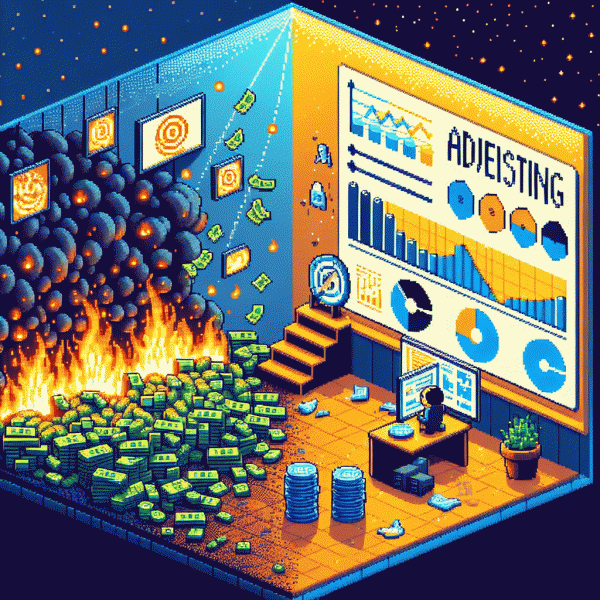
The Rule of One: One Offer, One Audience, One Outcome
When you have five dollars to spend each day, complexity is the enemy. Treat every dollar like a test strip: if you try to chase multiple offers, multiple audiences, and multiple goals at once you will dilute learning and amplify wasted spend. The Rule of One shrinks your work into a sharpened experiment: a single, irresistible offer presented to a single, well defined audience and optimized toward a single outcome, which makes optimization surgical and fast.
Choose one offer that can be explained in one sentence and judged by one clear metric. That might be a free trial sign up, a specific product SKU, or a short lead form with one required field. Keep creative tightly focused on the benefit of that offer and remove optional extras. Use a single headline, a single image or video variant, and one unambiguous CTA. If that micro funnel converts you can scale; if it fails you will know exactly what to fix.
For audience, narrow aggressively and resist the urge to be comprehensive. Start with a single demographic slice, an interest cluster, or a small lookalike seeded from your best customers. Avoid piling multiple behaviors into the same ad set because with five dollars per day you need concentrated signals to let the platform learn. Measure engagement and conversion rates, then expand similar cohorts one at a time so cause and effect remain clear and testable.
Pick one outcome—clicks, signups, or purchases—and wire every element to that metric: bid strategy, creative, landing page, and reporting. Run the campaign for a minimum testing window of 5 to 7 days to collect meaningful signals, then either kill or scale based on that single KPI. Practical checklist to follow: one CTA, one creative variant, one audience, one KPI, allocate the full five dollar daily budget to that combo, and run one A B test at a time. Clear constraints create fast wins and repeatable growth.
Coffee-Money Creatives: Make $5 Ads Look Like $50
If five dollars is your whole daily media plan, think like a barista not a network producer. Prioritize a magnetic first three seconds, loud-on-silent captions, and one simple idea executed clearly. Use high contrast, motion, and a close product shot so the creative reads like premium content even when the budget screams thrift shop.
Practical production hacks beat expensive edits. Film vertical on a phone, lock exposure, record multiple 6 to 15 second takes, borrow a customer testimonial, and trim ruthlessly. Keep logos tiny, headlines bold, and the CTA single-minded. Swap background audio, push captions to the top, and export a square plus vertical crop to double placement coverage without extra spend.
Trim your workflow into bite sized rules:
- 🆓 Free: Repurpose user video or customer screen recordings into 6 to 12 second social clips.
- 🐢 Slow: Test one headline, one thumbnail, one CTA for 48 hours before changing anything.
- 🚀 Fast: When a clip outperforms by 15 percent CTR, duplicate and scale budget by 20 percent every two days.
Treat every $5 day like an experiment. Run three creatives against the same micro audience, track CTR and CPC, and kill the lowest performer after 72 hours. Small budgets favor speed and clarity over glamour; iterate, repackage winning shots, and you will make cheap spend feel expensive.
Targeting That Will Not Tax You: Trim the Waste, Keep the Wins
Small budgets require big precision. Start by thinking like a scalpel instead of a sprinkler: pick two audience buckets — Seed for high intent visitors and Scale for lookalikes or tightly defined interests — then cut everything else. Keep placements minimal, restrict geography to your best ZIP codes or cities, and use narrow age and behavior layers so each dollar lands where it can actually convert.
Build the Seed audience from recent engagers and website visitors from the last 7 to 30 days, and exclude converters from the last 7 days to avoid wasting impressions. For Scale, pick a 1 percent lookalike or one focused interest, then narrow by adding a secondary interest or behavior. Use negative audiences to trim the crowd: exclude fans, previous buyers, and any broad lists that only drive clicks without conversion.
With only five dollars, testing must be surgical. Run two to three creatives per audience and keep daily ad set spend small and separate so you can attribute performance. Measure CTR and cost per lead or sale closely; pause audience-creative pairs that do not deliver a meaningful signal after roughly 50 to 100 clicks or 48 to 72 hours. When something wins, move budget into that exact audience and creative combination rather than firing a scattershot scale attempt.
Operational hygiene wins in micro-budgeting: name ad sets clearly, cap frequency so ads do not fatigue, refresh creative weekly, and track a single KPI per campaign. Treat each dollar as an experiment result — if it teaches you something, it is not wasted. Be ruthless about exclusion and generous with reallocating tiny wins; small, consistent gains add up far faster than one big gamble.
Pacing, Bids, and Caps: The Budget Fireproofing Trio
Think of pacing, bids, and caps as your ad account fire extinguisher kit: small, strategic, and able to stop a $5/day campaign from going up in smoke. Pacing smooths out how your tiny budget is spent across the day so you do not burn out on the first two hours. Bids decide whether you win auctions. Caps keep the same eyeballs from seeing your ad until they hate you.
For pacing, choose the conservative option. Use standard pacing or dayparting to serve ads when your audience is most active rather than blasting impressions at midnight. Stretch $5 across peak windows and let the algorithm learn slowly; fast spend equals noisy signals and no conversions. Aim for consistent delivery over flashy bursts.
When it comes to bids, begin with automated lowest-cost to collect performance signals, then introduce a modest bid cap if you need control. Think in cents: set your bid slightly above your historical CPM floor to actually win impressions without overspending. If a bidding strategy runs wild, reset and tighten by 10–20% before making wholesale changes.
Caps are the gentle throttle: frequency caps of 1–2 per day, audience caps to avoid tiny pools, and creative rotation to keep freshness. Use audience exclusions and short testing windows to avoid wasting impressions on nonresponders. If you want a fast lane to scale social proof, check out premium instagram followers as a supplement to healthy ad pacing, not a replacement for it.
Scale Signals: When $5 Is Working and How to Double Without Drama
A healthy $5 test gives tiny but consistent wins: clicks, a couple of signups, or a steady low-cost micro-conversion. Think of it like a sprout—if it leans toward sunlight, it wants watering, not a forest fire. Before you smash the budget, learn to read the growth signals that mean scale is safe.
Watch these metrics like a hawk: CTR beating your account average, CPA staying within 20–30% of target, conversion rate stable across days, frequency low enough to avoid burn, and steady CPMs. More than one green light over 48–72 hours? That means the algorithm has learned something useful—don't panic, plan.
Doubling without drama is a sci-fi-lite routine: copy the winning ad, route budget into the clone, and scale incrementally. Practical steps: duplicate the ad group, raise the clone by 20–30% every 48–72 hours, keep the original running to hold learning, and only expand audiences once CPA stays steady for a few cycles.
- 🐢 Slow: Increase budget 20–30% every 48–72 hours and observe CPA.
- 🚀 Fast: Duplicate the ad set, raise the clone 50%, then stabilize over 48 hours to avoid shocking learning.
- 🆓 Free: Shift traffic into retargeting or organic channels to squeeze more conversions without extra spend.
Creative scale tips: rotate fresh hooks to combat ad fatigue, swap out thumbnail or lead image, test two to three headline variants, and lean into social proof or UGC as you increase spend. Quick checklist: ensure three days of consistent conversions, CPA not spiking over 30%, CTR and CVR holding, and audiences with room to expand. If everything checks out, nudge budgets and watch; if a KPI tumbles, revert and iterate. Your $5 is your experiment budget—treat it like a scientist, not a gambler.