Stop Wasting Hours: What to Automate in Marketing—and What You Must Write Yourself
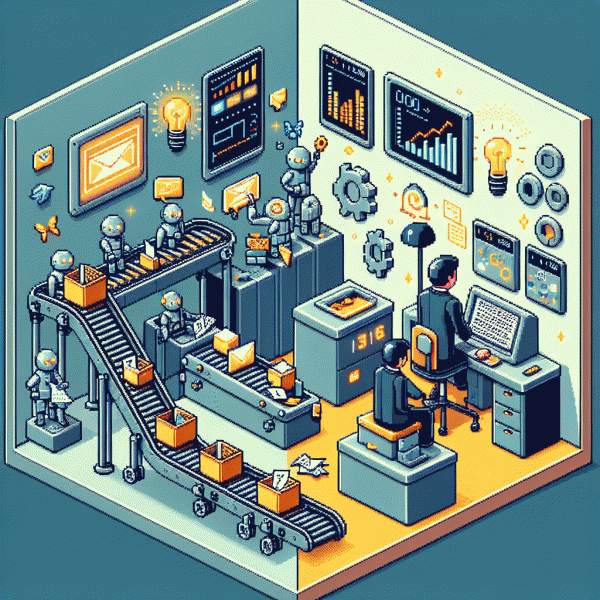
Automation Gold: Sequences, Scoring, and Segments You Should Put on Autopilot
Think of automation as your marketing autopilot: the parts that follow clear rules, deliver reliably, and free you to write the human stuff that actually moves people. Start by mapping repetitive touchpoints—welcome messages, onboarding nudges, and rescue attempts for abandoned carts—then let technology handle cadence and timing. It saves hours and reduces promoter fatigue, not your brand's personality. It doesn't mean unplugging creativity; it's about channeling it where it matters.
Sequences are where ROI lands. Build a short, targeted welcome series that learns from opens and clicks, trigger cart recovery within an hour, and create a slow-burn nurture for cold leads. Keep each email or message short, test one variable at a time, and use personalization tokens so the automation doesn't read like a vending machine receipt. Use dynamic content blocks to swap in product recommendations based on recent behavior. Timing matters more than cleverness; a well-timed basic email beats a brilliant one that arrives too late.
Score in two dimensions: intent (behavioral signals like product views, demo requests, downloads) and fit (company size, role, spend potential). Assign modest points and set clear thresholds that trigger actions — a sales ping at 75 points, a VIP drip at 120. Recalculate continuously so people naturally graduate between segments instead of getting trapped in a single list. Keep the scoring transparent so sales trusts it — nobody likes black-box leads.
Automate segments for cadence and suppression: high-value buyers, at-risk customers, new signups, and silent subscribers — then tailor frequency and creative to each. But don't automate your soul: draft the core narratives, key offers, and brand moments yourself; schedule automation to deliver them consistently. If you invest an afternoon setting rules and writing a handful of templates, you'll reclaim weeks over a quarter. Let automation handle the grind while your writing does the persuading.
Hands Off the Heart: Messages You Should Always Write Yourself
Automation should rescue your calendar, not ghostwrite your personality. Reserve messages that carry judgement, emotion, or strategic nuance for a human hand: welcome sequences that set long term expectations, pricing conversations that hinge on context, job offers and rejections, and any reply where tone can alter a relationship. Assign a named owner for these touchpoints so they are never left to a generic template or a late night autopilot.
Decide by impact and risk. Use automation for scaleable, low-risk work; keep high-impact moments manual. That means the machines can send receipts and reminders, but human writers handle narrative, empathy, and negotiations. Below are three quick categories to flag as non-automatable:
- 💬 Story: long form brand messages, founder notes, and evergreen pages that define voice and strategy.
- 👥 Empathy: complaint handling, PR outreach, and sensitive customer replies where literal accuracy and warmth are required.
- ⚙️ Offer: proposals, pricing exceptions, and legal-adjacent language that demand judgment and careful phrasing.
Make it actionable: build a lightweight playbook that says which messages are manual, who writes them, and how quickly they must be sent. Create reusable scaffolds instead of full scripts so humans edit the first two sentences and the close every time. Automate the mundane chores around these messages — scheduling, delivery, tracking — but let the human craft the meat. If it feels human, make it human; automation should amplify empathy, not replace it.
Your AI Sidekick: Prompts, Templates, and a 15-Minute Hybrid Workflow
Think of your AI sidekick as the intern who never sleeps: it drafts, formats, and pre-checks—but it doesn't feel your brand bones. Start by building a tiny toolkit of prompts and templates that reflect your voice, core offers, and must-not-say list. That upfront 30–60 minutes of setup saves hours later because every brief becomes a repeatable instruction set instead of a creative blank page.
Design prompts like a checklist: goal (engage, inform, convert), audience snapshot (age, pain, channel), tone (witty, calm, clinical), and hard constraints (word count, banned phrases). Wrap those into templates for headlines, captions, and 1–2 email subject lines. Make the template fields explicit—[hook], [value], [CTA]—so your AI produces consistent drafts you can skim, not rewrite.
If you need to scale distribution after you've polished content, pair human judgment with tools that actually move the needle — for example, a targeted solution like instagram boosting can amplify reach while you iterate. Use amplification sparingly and always route high-stakes copy through a human for final approval.
The 15-minute hybrid workflow is simple and repeatable: 5 minutes to set intent and select the right template, 7 minutes to generate 3 quick AI drafts and pick the best, 3 minutes to human-edit for accuracy, clarity, and brand voice. Time-boxing forces decisive edits: if it's still wobbly after your polish, either scrap it or schedule a deeper rewrite later.
Keep the process tidy: version your prompts, log results, and mark which pieces are never automated (legal copy, crisis responses, founder storytelling). Your AI sidekick is there to free your hours — not your judgment. Treat it like a fast assistant, not a ghostwriter of your identity.
Personalization That Scales: Dynamic Content Without the Creepy Factor
Think of scalable personalization like seasoning: a little goes a long way, but too much ruins the dish. Automate obvious, benign signals — first name, city, recent product category, last opened date — so you can stop manually pasting these into each campaign. Use dynamic blocks for imagery and CTAs tied to those simple fields and free up hours for the messages that actually need a human brain.
Reserve human attention for context and empathy. Don't automate sensitive triggers like complaints, refunds, complex onboarding or sentiment shifts — these demand a craftsman's touch. A single handcrafted sentence that acknowledges nuance will convert better and avoid the creepy cooing of over-personalization. Train templates to fall back to neutral copy when data is thin or ambiguous.
Operational recipe: build template libraries with clearly named variables, implement suppression lists for intimate segments, and add a mandatory review step for lifecycle emails. Instrument guardrails: caps on personalization frequency, privacy-safe signals only, and a no micro-targeting rule for messages referencing health, finances or relationships. Log versions so you can revert if creativity crosses the line.
Measure what matters: reply rate, opt-outs and qualitative feedback beat vanity stats here. A/B test a human-infused sentence versus fully automated copy; you'll often keep the automation for scale and the human line for conversion. The payoff: hours reclaimed without sounding like a stalker — just a brand that knows its audience enough to be useful, not weird.
Quality Control in 10 Minutes: Guardrails, Tone Checks, and Final Human Shine
Think of a ten minute quality control sprint as the secret sauce between automated drafts and the final human polish — quick, ruthless, and oddly satisfying. Start by locking guardrails: brand voice dos and donts, mandatory facts and numbers, and phrases to avoid. Treat those constraints as speed bumps, not speed limits — they keep the car on the road while you floor the creativity, so automated helpers can do their job without derailing your message.
Split the ten minutes into three micro-steps: a two minute scan for glaring accuracy, three minutes for tone and audience fit, three minutes for clarity and CTA, and a final two minutes to read aloud and approve. Run a grammar and consistency pass, then hunt for the subtle misses automation usually ignores — wrong data, mixed metaphors, or anything that sounds like it came out of a template. Use short templates for intros and CTAs so you only tweak, not invent.
- 🤖 Accuracy: verify numbers, names, and claims — if you cant confirm in 60 seconds, flag it for follow up.
- 💁 Tone: ensure the piece reads like your brand personified — replace corporate-speak with human words and a dash of personality.
- 🚀 CTA: make the next step obvious, frictionless, and slightly irresistible; test the wording as if you had 10 seconds to convince a stranger.
Finish with the human shine: tighten the first three lines into a hook, add one small sensory detail or a quick relatable example, and end with one crisp CTA. Timebox the process, assign a single signoff owner, and move any heavy-lift creativity into a separate pass. Ten minutes per asset turns hours of guesswork into reliable quality — automate the time sink, keep the human spark.