Stop Setting Money on Fire: The $5/Day Ad Blueprint That Actually Works
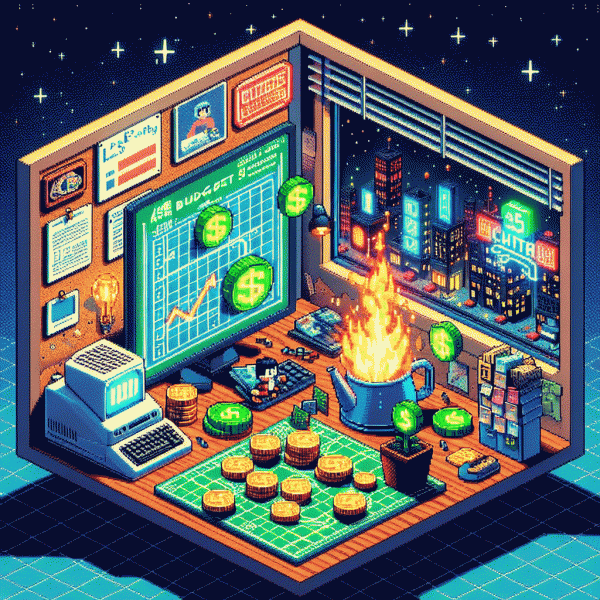
The 3-1 Rule: One goal, one audience, one offer
Think of your ad budget like a tiny campfire: throw in a single log at a time and watch it burn steady. The secret is to pick one clear path forward and refuse to multitask. When you lock on a single Goal, a single Audience, and a single Offer, every dollar learns something useful instead of getting scattered into noise.
Start with the Goal. Do not mix awareness, lead gen, and sales into one test. Pick the metric that matters for this moment and translate it into a measurable KPI: cost per click, cost per lead, or cost per purchase. Set a tiny, realistic target and treat that as the only finish line for your $5-per-day experiment.
Next, pick one precise Audience. Choose a single persona, one interest cluster, or one lookalike seed. Narrow down age, location, and top intent signal so your creative speaks like a private message instead of a billboard. If you want to learn fast, test different audiences in separate ad sets rather than cramming everything together.
Finally, build one compelling Offer. Keep the CTA singular, land users on one uncluttered page, and remove secondary links. Your offer should answer the immediate question users have: why should I click now? Use one price point, one benefit, and one clear next step to eliminate friction and sharpen conversion signals.
Operationalize it: run one ad set at $5 per day for seven days, serve 2 to 3 creative variations sequentially, pause variants that fall below your KPI, and then scale winners by 20 to 50 percent increments. Repeat the cycle with the same 3-1 focus and watch each $5 become a deliberate investment instead of smoke.
Steal-worthy hooks: low-cost creatives that click
Think of the first 1–3 seconds as the match, not the firework. If the opener does not snag attention, your $5/day will turn into a campfire nobody tends. Focus on tiny, swipeable hooks that promise a clear benefit or a peculiar twist—curiosity, urgency, or a micro-contrarian take. Keep phrasing bite-sized, emotionally tinted, and easy to copy for multiple audiences.
Build a cheap creative loop: 3 headlines, 3 visuals, 1 CTA. Swap only one variable per test so you actually learn what moves the needle. Use bold text overlays, close-up faces, quick motion, or a single surprising stat. For short-form placements keep videos under 10–15 seconds; for static ads use high-contrast crops and one-line captions. Annotate each asset with the exact headline and audience you used.
Here are three plug-and-play creative types you can replicate in minutes:
- 🆓 Free: A curiosity hook like "Nobody told you this about X…" paired with a shocked face — no production, big pull.
- 🐢 Slow: A calm, authoritative 10-second demo showing a step-by-step result — builds trust on a budget.
- 🚀 Fast: A punchy one-liner benefit + kinetic text against a colored backdrop — quick scroll-stopper.
Test each type for 3–5 days at $1–$2 per ad set, then scale winners to the full $5/day. Log the creative, headline, and CTR in a tiny spreadsheet so you stop guessing and start repeating. Steal the formats, not the words; tweak voice for your brand and watch small budgets start behaving like smart investments.
Budget pacing that works: day 1-3 setup to train the algorithm
Think of the first 72 hours as algorithm boot camp. Stop sprinkling pennies across a dozen experiments and start giving the learning phase clear signals. With a $5 a day budget you can still teach the platform what matters if you frontload structure: focused creatives, tight audience slices, and predictable spend windows so the machine does not get confused. Plan to be surgical not scattershot.
Day 1: explore. Run 3 creatives across 2 to 3 small audiences to collect clicks and early engagement. Put about 40 percent of your daily budget toward variety so each creative gets meaningful impressions. Day 2: consolidate. Pause the lowest performers and double down on the top 2 combos with roughly 35 percent of spend. Day 3: stabilize. Let the algorithm optimize with remaining spend and shift the rest toward the winner.
Use simple, mechanical rules to prune quickly. If an ad pair delivers CTR below 0.5 percent after a few hundred impressions or shows CPC that is double your campaign average, pause it. Reward ads that have above average CTR and low cost per result by reallocating 10 to 30 percent of budget mid day. Track conversions but treat clicks and CPM as the early training signals.
By day 4 you should be ready to scale slowly: increase daily budget by 20 to 50 percent and add lookalike or interest expansions only if the core signals stay strong. Rinse and repeat each week, swapping in fresh creatives while keeping your pacing discipline. With a witty plan and steady hands you will stop burning cash and start letting the algorithm pay for attention.
Red light vs green light: cut losers fast, feed winners faster
Treat every creative like a plant: water the green ones, cut the dead branches, and stop trying to resuscitate what is clearly compost. Start with tiny bets, watch the early signals, and make decisions like a merciless gardener with a stopwatch and a spreadsheet.
Red light rules are simple and nonnegotiable. If an ad fails to hit baseline CTR or conversion rate thresholds within your preflight window, pause it. A practical rule might be: pause any ad with CPA above 2x target after 100 clicks or three days, whichever comes first. This removes noise fast and keeps your learning budget focused.
Green light moves should be aggressive but surgical. When an ad beats benchmarks, duplicate and scale in controlled increments: increase budget by 20 to 30 percent every 48 to 72 hours, or duplicate the ad into a new ad set and lift budget there to preserve the original learning state. Always refresh creatives every 7 to 14 days to avoid fatigue and test one variable at a time.
- 🐢 Signal: early CTR, cost per click, and conversion velocity tell you what to kill quickly
- 🚀 Scale: duplicate winners and raise budgets in small jumps to keep delivery stable
- 🔥 Refresh: swap headlines or visuals on a schedule to extend top performer life
End each week with a binary audit: which ads lived, which died, and which to clone. That rhythm turns chaotic spend into compoundable growth and stops you from literally setting money on fire.
From $5 to lift-off: painless ways to scale without CPM spikes
Scaling shouldn't feel like lighting cash on fire. Start by treating your $5/day account like a bonsai: small, precise nudges grow healthy branches. The core rule: avoid sudden budget spikes that shock the delivery algorithm—patience beats panic bids.
Practical roadmap: either raise daily budget by 10–20% each day or clone winning ad sets and fund the clones. Cloning preserves the original's learning while letting the platform explore new delivery paths. Use campaign budget optimization (CBO) when you want the system to allocate winners; use ad set budgets (ABO) if you need control over specific audiences.
Creatives and audiences are your thermostat. Broaden audiences incrementally, layer lookalikes, and exclude recent converters to prevent wasted CPM. Rotate creative formats and headlines every 7–10 days to keep frequency and ad fatigue down—test short hooks and bold thumbnails first.
Metrics to live by: CPM, CTR, conversion rate, and frequency. If CPM rises but CTR tanks, pause and analyze. Add retargeting funnels to capture low-cost conversions and employ dayparting or bid caps when you spot peak-hour CPM spikes. Small, frequent tests beat one big blind bet.
- 🆓 Free: scale audience breadth—add similar interests and a 1% lookalike to expand delivery without extra spend.
- 🐢 Slow: increment budgets 10–20% daily or every 48 hours for stable learning.
- 🚀 Fast: duplicate winning ad sets and double budget on clones while keeping the original at base spend.