Stop Scrolling: The Shocking Truth About Clickbait vs Value That Converts Like Crazy
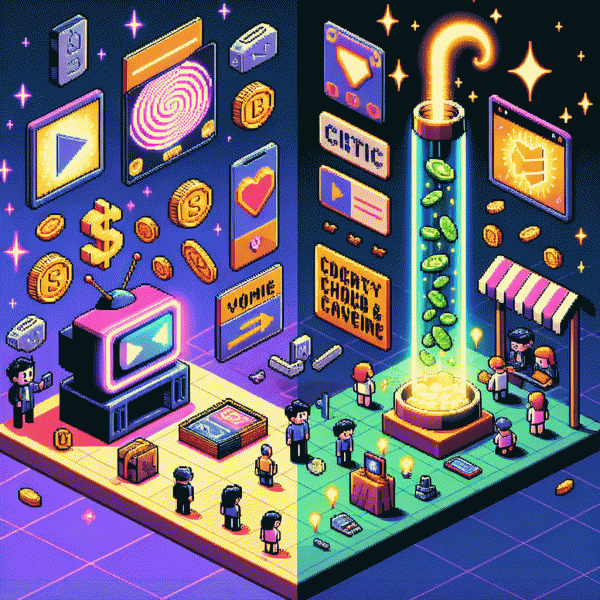
Curiosity Without Substance: Why Clicks Do Not Become Customers
Everyone loves a mystery, but mystery without payoff is like a party with no snacks: attention is there, commitment is not. Curiosity headlines drive clicks the way candy draws kids — an immediate sugar rush and then remorse. That surge of traffic brightens dashboards for a day, but if the page lacks substance or a clear next step, visitors bounce before they ever consider buying or subscribing.
What happens next is painfully predictable: high CTR and low time on page collide with a conversion rate that flatlines. Algorithms reward content that keeps people engaged, not content that tricks them into a momentary glance. Repeated baiting also erodes brand trust; customers remember being teased and your lifetime value suffers when people stop returning. Clicks are vanity when they are not tied to usable, memorable value.
Turn curiosity into momentum by delivering immediate micro value. Open with a compact promise and fulfill it in the first 10 to 30 seconds — a short how to, a striking stat, or a clean visual demo. Follow with one obvious next step: a single CTA that asks for a small commitment like an email or a trial. Back that CTA with social proof and a tiny deliverable so the user feels rewarded right away. Design for intent, not interruption: clarity converts better than cleverness.
Finally, treat headlines as experiments, not hacks. Set expectations in the copy, deliver something genuinely useful, and measure click to action ratios. Iterate on what actually helps users, and you will watch curiosity become conversion instead of noise.
Value Hooks That Hit: Promise Precisely Deliver Generously
Stop trying to seduce with vague promises—replace flashy fluff with a tight, tangible commitment that actually signals what follows. Think 'gain 53 email opens in 7 days' instead of 'increase engagement.' That crisp, measurable promise is the hook; the conversion happens when you deliver more than you promised. Make it measurable, time-bound, and honest—it's the handshake that prequalifies the reader.
Craft it by zeroing in on a single transformation: one metric, one pain, one timeline. Use sensory verbs and numbers, not corporate-speak. For example: 'A one-page tweak to lift your click rate by 18% in 72 hours.' That sentence paints the result and lets prospects picture victory. Test a bold variant and a conservative one; the conservative often builds trust, the bold grabs attention.
Deliver generously. Don't stop at theory—give a plug-and-play first step, a micro-win, and a blueprint to scale. Instead of promising a 'strategy,' hand over a 3-line subject formula, a before/after screenshot, and a tiny checklist. Those tangible assets convert curiosity into action and turn your promise into credibility. Small overdeliveries add up into enthusiastic testimonials.
Measure what matters: conversion lift, time-to-first-win, and share rate. Iterate copy with real results, not hunches. When a sharp promise and generous delivery pair up, you stop being another fleeting scroll and become the solution people bookmark, share, and pay for. Try one precise promise this week and watch trust multiply.
The 70 30 Headline Mix: Ignite Interest Maintain Trust
Think of headlines as a flavor ratio: 70 percent substance and 30 percent sizzle. Give readers a clear reason to keep scrolling, then tease just enough mystery to pull them deeper. That balance sparks curiosity without betraying trust, and it keeps the right people moving toward action.
Start with a concrete benefit — the result someone can picture and want — then append a curiosity hook that invites a click. Example approach: Double lead flow in 30 days: the unexpected step most founders ignore. The first half promises value; the tail promises a revelation worth reading for.
Never use the 30 percent to lie. The small intrigue piece must be honest and deliverable. Open the article with a quick premise, then show the mechanism, a tiny proof point, and one clear next step. That sequence is how curiosity turns into trust and then into conversion.
Measure the mix. A/B test headlines where the 70 side varies between quantifiable outcomes and emotional rewards, while the 30 side trades mystery styles — question, contradiction, or shocking stat. Track CTR, scroll depth, time on page, and micro conversions to learn which blend actually drives sales.
Practical tools: use numbers, names, timelines, and concrete verbs in the 70 percent; use short cliffhanger phrases, surprising adjectives, or a single unusual word in the 30 percent. Avoid clickbait tropes like "This" or "You Will Not Believe" unless you can fully back them up within the content.
Try this mini template today: [Result in X time] + : + [Tiny curiosity hook]. Write three options, publish the best two, and let data decide. When your headlines promise value first and tease second, the clicks you get will be the kind that convert, not just inflate vanity metrics.
Ethical Clickbait: Teasers That Win Hearts on LinkedIn
On LinkedIn, a good teaser doesn't trick people — it hands them a tiny, irresistible promise and keeps its word. Think of your opener as a polite tap on the shoulder: short, intriguing, and honest. Use curiosity to invite a click, not to bait-and-abandon. When the post delivers immediate, useful payoff, readers reward you with attention, trust, and clicks that actually matter.
Make your next teaser ethical by following a few simple rules: lead with the benefit so the reader knows what they'll gain, hint at a specific outcome to create curiosity, and never over-promise. Swap vague hype for a crisp micro-story or a surprising stat. Add one bold, measurable claim the content can validate, and you'll convert curiosity into meaningful engagement instead of annoyed scroll-past.
Want phrasing you can steal? Try short, human-first openers like “I fixed X in 5 minutes — here’s the catch…” or “We stopped losing Y customers by changing this one sentence.” Pair them with a quick hint of data and an explicit next step: comment a keyword, click to read, or DM for the template. Those tiny directives turn warm interest into action without sounding sleazy.
Finally, treat each post like an experiment: A/B test three honest teasers, track comment-to-view and message-to-view ratios for 48–72 hours, and double down on winners. Ethical teasers don't just win hearts on LinkedIn — they build a repeatable pipeline of real conversations and conversions.
Metrics That Matter: CTR Dwell Time and Revenue Per Reader
CTR is the shiny candy you show the algorithm — cheap, addictive, and easy to measure. But a high CTR that drops into a two-second bounce is like a party guest who ghosts your house after the first drink: lots of noise, zero value. Treat CTR as a traffic signal, not the destination. It tells you whether your title and thumbnail get attention; it doesn't tell you whether that attention turns into interest, trust, or a sale.
Dwell time is the silent referee. It measures how long someone actually consumes the thing they clicked for, and it's the first real indicator of substance. Improve it by fixing the first 10 seconds: open with a clear promise, use scannable subheads, add visuals that pull the eye, and stop making readers hunt for the point. Use session-segmentation in analytics to spot which headlines attract shallow vs deep readers.
Revenue per reader is the final score. This macro metric folds CTR and dwell into dollars: how much does each visitor deliver to the bottom line? Track it by dividing revenue (or expected LTV) by unique readers, and run cohort tests to see which content types lift that number. Small nudges — one contextual CTA, an inline content upgrade, faster page loads — often outperform bigger headline experiments when you measure revenue per reader.
Operationally: run headline A/Bs to move CTR, then gate decisions on dwell and revenue per reader. If a variant spikes clicks but tanks dwell and $/reader, kill it. If another draws fewer clicks but longer attention and higher revenue per reader, scale it. In short: don't chase clicks alone — cultivate attention, then monetize it.