Stop Doing Ad Drudgery: Let AI Handle the Boring Stuff While Your ROI Takes Off
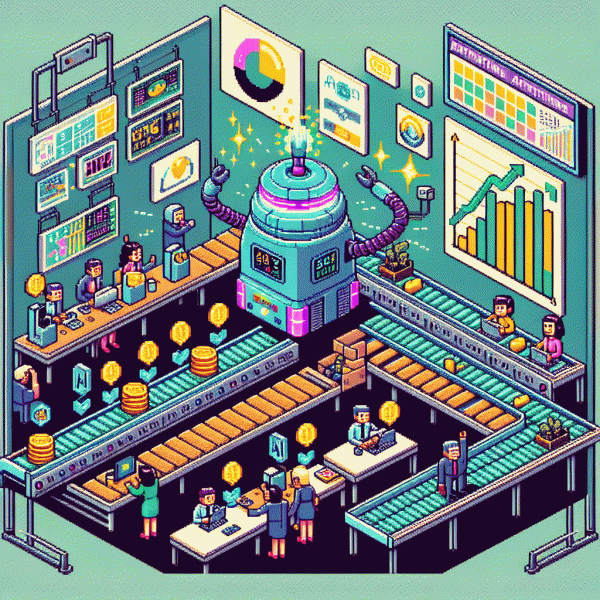
Plug In the Bots: A 3-step play to automate targeting, bids, and reporting
Think of ad automation as hiring a tiny, obedient intern that never sleeps. Configure signals, feed quality data, and let the system do the heavy lifting so your calendar empties and your dashboards fill. The real magic is not removing humans; it is freeing them to design creative tests while machines optimize the grind.
Start with a compact three move playbook that you can launch in a single afternoon. Keep it measurable, keep it reversible, and treat the system as a decision amplifier rather than a black box.
- 🤖 Segment: feed the bot real behavioral signals such as recency, intent, and frequency so audiences are micro-targeted and creative matches improve CTR.
- ⚙️ Bid: set profit floors, choose a sensible pacing window, and let automated bidding scale winners while throttling losers.
- 📊 Report: auto-generate short, actionable summaries with anomaly alerts and one click exports for stakeholders so insights travel fast.
Practical setup tips: start with conservative caps and a 48 to 72 hour learning window, validate with a holdout audience, and add a kill switch for runaway spend. Log changes, automate change notes, and run weekly reviews to retrain models.
Flip the switch, watch the first two days with curiosity, then iterate. Remove tedious tasks, not control, and let better loops deliver smarter ROI.
Creative on command: prompts that spin thumb-stopping headlines and hooks
Stop wrestling with headline blockages and start commanding creative output. Feed an AI a tight brief and it will spit back dozens of thumb-stopping options in seconds: specify audience, core benefit, tone, desired length, and one constraint (no brand jargon, no exclamation marks). Keep the brief snappy and repeatable.
Use a compact prompt formula: role + goal + audience + style + constraints + examples. For example: "You are a senior copywriter. Create ten 6–10 word headlines that spark curiosity for busy parents who want faster bedtime routines. Tone: playful, reassuring. Avoid promises that feel impossible. Include a short hook line after each headline."
Bias for variants: ask for emotion-focused clusters — curiosity, urgency, social proof, and benefit-first — and then request micro-variants for length and POV. Command the model to output numbered lists so you can skim and paste. A single prompt that produces 20 alternatives saves hours of manual rewrites and surfaces unexpected angles.
Turn ideas into experiments: pick five contenders, craft two CTAs each, and run a rapid A/B. Small tweaks — a verb swap, a number, or a time frame — move engagement metrics more than you expect. When you need paid distribution at scale, pair winners with targeted buys like authentic tiktok boost to accelerate social proof and jumpstart algorithms.
Save the best prompts as reusable snippets, version them when a theme wins, and make prompt engineering part of your creative sprint. Do a thirty-second prompt test before every campaign and let the machine handle the drudge while you polish the message that converts.
Never babysit budgets again: guardrails that keep spend smart (even on weekends)
Set smart floors and soft ceilings so your campaigns run, learn, and sleep without you. Instead of waking up to a $1,200 surprise after a big night, configure tiered caps, pace limits, and ROI-based cutoffs that automatically throttle spend when performance dips. The point isn't to amputate growth — it's to stop the budget from sprinting off a cliff while you're eating brunch.
Start with three practical rules: absolute daily caps per campaign, adaptive pacing that slows delivery when CPA climbs, and a small emergency reserve for high-confidence winners. Tie those to short evaluation windows so algorithms can test creative and audiences, but don't let a single outlier blow the whole month. Set notifications for true anomalies, not every tiny blip — your inbox deserves mercy.
Layer in guardrails visually and behaviorally with these quick settings:
- 🤖 Cap: hard daily and lifetime spend limits per campaign to prevent runaway costs.
- ⚙️ Pace: delivery schedules that slow down during low-conversion hours and accelerate on proven peaks.
- 🚀 Cutoff: performance triggers (CPA, ROAS, conversion rate) that pause or reallocate budget automatically.
Finally, build a one-click override for when you want to be human again: short-term boosts that auto-revert and a transparent dashboard that shows why the AI made a move. With these guardrails, you stop babysitting budgets and start steering ROI — even on weekends.
Make testing lazy: auto-A/Bs that learn faster than your team chat
Stop treating tests like chores. Set up a system that scans creative permutations, traffic slices, and minor copy tweaks, then lets a learning engine do the heavy lifting. The result: experiments that converge in days instead of conversations that stretch for weeks. You get actionable winners while the team gets time back.
Implementation is simple and low friction. Feed your creative library, pin the metric you care about, and choose a risk profile. The auto A/Bs will explore boldly at first, then rapidly exploit the best performers. Use conservative rollouts for big changes and aggressive ramps for marginal wins.
The payoffs are immediate. Better signal to noise, fewer wasted impressions, and continuous optimization without manual babysitting. Here are three quick outcomes to expect:
- 🤖 Auto: Variants are launched and adjusted without human queueing, so tests run 24 7.
- 🚀 Speed: Better decisions appear in hours, not in back and forth threads.
- 💥 ROI: Small wins compound fast when the algorithm reallocates spend to winners.
Make the first test a tiny change to CTA or image and let the system learn. Monitor the dashboard twice a day, celebrate the winners, and deploy confident rollouts. Lazy testing does not mean lazy results; it means smarter, faster growth with less drama.
Prove the lift: dashboards that tie AI moves to real revenue
Think of your dashboard as the courtroom where AI moves testify: it must connect each tweak to cash in the bank. Start by showing spend, conversions and real revenue on the same timeline, then layer in the model's predictions and confidence bands so viewers can see when the bot nudged bids or creative and what happened next. Visualize action to outcome latency so teams know how long to wait for lift.
Operationalize that: tag every campaign change with an experiment ID, push UTM parameters for downstream attribution, and record the model action that caused it (bid up 12 percent, creative variant B, audience prune). Connect campaign logs to CRM revenue events, refunds and offline conversions, and compute both last touch and incrementality so numbers are defensible. Build cohorts by action timestamp, compare incremental revenue per dollar spent, and surface a predicted versus actual delta chart to validate calibration; log counterfactual assumptions for fast audits.
Spotlight the KPIs that matter: incremental revenue, marginal CPA, LTV to CAC, retention lift and conversion velocity. Add slices by propensity decile and creative, plus clear confidence intervals and sample size notes so stakeholders do not chase noise. Consider Bayesian posteriors or uplift models for richer uncertainty estimates, and automate alerts for diminishing returns and model drift — a red flag at the top of the dashboard beats a surprise on the next invoice.
Design the view for two audiences: an executive one-line verdict (AI raised weekly revenue 18 percent — keep scaling) and an analyst pane with raw cohorts, SQL-ready exports and replayable action logs. Surface the recommendation, the evidence and the winning test so teams can stop debating and start iterating. When your dashboard tells a crisp story, the bot gets credit where it earns it and everyone focuses on where to scale next.