Steal Back Your Time: Automate These Marketing Tasks—and Write These Yourself Before Competitors Do
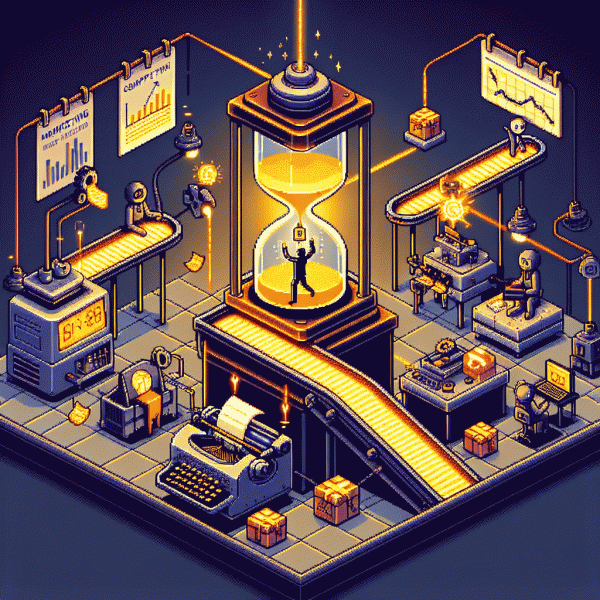
Set-It-and-Scale-It: Email Drips, Lead Scoring, and Routing You Should Hand to the Machines
Think of automation as your behind-the-scenes intern: it does the repetitive, time-sucking plumbing so you can be the person who writes the clever, competitive emails that win attention. Set predictable drips, score behavior, and route leads to the right human or nurture stream, then keep the creative work — subject lines, offers, voice — firmly in your hands.
Start with risk-free drips: welcome, onboarding, and reactivation. Map the customer journey into 3–5 micro-sequences with clear goals (activate, educate, convert). Use behavioral triggers — first open, product view, trial expiration — and schedule follow-ups that escalate from helpful to persuasive without sounding like a bot.
Design a simple, transparent scoring model: assign points for intent signals (demo request = high), engagement (emails opened, links clicked), and firmographics (company size, role). Add decay so old activity loses weight and set two thresholds: one for sales-ready and one for high-touch nurture. Revisit scores every quarter to avoid stale leads dominating your pipeline.
Make routing rules explicit and automated.
- 🚀 Fast: Immediate handoff to sales for demo requests or intent above the high threshold.
- 🔥 Hot: Priority queue for accounts that match ideal-customer criteria and show recent high engagement.
- 🤖 Nurture: Place lower-score contacts into timed educational drips until they requalify.
Instrument everything: open rates, click-to-conversion, time-to-contact, and lead velocity. A/B test cadence and creative, then fold winning copy into sequence templates. Keep a kill-switch fallback that moves prospects to low-touch if they go cold to avoid wasting rep time.
Action plan: automate the routing, scoring, and sending cadence today; write the emails yourself this afternoon. Start with one drip, one scorecard, and one routing rule, then scale. The machines handle the grind; you keep the glue that actually converts attention into revenue.
Keep the Human Spark: Brand Voice, Headlines, and Stories You Should Always Write Yourself
Automation is your secret weapon for boring, repetitive marketing busywork — but it shouldn't be the author of your personality. Use machines to schedule, segment, and scale, and reserve the opening lines, tone choices, and central stories for human hands. Those are the sparks that make people stop scrolling.
Start by writing a tiny, brutal brand-voice brief: three adjectives that capture your personality, two words you never use, and three sample sentences that show how you speak to customers. Keep it under 100 words so teams and tools can actually use it without overthinking.
When it comes to headlines, don't spray-and-pray. Draft your top 5 headlines for every campaign yourself — one curious, one urgent, one benefit-driven, one data-driven, and one playful. Feed those into your automation as the primary set, not the afterthought. Human intuition still spots the twist that makes a headline click.
Stories are your moat. Write the core narrative: quick setup, clear conflict, and a human payoff. Anchor each campaign with a single anecdote or customer moment that captures emotion; repurpose with automation, but never auto-generate the original anecdote. Empathy and specificity translate across formats in a way algorithms can't invent.
Make it actionable: time-box creative work to 60–90 minutes, keep a swipe file of winning lines, and require a human sign-off on the first 3 versions of any headline or story. Let automation handle variations, delivery, and metrics — you handle voice, nuance, and meaning.
Protect that human spark like it's intellectual property. Schedule a weekly creative hour, create micro-templates from your originals, and use automation to amplify — not replace — the words that actually persuade.
AI-Assisted, Human-Approved: How to Brief, Prompt, and Edit for Conversion
Think of AI as your junior copywriter: fast, obedient, and terrible at reading rooms. To get gold you must brief like a pro. Start with the outcome you need to move, a tight audience snapshot, the offer mechanics, and a single conversion goal. Add constraints — word count, tone, and one prohibited phrase — to stop the model from wandering. This filter saves hours downstream.
When you prompt, use a predictable scaffold: context, role, example, task. Give the model one winning instance and one failure example, then specify KPIs like CTR or demo signups. Include tone adjectives such as witty, plainspoken, or urgent and demand multiple micro-variants with a one‑line rationale for each. Those rationales make human editing shockingly fast.
Editing is where humans win. Hunt for clarity, swap generic verbs for sensory specifics, and flip features into benefit-first copy. Tighten CTAs to a single, unambiguous action and trim anything that forces decisions. Run a headline swipe against high-performing competitors to borrow momentum ethically, then simplify so scanners can convert in seconds.
Operationalize the loop: batch-brief once, generate ten options, human-edit the top three, and launch the winner. Use a batch‑brief → generate → edit → test cadence and document versions and performance so prompts improve over time. The aim is not to outsource thinking but to automate grunt work, letting you outwrite competitors where it truly counts.
Data-Driven Timing: Triggers, Segments, and A/B Tests to Automate for 10x Lift
Think of timing as your high-ROI automation lever: when a moment matches a message, your funnel stops leaking. Build simple triggers that react to behavior or context so campaigns fire without babysitting. Use event-based rules — page view, cart add, content consumed — and let the system decide who gets nudged and when. You get consistent reach, fewer manual sends, and more uninterrupted time to write offers that competitors will copy.
Segments are not static lists; they are living audiences that evolve as people behave. Create dynamic segments for intention signals: frequent browsers, price watchers, engaged subscribers, or high-risk churn. Tag micro-behaviors with scores and push those scores into automation: when score crosses a threshold, trigger a tailored flow. That means hyper-relevant messages hit inboxes at the exact moment of intent, boosting response while removing the need for daily list pruning.
A/B tests are your timing lab. Test send windows, trigger latency (immediate versus 24 hours), and message cadence, not just creative. Run multi-variant experiments that pair subject lines with timing to find compound wins. Track leading metrics — open rate, click rate — and business outcomes — conversion and LTV. Automate the winner: promote top-performing variants into production rules and shut down losers so your automation constantly self-optimizes.
Start with one small loop: pick a trigger, define two segments, run a timing A/B for one week, and let the automation handle dispatch. Monitor results, document winning rules, then scale. The payoff is clear: fewer manual campaigns, smarter send timings, and hours reclaimed for original writing. When you automate the timing science, you get to spend time crafting the voice that makes competitors play catch up.
The Red Flags: Moments Automation Backfires—and How to Fix It Fast
Automation is your secret weapon—until it isn't. The red flags are subtle: a sudden tone shift, engagement dropping while impressions climb, or customers puzzled by robotic replies. When that happens, pause the autopilot and diagnose with small tests rather than mass rewrites. Pinpoint whether rules, training data, or timing caused the miss.
- 🤖 Off-brand: copy sounds generic or mismatched to your voice within posts or replies.
- 💬 Tone-deaf: automated replies miss sentiment and escalate instead of soothing.
- 🚀 Stagnant: engagement plateaus while vanity metrics swell—followers without fans.
Quick fixes you can deploy today: add a human-in-the-loop for flagged messages, create exclusion rules around sensitive keywords, and set clear escalation paths for uncertain cases. Carve ten minutes daily to review patterns and batch-correct templates. If you want a fast place to compare vendors and pricing, check the best smm panel and shortlist partners before you scale automation.
Think of automation as an eager intern: brilliant with boilerplate, terrible with nuance. Keep repeatable tasks on autopilot, but keep your creative muscle warm. Intervene quickly to protect brand voice and reclaim the hours you need to write the pieces that actually win customers before competitors catch on.