Shoppable Content Beyond Social: The Sleeper Sales Channel You Are Missing
From Blog to Buy Button: Turn Articles, Emails, and CTV into Instant Checkout
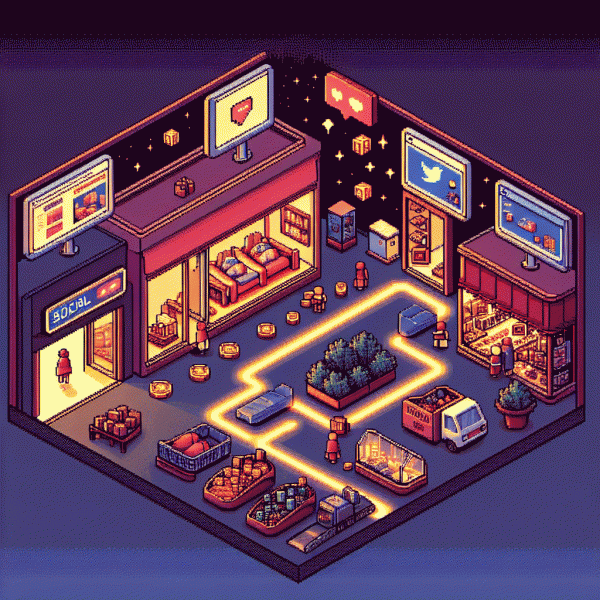
Think of articles, newsletters, and CTV spots as checkout-ready real estate rather than passive displays. Turn a how-to post into a product carousel with an embedded buy action, make a marketing email send a tokenized cart that completes with one tap, and transform linear TV spots into shoppable moments with a simple overlay or QR lead that drops items straight into a mobile cart. The secret is swapping friction for momentum.
Start small on the page: add concise product cards inside relevant paragraphs so the reader never has to hunt. Use a micro checkout pattern that saves selections to a session or email token, then present a short payment form or Wallet option. Keep copy short, buttons vivid, and confirmations instant. Every extra field is a conversion leak, so remove login walls and let payment methods do the heavy lifting.
Emails and CTV need their own playbook. In email, deliver a single CTA that reconstructs a cart server side so the recipient lands at checkout ready to pay. For CTV, pair a visual cue with a scannable code or a second screen deep link to capture intent while the spot is fresh. Instrument these paths with short lifetimes for carts and fallback SMS links for nonresponsive devices to keep the purchase loop tight.
Measure like a scientist: track assisted conversions, time to purchase, and abandonment at each touch. Run a two week A B on one article or email and compare revenue per session before you scale. A simple rollout plan is all it takes: identify high intent content, add a buy touch, instrument events, and iterate. Do that and you will find revenue where everyone else sees only content.
ROI Reality Check: Costs, AOV Bumps, and What Brands Actually See
Think of shoppable content as a smart pop up at the checkout counter rather than a flashy billboard on Main Street. Up front there are setup costs for creative, tagging, and platform integration, and those can range from budget friendly experiments under 2k to full commerce builds north of 20k. The ROI story depends less on glam and more on two things: how much you lift average order value and how cleanly you can track the lift.
In live programs brands often report an AOV bump between 8 and 25 percent when shoppable touchpoints recommend complementary items or quick bundles. If conversion rate climbs alongside that AOV lift, the revenue impact compounds quickly. High intent formats like product videos or interactive lookbooks can even push AOV gains toward 30 to 40 percent for focused SKUs, but those wins are usually concentrated on best sellers, not the whole catalog.
Costs fall into three buckets: production, tooling, and attribution overhead. Production is variable, tooling might be a recurring platform fee, and attribution costs show up as engineering or tag management time. A simple sanity check: if your baseline AOV is 60 and you net a 15 percent AOV increase plus a 10 percent conversion lift, you are looking at close to a 26 percent revenue bump. That math gives you the payback window to compare against the project price tag.
Actionable move: start with a narrow pilot on top sellers, instrument micro conversions, and require incremental AOV reporting before scaling. Optimize CTAs, test purchase prompts, and measure how many new buyers stick around. Shoppable content will not cure every funnel woe, but when measured the right way it is one of the most efficient levers to lift revenue without buying more reach.
SEO Meets Shopability: Rank It, Then Bank It
Think of organic traffic as a flood; if your product pages aren't built to accept water, you'll get soaked in impressions but dry in sales. Start by mapping high‑intent queries to page types: transactional terms (buy, ship, coupon) to product pages, comparison queries to category or buying‑guides. Quick win: pick your top 20 converting queries, build one focused landing page per query, and optimize title + H1 to match the search phrase.
On‑page mechanics are where SEO earns its shopping stripes. Nail product schema (Product, Offer, AggregateRating) so Google can show price and availability in rich snippets; include priceCurrency, availability, SKU and image URLs. Keep meta descriptions crisp and action‑oriented, compress images for speed, and canonicalize variant pages. A single misplaced canonical or missing price can kill a shoppable result — so validate with Google's Rich Results Test after deployment.
Shopability is UI + friction removal. Place a clear buy button above the fold, show stock level, shipping ETA, and a one‑step add-to-cart flow. Turn content pieces into commerce by embedding shoppable modules inside guides and using internal links that look natural (anchor text = product names, not click here). Add micro‑conversions — 'save for later', size selector — and instrument each with analytics.
Measure, iterate, repeat. Use Search Console for query-to-page mappings, monitor impressions-to-clicks for shoppable snippets, and send events to GA4 for every micro‑conversion so CRO tests can prove lift. If a page ranks but won't convert, focus on price clarity, trust signals (reviews, returns), and speed. Small UX fixes often deliver bigger returns than extra backlinks — get the traffic, then turn it into predictable revenue.
Friction Fighters: Payments, PDP Links, and On-Site Cart Magic
If your shoppable content turns like a carnival mirror on the path to purchase, it's time to slim the ride. Start thinking less like a marketer and more like a cashier: remove steps, mask complexity, and keep the moment between desire and buy as short as possible. Payments, product-page deep links and on-site cart behaviors are the secret doors — nudge each one open and conversion walks through.
Payments are the biggest drop-off culprit, so treat them like VIPs. Offer one-click wallets (Apple/Google Pay), guest checkout, and local payment methods so people don't hunt for options. Tokenize for repeat buyers, prefill forms with profile data, and validate inputs inline to avoid form fatigue. Do an A/B test that cuts the checkout steps by one and measure lift: often a single removed field = double-digit gains.
PDP links should be friction-free bridges from content to product. Use deep links that open a lightweight modal PDP or a preloaded page instead of forcing a full reload. Preselect common variants, surface key specs and trust signals instantly, and let users add-to-cart from the modal. Make the cart sticky and preview-able so users never feel lost; animated micro-interactions and a tiny confirmation toast keep confidence high without interrupting browsing.
Ship a quick roadmap: Measure time-to-checkout, Simplify payment options, Enable deep PDP modals, and Polish cart UX. Prioritize fixes that shave seconds off the flow, then iterate. Do that, and you'll turn passive content into an on-site sales engine — it's like turning whispers into a direct "add to cart."
Start Small, Scale Fast: A 30-Day Pilot and the Metrics That Matter
Treat the next 30 days like a lab experiment: small scope, fast feedback, measurable outcomes. Choose one non-social channel — a product page, help article, transactional email, or a press mention — and add a single shoppable element (a buy button, one-click cart widget, or embedded product card). Keep creative tight and traffic sources limited so results aren't noisy.
Map the month in micro-sprints. Week 1: instrument tracking, set a clean baseline, and launch one hypothesis. Week 2: drive a low-cost traffic burst (email, micro-paid spend, or partner promo). Week 3: analyze where people drop off and iterate on copy or placement. Week 4: rerun the best variant to confirm lift. The goal is learning velocity, not perfection.
Measure smart — not everything. North stars: conversion rate (click-to-purchase), revenue per visitor, and average order value. Diagnostics: click-through on the shoppable element and cost per acquisition. Compare pilot vs baseline lift and run a quick significance check before scaling decisions.
Decide on day 31: if conversions improved and CPA is acceptable, clone the winning unit across more pages and channels; if not, pivot creative or offer and run a second micro-test. Automate the simple reports, set clear go/no-go criteria, and celebrate small wins — big channels are built from tiny, repeatable experiments.