Raw vs Flashy vs Weird: the creative showdown that will shock your metrics
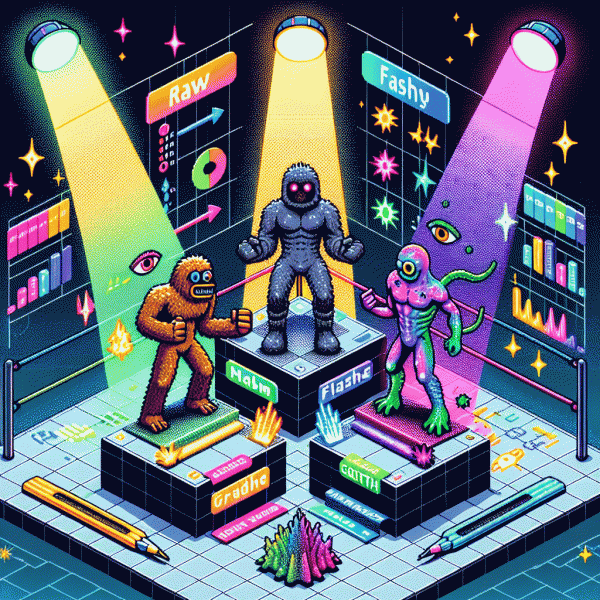
Raw: scrappy authenticity that builds trust faster than any filter
Forget glossy perfection — audiences lean toward the human. Unvarnished clips, flubbed lines, and candid reactions create a magnetic trust loop: people see themselves, they comment, and they convert. The raw approach behaves like a credibility shortcut that outperforms polish when the goal is relationship, not just reach.
Make it actionable: capture one honest moment per post, hook viewers in the first two seconds, record on phone, and keep edits tight. Write captions that admit a mistake or ask a blunt question; vulnerability invites replies faster than cleverness ever will.
Measure the right signals: more comments, saves, and time watched indicate trust building. Track repeat engagement, click-throughs on your bio link, and message starts instead of obsessing over vanity likes. When trust rises, conversion becomes a downstream effect.
Production rules are forgiving: natural light, good audio, two takes max, and clear on-screen text for sound-off scrollers. Stabilize with a simple prop or handhold, avoid overly processed filters, and reuse raw formats so the audience recognizes your vibe across channels.
Treat constraints as creative fuel: document over produce, show failures, and celebrate small wins. Run quick A/B tests between candid thumbnails and polished ones, double down where return engagement is highest, and let imperfect authenticity scale your metrics faster than any filter could.
Flashy: high gloss hooks and thumb stopping visuals that sell the sizzle
Gloss and glow win attention fast, but attention without action is just pretty noise. Treat every frame like a tiny billboard: the first 1 to 2 seconds must promise a benefit, the middle keeps momentum with motion and hierarchy, and the end closes with a clear next step. Use bold color palettes, high contrast text overlays, micro animations, and a human face or product close up to turn eyeballs into clicks.
Make the creative do the heavy lifting. Design hooks to move CTR and CPM, not just vanity likes. Test headline variants against visuals, keep captions scannable, and make sound optional so the asset works on mute. Instrument every asset with simple KPIs: CTR for attraction, CVR for sizzle to sale, CPM for efficiency, and watch time for attention quality. If a creative flops in day one, kill it quickly and redeploy the lesson.
Build a modular toolkit so swapping a hook, background, or CTA is low friction. Start tests with three focused variants to learn fast and avoid overcomplication. Try these starter templates:
- 🆓 Hook: tease one free benefit or pain relief in 1 to 2 seconds, no fluff.
- 🚀 Visual: high contrast motion or product reveal that reads without audio.
- 🔥 CTA: short, urgent direction that aligns with the promise and maps to post-click experience.
If flashy is the playbook, treat it like a lab: iterate, measure, and never adore any asset too long. Scale winners with fresh angles to beat creative fatigue, automate rotation where possible, and let data decide which sizzle becomes repeatable revenue.
Weird: pattern breaking ideas that freeze the scroll and spark comments
When every feed looks like a polished storefront, weirdness becomes the oxygen that makes people stop breathing through their thumbs. Tiny ruptures in expectation — an extreme close up, a caption that contradicts the image, a sudden cut to silence — trigger curiosity. Those micro-shocks create the cognitive lag where comments and shares are born.
Make weirdness tactical rather than chaotic. Start with a single rule to break consistently: reverse the caption and the visual, swap expected audio with an offbeat track, or narrate a mundane action as if it were a thriller. Keep it short, repeat the oddity across posts so followers recognize your signal, and always end with a question that begs a reply.
If you want to accelerate learning and ensure those pattern breakers reach real people, use a focused lift like get instagram followers fast. A modest boost widens the sample so you can see which quirks spark comments, not just impressions. Think of paid reach as a testing rig, not a shortcut.
Measure what matters: comment sentiment, save rate, and follow conversion from odd posts versus safe ones. Double down on the smallest weird element that drives conversation and iterate like a mad scientist. The result is a repeatable engine that freezes the scroll and keeps the metrics smiling.
How to test all three on Instagram without torching your budget
Run tiny, smart experiments instead of one big flamboyant splash. Pick three short tests — one authentic phone-shot clip, one high-polish reel, and one oddball idea that makes people stop mid-scroll. Keep everything else identical: same caption, same CTA, same targeting. That way you isolate creative as the variable, and you learn what actually moves your metrics without lighting money on fire.
Budget the tests like a scientist: think micro pockets of spend for 3 to 5 days. A practical plan is $30 to $60 total — about $5 to $15 per creative per test period. Use the Facebook Ads A/B tools or set up three ad sets with identical audiences and delivery goals. Run until you have at least a few hundred impressions and clear directional signals in CTR and engagement rate.
Decide a single KPI to avoid analysis paralysis: clicks for traffic goals, saves and shares for virality, or conversions for direct response. If one creative outperforms by 20% or more on that KPI, scale it gradually—3x first, then 5x if the trend holds. If none win, iterate fast: tweak hook, shorten the first three seconds, or swap the thumbnail. Repeat weekly to keep feeding the algorithm with fresh winners.
Here is a quick testing menu to get you started:
- 🆓 Free: post the raw clip organically and track saves, DMs, and reach for 48 hours.
- 🐢 Slow: boost the best organic performer with $5 a day for 3 days to test paid response.
- 🚀 Fast: run a $15 micro A/B with three creatives in Ads Manager optimized for your KPI.
The hybrid playbook: mix, match, measure, win
Think of your campaign as a playlist: raw tracks for authenticity, flashy remixes for scale, weird interludes for virality. The hybrid playbook shows how to layer those elements so each part compensates for the others and your metrics climb. Start by mapping audience moments — discovery, consideration, retention — then assign a dominant creative style to each moment and define what success looks like.
- 🆓 Discovery: High energy flashy ads to grab attention and expand reach fast; measure CPM and click lift.
- 🐢 Consideration: Longer raw content that builds trust; track watch time and micro conversions.
- 🚀 Retention: Weird, surprising hooks to create loyalty and referrals; monitor share rate and repeat visits.
Allocate your media split and test with clear hypotheses. Start with a 20/60/20 allocation as a default experiment, then run A/B tests within each style. Use holdout groups so you can calculate true incremental lift. Tie each creative bucket to one primary KPI and one secondary KPI, use cohort tracking to see which mix moves LTV, and ensure sample sizes meet statistical thresholds before declaring a winner.
Operate in six week sprints: plan, launch, measure, tweak. If flashy spikes acquisition but costs bleed, scale back and shift spend to raw to improve conversion. If weird yields shares but not purchases, pair it with targeted retargeting. Celebrate small wins and codify winners into reusable templates so future sprints start ahead; keep a simple dashboard and treat creative like a product you iterate toward metrics.