Raw vs Flashy vs Weird: The Creative Cage Match Marketers Need to See
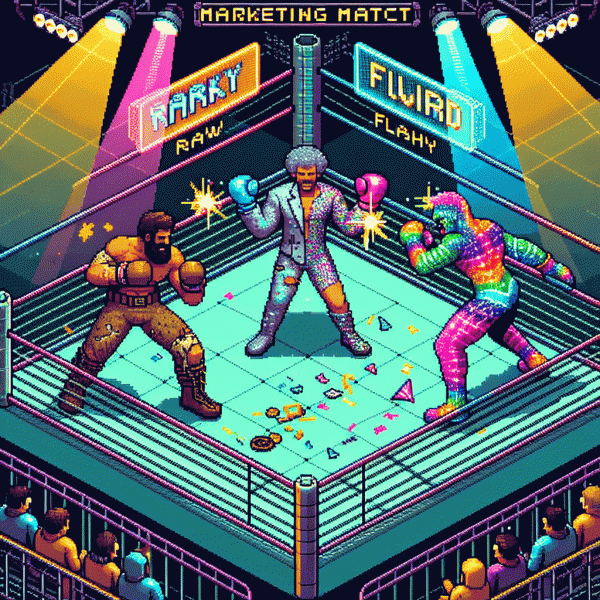
Raw: The unfiltered charm that builds wild trust
Think of raw creative as the backstage pass that lets your audience meet the human behind the brand. Instead of a polished ad, serve short clips of real meetings, honest reviews, or offbeat product tests. That vulnerability acts like social proof on steroids: people trust what feels unedited because it signals there is nothing to hide. Use that trust to seed longer narratives that follow the same tone, and watch engagement move from skeptical to loyal.
Start small, then amplify: build an edits bank that preserves spontaneity while allowing rapid distribution. Here are three tactical riffs you can try right away to make raw feel strategic:
- 🆓 Unscripted: Post a 20 second lesson or mistake caught live to normalize imperfection and spark conversation.
- 🐢 Slow-Burn: Keep a pinned series of behind the scenes clips so newcomers find context and returning fans feel rewarded.
- 🚀 Direct: Ask one simple question on camera and post the best replies as UGC to create a feedback loop.
When you want a reliable lift without compromising authenticity, think about scaling with partners who understand organic signals. One simple way to explore safe amplification is to check out a trusted option like safe instagram boosting service that focuses on legitimacy and retention rather than hollow spikes.
Measure what matters: watch comment sentiment, share rate, watch time, and repeat visits rather than only vanity metrics. Repeat the raw format that drives meaningful actions, rinse and repeat, and keep squashing the urge to overproduce. The point is not to be rough for the sake of it, but to be human where it counts.
Flashy: High gloss hooks that punch above their weight
Glossy creative lures attention like a carnival mirror, reflecting big promises in 0.5 seconds. Start with a single, unmissable visual: a silhouette, a pop of neon, or a face with an intense expression. Pair that with a short audio sting and a clear micro headline so viewers know what they will gain before they decide to keep watching.
Make the first three seconds count and then compel a single action. Run tight A/B tests focused on view through rate, click through rate, and cost per action to learn which shiny hook actually works. When you need fast scale to validate ideas, try boost instagram to reach real audiences and cut time to insight.
Think of flashy as a toolkit for rapid persuasion
- 🚀 Reach: push the creative to new audiences to find latent demand quickly.
- 💥 Engagement: use kinetic edits and a punchline to force replays and shares.
- 👥 Precision: pair visual hooks with tight targeting to avoid wasted impressions.
Finally, treat gloss like seasoning, not a main course. If the idea is weak, polish will only extend the shelf life for a short while. Save budget for the creative that survives testing, then scale that winner with confident media buys and measurement. Keep it bold, test ruthlessly, and let the data decide which sparkle deserves the spotlight.
Weird: Left field ideas that spark scroll stopping curiosity
Want attention that feels accidental but engineered? Think of weird ideas as curated curiosities: small, odd moments that make someone pause mid-scroll and tilt their head. The trick isn't shock for shock's sake — it's surprise with purpose.
Start by forcing strange combinations: mash unrelated cultural signals, time periods, or product uses. Give a copywriter a painting, hand a designer a recipe, or pitch a celebrity voiceover to a vintage appliance. Constraints breed the oddest, most shareable sparks.
Execution should be playful and surgical: a 2–4 second visual gag, an unexpected soundbite, or a caption that reframes a mundane scene. Prototype as a story or 6-second cut; if curiosity rises, scale the idea into longer formats.
Worried about brand safety? Use micro-tests. Run short paid placements, track retention and comments, then iterate. Keep a "weird wins" ledger so you can trace which oddities align with conversions versus those that merely get likes.
- 🆓 Surprise: Hand out a bizarre freebie tied to a tiny challenge — people share the story.
- 💥 Juxtapose: Pair your product with an impossible setting and film reactions.
- 🤖 Animate: Give inanimate objects a deadpan personality and a tiny mystery to solve.
Make weird part of your sprint cadence: schedule a monthly oddball test, measure curiosity metrics (watch-throughs, replies, time on creative), and let the winners migrate into bigger campaigns. Weird scales when it proves it converts.
When each style wins: channel, budget, and goal cheatsheet
Think of this as a compact referee card: Raw wins when trust is the metric because unvarnished stories, candid flaws, and product origin build authenticity; Flashy wins when polish, movement, and glossy editing drive clicks and conversion velocity; Weird wins when a magnetizing oddity forces shares, memes, and cultural conversation. Let goals pick the style, not ego.
Channel cheat codes: short form socials like tiktok, instagram reels, and snapchat reward Flashy and Weird hooks that stop thumbs; long form (youtube, podcasts) reward Raw narrative arcs that earn time; linkedin prefers literate Raw with tidy finishes; niche communities (discord, telegram, reddit) tolerate Weird experiments. Budget guidance: bootstrap with Raw, funnel experiment money to Weird, scale Flashy when signal is strong.
Goal playbook with micro tactics: awareness = test 3 Weird hooks in 2 week bursts; conversions = run Flashy creatives with one clear CTA and A/B headline tests; retention = deploy Raw personalization and serialized stories. For a fast reach test on short form, try a paid nudge like get tiktok views today and measure watch depth before you scale.
Operational checklist: run a four week test window, track reach, watch time and conversion lift, and kill the lowest performer. Reserve one creative slot for wild experiments and one for reliable winners. The winning play is mixing styles strategically: raw backbone, flashy amplification, and weird spikes when you need gravity.
Test like a pro: run fast experiments and crown a champ
Think of your creative lab as a boxing ring: put raw, flashy, and weird in front of an audience, but don't let the fight go to a decision by fandom. Run short, surgical experiments that expose winners quickly by forming tiny hypotheses—what single change will move the needle?—and commit to a strict timebox so results do not drift into opinion.
Pick one clear metric per test: CTR, play rate, micro-conversions, or CPA. Estimate minimum sample sizes with quick rules of thumb (a few thousand impressions for click signals, hundreds for view-based metrics) and predefine stopping rules. If stats feel scary, use pragmatic thresholds: stop when a variant leads for two sequential windows and the lift is meaningful to your business.
Design lean variants. If the raw creative trades polish for honesty, the flashy one leans on motion and polish, and the weird one subverts expectations, test only the creative plus one changed element—headline, opener, or CTA—so you can trace causality instead of guessing which tweak mattered.
Watch early velocity and audience slices, not just final conversions. A losing creative is still intelligence: note when and where it failed. Log creative file names, timestamps, audience cohorts, and placement details—these small notes turn into pattern-recognition fuel faster than a new brief.
When a champ emerges, scale in increments: increase spend gradually, refresh surrounding assets, and run follow-ups that hybridize the winner's strengths. Keep testing as an ongoing sport—short rounds, quick learnings, and one impartial referee: the data.