Performance vs Brand: The One-Track Myth Killing Your Campaigns — Do Both and Win Bigger
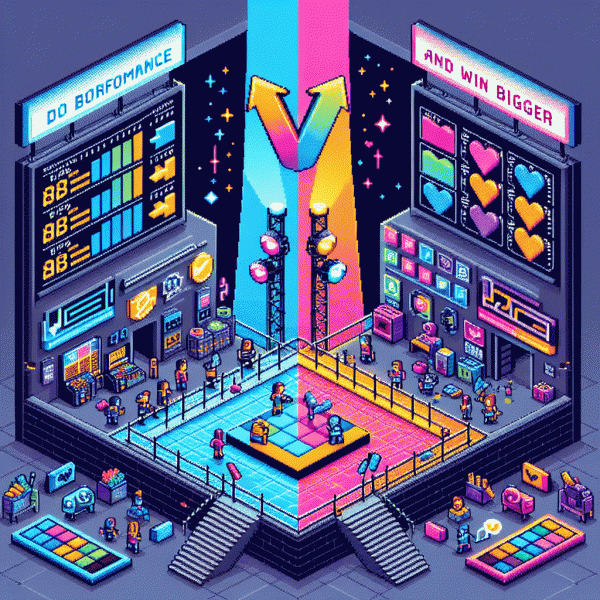
Stop the Either Or: Make Performance Fuel Brand and Brand Lift Conversions
If your media plan still treats conversion-focused ads and brand work like two rival camps, try one simple mental shift: make performance channels your creative R&D. Use low-cost acquisition buys to surface the hooks, visuals and claims that actually change behavior, then wrap those winning assets in brand-forward creative that reinforces memory and meaning at scale.
Practical moves: bake brand cues into test creatives from day one—logo placement, brand story beats, a signature color or sound—and read both short-term clicks and longer-term lift. Run rapid A/B creative cycles to find the lines that move conversion, then promote winners into higher-frequency, emotionally richer executions that build recall without killing ROAS.
Follow a tight loop: Test cheap, measurable variants; Scale the ones that show conversion correlation; Measure with lift studies, incrementality and on-site conversion cohorts. Layer sequential funnels so prospects see attention-driving spots first and conversion-focused nudges later. The result: faster learning, cleaner attribution and creative that earns both attention and action.
Stop asking which side to back and start designing campaigns where brand is the fuel and performance is the dynamo. Create cross-functional rituals, share dashboards that show memory + conversion together, and treat every performance dollar as a test that can make your brand stickier — and your results bigger.
The Split-Stack Plan: Upper Funnel Fame with Lower Funnel Gains
Think like a DJ mixing two decks: one plays memorable hooks while the other drops the conversion beat. The split-stack plan pairs a broad, fame-first upper funnel with a tight, ROI-first lower funnel so both reinforce each other instead of competing for scraps. The trick is deliberate separation with relentless communication — separate buys, separate KPIs, shared creative DNA.
Operationalize it with clear roles and budgets. Let the upper stack buy reach, emotion, and memorability across big placements, while the lower stack chases action with offers, urgency, and tight frequency caps. Allocate a stable baseline to each stack and reserve a test pot to accelerate winners. Keep creative families aligned so a brand moment can be repurposed as a conversion hook when metrics prove out.
Use a tiny playbook for each stage and run them together:
- 🆓 Awareness: Serve broad story ads optimized for reach and attention metrics to seed demand.
- 🐢 Consideration: Layer in helpful, social proof driven content to move interest toward intent.
- 🚀 Conversion: Retarget engaged cohorts with offers, urgency, and clear CTAs to close the loop.
Measure with both lenses: brand lift and short term ROAS. Run holdouts and simple experiments so you can attribute the halo effect back to the upper funnel. Tag creatives and audiences to let learnings cascade from fame into performance. Iterate weekly, promote assets that increase recall into the conversion stack, and cut what does not move either needle.
This is not a compromise. It is a compounding engine: fame fuels performance, performance funds fame. Build two stacks, let them trade signals, and watch campaigns scale with higher efficiency and better long term value.
Creative That Converts: Brand Led Messages That Drive Clicks and Recall
Great creative that converts borrows brand signals to earn attention and clicks. Lead with a distinct visual or sonic cue tied to the brand palette or logo, then hit a benefit-first line. The job in the first three seconds is simple: show why the viewer should care and where to go next. Use bold framing and one clear action to reduce cognitive load and increase immediate response.
Make recall work like a faucet — repeat the motif, not the whole message. Pair a memorable hook with different CTAs and offers so test results reveal what drives behavior versus what just delights. Build short loops, a signature sound or motion, and a microheadline that lands the value. Run parallel variants: hero change, angle change, and CTA change, then measure which lifts CTR and ad recall.
Operationalize this with modular templates. Separate hero frames, headline overlays, and CTA cards so editors can swap elements without losing brand consistency. Refresh creatives on a predictable cadence to avoid ad fatigue while keeping that core brand cue intact. Control frequency and use sequential ads to tell a mini story that nudges users closer to conversion without sacrificing brand warmth.
Small checklist to run right away: pick one unmistakable brand cue and bake it into every creative; launch three variants across hero, message and CTA; prioritize two metrics — CTR and ad recall — and iterate on the winner. Think of this as both sides of the same coin: emotional memory plus measurable action equals campaign lift with personality.
Budget Alchemy: One Media Plan, Two KPIs, Zero Compromises
Think of budget as chemical element, not a zero sum fight. Split your spend into complementary streams: one that drives immediate conversions and one that builds memory and preference. That dual-track approach stops you from pitting short term metrics against long term value. Practically, set a simple rule: protect a brand baseline for reach and attention while letting a performance pool iterate on offers, audiences, and creatives.
Choose a budget archetype that fits your growth stage and stick to it for at least one learning cycle:
- 🆓 Baseline: steady share for awareness and warmth that keeps your brand in market without spiking CPA.
- 🐢 Slow: conservative test budget focused on quality audiences and creative refinement.
- 🚀 Fast: aggressive activation money for scaling winning ad sets and seizing demand.
Pair each pool with one clear KPI and a bridge metric. For performance track conversions and CAC; for brand track reach, ad recall, or engagement uplift. Use short AB windows to move dollars from Slow to Fast when a creative or segment outperforms, and let the Baseline run uninterrupted so your long term signals dont collapse. If you need a quick boost to test activation tactics on a channel, try a safe instagram boosting service to validate creative resonance before scaling.
Operational checklist: set distinct budgets in your DSP, align creatives to intent (story for brand, CTA for performance), automate rules to reallocate after causally valid wins, and report both KPIs side by side so nobody gets surprised. Do both well and budgets stop being a compromise and start being your competitive edge.
Proof or It Did Not Happen: Measure MMM, MTA, and Incrementality Without Slowing Down
Measurement does not have to be the speed bump that kills momentum. Treat MMM, MTA, and incrementality as layers in a single fast engine: MMM gives the long view, MTA provides path-level nuance, and incrementality proves causation. The trick is to thin each method down to its essentials so they can run together without requiring a full stop.
For MMM, move away from heavy weekly rebuilds and toward a rolling cadence. Aggregate at the right granularity, keep priors simple, and automate feature refreshes so models update on schedule rather than by manual ritual. A compact MMM that surfaces trends and bias corrections is far more useful than a perfect model that arrives too late to act on.
MTA should be event driven, not batch bureaucracy. Use short lookback windows, probabilistic touch scoring, and streaming joins to keep attribution actionable. Where data is sparse, let MTA feed a probabilistic uplift that can be calibrated against MMM outputs. That creates a conversation between systems instead of a turf war over which number is correct.
Incrementality experiments do not need to be monolithic to be valid. Run micro RCTs, rotating holdouts, or targeted creative splits that are powered for the key decision, not for academic perfection. Leverage synthetic controls and causal forests to rescue noisy results, and treat tests as plumbing that stay in place while campaigns run, not as one off roadblocks.
Build a lightweight measurement stack that automates sampling, analysis, and calibration so insights flow in minutes or hours rather than weeks. If you want a pragmatic starting point, check the facebook boosting site for quick ways to pair rapid experimentation with scalable attribution. Do the math, ship the creative, and let proof and momentum run hand in hand.