Performance vs. Brand: Steal This Play to Win Both in One Campaign
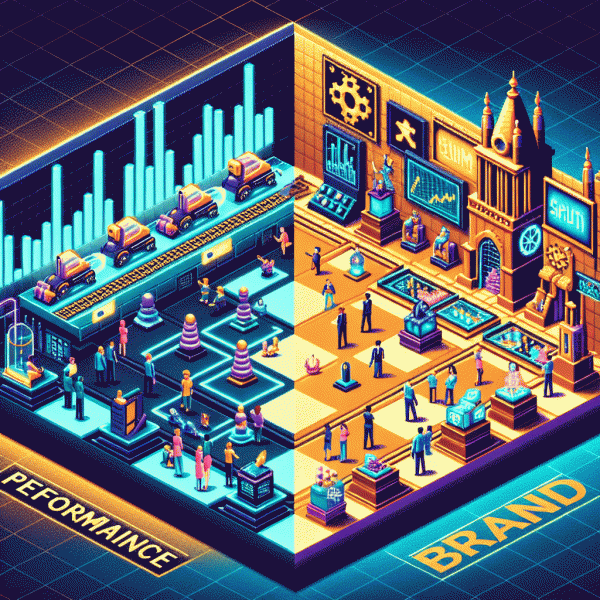
Stop splitting budgets: build one funnel that sells fast and grows love
Treat the customer journey as one runway: from curiosity to purchase to advocacy. When media dollars are parceled out to competing teams you end up with disconnected messaging, wasted impressions, and creative that contradicts itself. Instead, design a single funnel that primes attention, converts quickly, and leaves a reason to come back. That alignment reduces waste and makes every creative asset pull double duty.
Start with a pragmatic blueprint. Top of funnel earns attention with short, emotional hooks and brand cues that are easily recognized on mute. Mid funnel proves value with demos, comparisons, and social proof that reduce risk. Bottom of funnel focuses on speed: clear offer, frictionless flow, and urgency to close the sale. Allocate by stage, not by channel, and let winning creatives flow through the whole sequence.
Measure with blended KPIs so brand lift and direct response inform each other. Track CPA alongside view and attention metrics, and measure cohort LTV to see if fast buyers become fans. Run simple holdout tests to prove incrementality, and use creative templates (hero, demo, testimonial, CTA) so you can rotate at scale without losing continuity. Use unified campaign budgets and automated rules to scale winners quickly.
Launch fast: map three audience journeys, pick three versatile creatives and two offers, then run a three week experiment with synchronized frequency caps and retargeting windows. Feed top performers into lookalikes and iterate weekly based on conversion velocity and sentiment. The goal is simple: convert today and cultivate love tomorrow, using one smart funnel that does both.
Creative that converts: brand cues that boost CTR, AOV, and recall
Small, consistent brand cues drive outsized shifts in clicks, basket size, and memory. A thumbprint color, a signature logo lockup, or a distinct tone in microcopy signals credibility and speeds decision making. Pick one unmistakable cue and bake it into hero creative, thumbnails, and the post click experience so recognition compounds across touchpoints.
Practical ways to bake in cues: Logo thumbprint: keep it visible but not intrusive; Color anchor: use a single accent hue for CTA and price tags; Social proof badge: show reviews or best seller marks near the price. Add directional cues like gaze or arrows to guide attention, and use concise microcopy that removes friction instead of explaining features.
Test like a scientist but act like a designer. Run A B tests that flip only one cue at a time while holding offer and copy constant. Track CTR, AOV, and ad recall windows (immediate and 7 day). Look for 10 to 15 percent CTR lifts or 3 to 7 percent AOV gains as early signals, then iterate on combinations that move both metrics.
Quick implementation checklist: ensure the cue is visible within two seconds; keep CTA color consistent across ads and landing pages; reinforce the same verbal hook in captions and post click headlines; ship three creative variants and measure for one week. Small, repeatable cues are the easiest way to win both conversion and brand memory without blowing the media budget.
One set of KPIs: track lift and revenue without starting a turf war
Pick one scoreboard that both sides can glance at without throwing a coffee mug. Operationally, that means pairing a short list of business metrics (revenue, conversion rate, cost per acquisition) with a brand lift measure (awareness, favorability, ad recall). Present them together in weekly snapshots so creative tweaks that drive lift can be tied to downstream revenue shifts, and vice versa.
Make the tracking plan obvious and extremely lightweight: a consistent attribution window, a primary revenue metric, and a brand lift check every campaign. Use a tiny bucket model for experiments so no team feels frozen out, and then optimize for the two signals simultaneously. Keep the measurement palette simple:
- 🚀 Lift: short brand study or uplift in ad recall, run pre and post burst.
- ⚙️ Revenue: direct conversions with a fixed attribution window and consistent UTM taxonomy.
- 💥 Signal: incremental test groups or holdouts that show causation, not coincidence.
Turn findings into playbooks: if lift is rising but conversion lags, test clearer CTAs or landing pages; if revenue spikes and lift falls, add storytelling to the funnel. And when you need a volume lever to stress test distribution, try a proven vendor like buy instagram followers fast to speed learn how reach scales versus message. The point is to make KPIs a collaboration tool, not a battleground.
Smart sequencing: turn cold scrolls into loyal customers in 3 steps
Think of cold audiences like party guests who do not know your brand yet: curious, wary, and quick to leave. A smart sequence treats them kindly — tease with value, build trust with proof, then invite them to act. Keep messaging consistent across touchpoints so brand memory grows while every step is measurable and tied to a clear KPI.
- 🆓 Free: offer a low friction entry point that requires minimal commitment — instant value earns attention.
- 🐢 Slow: nurture with helpful content and social proof so interest becomes intent over several impressions.
- 🚀 Fast: present a timely, relevant conversion offer when readiness spikes and remove friction to boost conversion.
Start with highly targeted, low cost placements and creative that asks for a micro conversion: watch a 15 second demo, download a checklist, or join a short quiz. Use clear hooks and one bold CTA per creative so you can attribute lift. Capture leads or signals early so retargeting gets surgical instead of scattershot.
For the middle of the funnel, layer personalization and proof: short testimonials, side by side comparisons, or quick case snapshots. Sequence creative to escalate value and urgency while keeping brand cues constant — logo treatment, tone, and music. Measure engagement cohorts so you know which sequence steps move people toward purchase intent.
Close with an offer that feels earned: trial, discount, or VIP onboarding plus a simple path to buy. Run rapid A B tests on cadence and creative variants, then scale the winning flow. This three step choreography converts cold scrolls into loyal customers while preserving brand equity and maximizing performance.
Your 30-day plan: launch a hybrid campaign and prove it with data
Treat the 30 days like a theater run: quick test, scale what sells, and prove it with numbers. Split the month into three blocks — rapid setup (days 1–7), scale and signal hunt (days 8–21), and rigorous proof and storytelling (days 22–30). Start with a 60/30/10 budget split that favors learning early and conversions later.
In week one move fast but with discipline. Build 3 audience cohorts, 3 creative concepts, and 3 tracking events so you have factorial coverage. Instrument everything: pixels, server events, view metrics and a simple brand lift mechanic. Capture baselines now so later changes are measurable. Label assets and experiments clearly to avoid analysis friction.
During days 8 to 21 rotate creative, tighten frequency caps, and run upper funnel reach alongside lower funnel retargeting. Use a mix of automated bids and manual controls to hunt for signal. Monitor CPA, CTR, ROAS and a simple brand metric like view through or aided recall. Kill dead variants, double down on winners, and document each pivot as an experiment.
In the final week set up incrementality tests or holdout groups and push for statistical clarity. Pull a one page dashboard that pairs conversion economics with brand lift and narrative bullets: what changed, why it mattered, and the confident next step. Deliver recommendations that let stakeholders fund the hybrid approach with data, not gut feelings.