No Followers? No Problem: The Funnel That Converts Without Social Traffic
Where to find buyers when social goes silent
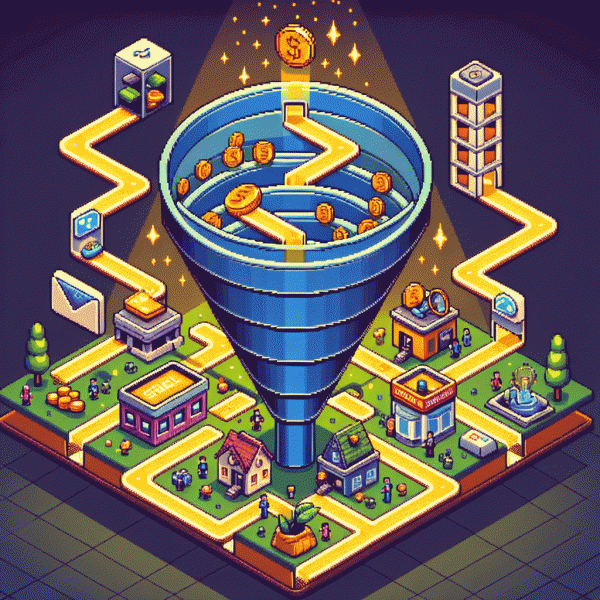
Stop assuming buyers all hang out on feeds — they live where intent and attention meet. Think of your funnel as a map: highways of search, cozy community lanes, and marketplaces bustling with shoppers. When social goes quiet, you redirect traffic to channels that actually convert and pay the bills.
Start with search: optimize pages for buyer intent, not vanity keywords. Build a few long‑form product comparison pages and FAQs that answer the exact questions your customers type at 2 AM. Use clear CTAs, tight copy and product schema so Google understands you're serving buyers, not browsers.
Marketplaces and platforms are a shortcut to purchase-minded audiences. Fine-tune your listings on niche storefronts, app stores or ecommerce channels, collect reviews fast, and turn listing analytics into product tweaks. A small price adjustment or clearer photos can unlock a flood of conversions without any social posts.
Communities still convert if you play the value game. Be the helpful expert in forums, Reddit threads, Quora answers and niche Discord or Slack groups. Share tactical advice, then invite people to a specific resource—a calculator, checklist or demo—that captures their email and permission to follow up.
Paid channels and direct outreach are practical when speed matters. Run targeted search ads for high‑intent queries, use retargeting to chase warm visitors, and pair that with concise cold email or LinkedIn sequences. Keep offers simple: a free audit, a trial, or a limited discount that funnels straight to a landing page built to close.
Finally, stitch everything together with partnerships and a conversion ladder. Launch webinars, affiliate deals, and a lead magnet that feeds a short nurture flow: lead magnet → email value series → low-ticket offer → upsell. Track every step, test copy and price, and treat every non‑social channel as a repeatable water source for your funnel.
Lead magnets that make people say take my email
Lead magnets aren't fancy when they work — they're obvious. Give a one-sentence promise that removes a single scary obstacle and people will hand over their email like it's free coffee. Think: a 2-page checklist that stops time-sucking setup, a 5-minute video that fixes a recurring mistake, or a calculator that proves your plan actually saves money. Label it clearly and solve the immediate itch.
Make the magnet format play to your strengths. If you write well, offer a swipe file with subject lines and templates. If you're analytical, build a quick ROI calculator. If you teach, ship a 3-email mini-course that delivers a tiny win. Keep each piece scannable, printable, and usable in under ten minutes — people trade the least for the most tangible returns.
Lower friction to near-zero. Use a single-field opt-in, promise instant access, and show a screenshot or sample so skepticism hits the floor. Use bold microcopy like “Yes—send my 3-email launch sequence” or “Get the 7-step checklist now”. Deliver via email immediately and include a clear next step in that first message so momentum doesn't evaporate.
Test two magnets, measure sign-up rate and first-week engagement, then double down on what nudges people forward. In that follow-up sequence, pack one actionable tip, one case example, and one friendly ask to reply. Repeatable, useful, low-friction — that's the hook that makes strangers swap an address for an asset. Pick one, ship it today, iterate tomorrow.
Landing page tweaks that double opt-ins
Tiny landing edits are the secret weapon for funnels that do not rely on followers. Start by treating the page like a one-question test: can a visitor answer "What is in it for me?" in two seconds? If not, rewrite the headline to a benefit-first sentence, tighten the subhead, and cut visual clutter so the path to opt-in is obvious.
Next, make the experience frictionless. Remove the top navigation, reduce form fields to a single meaningful question, and replace generic CTAs with specific action promises like "Get my 15-minute checklist." Swap long paragraphs for three short benefits and a single trust cue (user count or a bite-sized testimonial). Always A/B each change so you know which tweak actually moves the needle.
- 🆓 Free: Make the offer explicit—"15-minute checklist" beats "free resource" every time.
- 🚀 Fast: Test one-field signup vs multi-field to see which holds cold traffic.
- 🔥 Urgency: Add a simple time-limited phrase and measure the lift it generates.
Measure rigorously: expect 2–3% lift per sensible change and let wins compound. Use a one-line hypothesis ("If we X, conversions will Y by Z%"), run one test at a time until you have 1k visitors or seven days of data, then ship the winner. Small, iterative wins on the landing page beat waiting for social virality.
Email sequences that sell while you sleep
Think of your email sequence as a tiny 24/7 salesperson: it welcomes new leads, delivers value, builds trust, and nudges for a sale while you grab sleep. Start with a welcome that gives an immediate micro-win and sets expectations for frequency and tone.
Design a simple timeline: day 0 deliver the lead magnet and a how-to; day 2 share a deeper tip; day 5 showcase a short case study; day 9 give a soft pitch; day 14 present a clear offer with a deadline. Keep each email focused on one action and measure clicks rather than vanity metrics.
- 🆓 Free: lead magnet delivery and quick usage tips to build rapport and trust.
- 🐢 Slow: nurture content that demonstrates expertise without asking for much.
- 🚀 Fast: a tight offer sequence designed to convert within two weeks.
If you want to test social proof quickly to boost conversions try buy instagram followers instantly today as a temporary experiment, then focus on improving open rates and onboarding to keep those subscribers engaged.
Automate with simple tagging: tag by clicks and send follow ups only to engaged subscribers. Split test subject lines, preview text, and send times. Aim for a sequence that covers value, proof, and a gentle but clear call to action so it pays for itself after the second sale.
Plug the leaks: metrics that tell you what to fix next
Think of your funnel as a leaky bucket: every page, popup and button can lose customers. Start by mapping the journey — source → landing → product → cart → checkout — and instrument each step with events and UTMs. Use session recordings and funnels in your analytics to get the exact drop-off numbers you can act on.
Track metrics that point to real leaks: channel conversion, landing bounce and time-on-page, micro-conversions (newsletter signups, add-to-cart), cart abandonment, checkout completion and post-purchase engagement. Heuristics: channel CR <2% worries, bounce >60% suspicious, cart abandonment >70% red, email open <20% needs work.
When a metric flags, prioritize by impact: multiply traffic volume by drop rate to find the biggest revenue leaks. Run one hypothesis at a time — shorten forms, clarify the value proposition above the fold, speed up images, or add targeted social proof — and A/B test the change. Segment results by device and acquisition source; many "mystery" drops vanish when you fix mobile UX.
Make a rapid triage: measure, prioritize, hypothesize, test, repeat. Start with the lowest-effort, highest-impact wins — a faster checkout or clearer CTA — then scale what works. Treat metrics like a backstage pass: even without a giant following, the data will show where to pour fuel and where to plug holes so your funnel actually converts.