Marketing Automation Secrets: Automate These, Write Those—Your Conversions Will Thank You
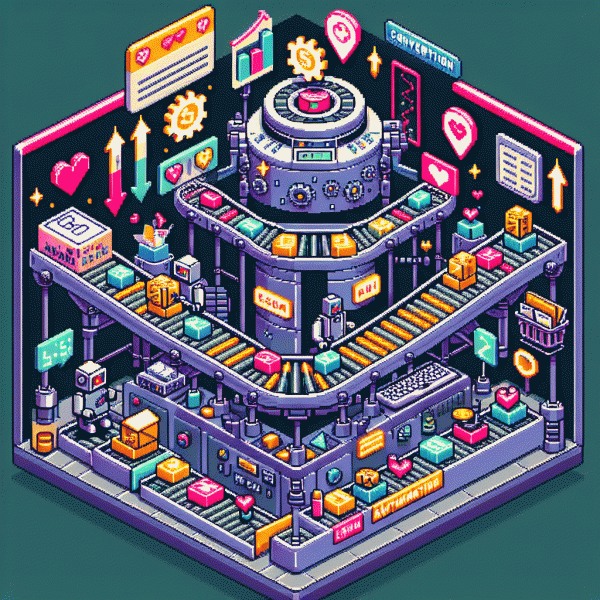
Email That Writes Itself: Triggers, Drips, and the Lines Only You Should Type
Think of your email stack as a sympathetic robot: it reacts to real behavior, delivers tidy follow ups, and leaves the few human lines that actually move people. Build triggers around clear signals — signup, first open, click, cart add, cart abandon, and key page visits — so messages hit while interest is hot and you avoid noise when it is not.
Make triggers actionable and timebound. Send a welcome within minutes with a single value proposition, follow a browse or cart abandon after 1 hour with a low-friction CTA, nudge with social proof at 48 hours, and try a last-chance offer at 5 days. Use dynamic content to swap product blocks and simple tokens for name, recent product, and saved cart total so each mail reads like it was composed for that person.
Design drips as mini-campaigns with a clear aim: onboard, convert, or reengage. A clean three-step drip works wonders: Day 0 quick welcome and next step, Day 2 value and use case, Day 5 proof plus urgency. Automate the scaffolding, but handcraft the parts that create rapport. Write the subject lines, opening hook, P.S., and the human signoff yourself; automate the rest.
Quick checklist: Automate: triggers, timings, product blocks, follow up logic, and basic personalization tokens. Handcraft: subject, first sentence, P.S., and any conditional offer language. Launch small, test two variants, measure conversion per trigger, and iterate until the robot sounds like a helpful colleague.
On LinkedIn, Let the Calendar Click—Save the Hot Takes for You
Treat LinkedIn like a confident assistant: let your calendar post the steady stuff while you keep hot takes and reactions for live moments. Schedule evergreen thought leadership, case studies and testimonial snapshots to keep a reliable beat. Use time windows to test reach, then let automation handle publishing so your feed feels present without burning your day.
Automate the scaffolding, write the glue: prepare templated post frameworks (opening hook, value line, CTA) and auto-fill evergreen details, but override the first 1–2 lines before posting to add context or a fresh opinion. Queue follow-up sequences for new connections, but pause automation when a reply signals a real conversation—those are conversion moments.
Make automation smart: link LinkedIn to your CRM so likes, comments and profile visits create tasks or calendar reminders for outreach. Recycle top performers on a predictable cadence and A/B subject your hooks. Set alerts for high-value names so you can jump in live—automation should surface opportunities, not replace presence.
Quick checklist: automate scheduling, recycling, basic follow-ups and CRM logging; write personalized openers, hot takes, and bespoke replies. Keep the rhythm consistent, the tone human, and save the spicy commentary for moments that need you—your calendar can click, but your conversions will need your voice.
Ad Automation FTW: Let Algorithms Optimize—You Own the Hook and Angle
Think of ad automation as the backstage crew: it handles tempo, placement and the heavy lifting so your headline and creative snag center stage. Hand the algorithms clean signals — conversion events, clear budgets and time windows — and they'll hunt for efficiency. Your job is to craft the emotional hook and the angle that make people stop scrolling. Treat creative like a hypothesis lab: one strong idea, many tiny variations, rapid feedback.
Start each campaign with a compact creative matrix: three hooks, two angles, and four asset types (short video, long video, static, and thumbnail). Label everything consistently so automated rules can aggregate performance by hook or angle. Use dynamic creative to let the algorithm recombine your assets, but keep the naming so you can trace which phrase or visual actually moved people. Don't overcomplicate variables — change one thing per test to learn faster.
Let bidding strategies run — automated bids, target CPA or ROAS — but pair them with human guardrails: floor and ceiling limits, frequency caps, and exclusion lists for converters. Separate prospecting and remarketing with different creative tones: curiosity-first for new audiences, reassurance-first for returning ones. Set scale rules that increase budgets on winners and automatically trim losers; automation is great at allocation, lousy at storytelling, so you orchestrate the narrative.
Measure with intention: include holdouts for lift tests, track both short-term conversions and mid-funnel signals, and log creative performance in a shared playbook. Refresh creative on a predictable cadence to avoid ad fatigue and keep winning hooks in rotation. In short, let machines optimize the plumbing and metrics, and own the one thing algorithms can't invent for you: the irresistible line and angle that actually compels action.
Landing Pages at Lightspeed: Templates Automate, Hero Copy Persuades
Hit the ground running: templates let you spin up landing pages at lightspeed while well-crafted hero copy does the heavy lifting of persuasion. Together they let automation serve personalized first impressions that feel handcrafted, not canned.
Start with modular templates—header, hero, social proof, footer—and parameterize them. Swap images, offers, and microcopy via tokens tied to campaigns so one template generates dozens of relevant pages without manual edits.
Hero copy should state one clear benefit in the headline, remove friction in the subhead, and present a tiny next step in the CTA. Short, specific language converts better than clever ambiguity every time.
Automate hero variants by audience segment and traffic source, then wire experiments into the pipeline. When rules pick the right angle automatically, creative becomes a lever instead of a bottleneck.
Measure impact obsessively: load speed, attention span metrics, CTA click rate, and downstream conversion. Use that data to prune weak templates, double down on winning hero hooks, and feed results back into automation rules.
Actionable starting move: pick one funnel, build a template, write three hero options (benefit, scarcity, social proof), and set rules to rotate them by segment. Within days you will turn a manual task into a conversion experiment engine.
Reports Can Auto-Compile; Insights Need Your Brain (and a Bold POV)
Automated reporting is a miracle for speed: pipelines pull, charts render, schedules send. But a neat PDF with tidy trendlines is not the same as an argument that moves a decision. Think of reports as a potter's wheel: automation shapes the wet clay, but you still need to be the sculptor. Keep automation for grunt work—aggregation, segmentation, and error checks—so your time is spent picking the winning story, not hunting for the numbers. Examples include cohort churn, micro-conversion lift, and creative decay detection.
Make insight work by using a simple ritual every week. First, isolate the single metric most likely to change conversion this sprint and state why in one sentence. Second, translate that sentence into an experiment or copy tweak with a clear success signal. Third, automate the test mechanics you can (audience selection, delivery timing), but do the interpretation manually. Also pull qualitative snippets from customer messages to prove or refute your hypothesis. A bold point of view beats a bland dashboard every time.
Do not confuse automation for autonomy: you can automate a landing page variant that proved best last month, and you can wire alerts to tell you when it slips, but you must declare when to escalate. For social-first tests, marry your data to creative briefs and pipeline winners into your content calendar. If you need a jumpstart for executional muscle, check the authentic instagram growth section for plug and play templates that reduce busy work. Set alert thresholds so automation notifies you only when a real deviation shows up.
Here is the rude but useful rule: if a number does not lead to an action, it is noise. Schedule a thirty minute insight huddle, feed the automation with the outputs, and let the team choose one bold change to ship that week. Rinse and repeat. Be willing to be wrong fast — a bold hypothesis that fails teaches more than a timid plan that never runs. The combination of machine speed and human taste is the secret sauce that lifts conversion from plausible to inevitable.