Landing Pages in 2026: Dead or Dominating? The Truth Will Shock Your CTR
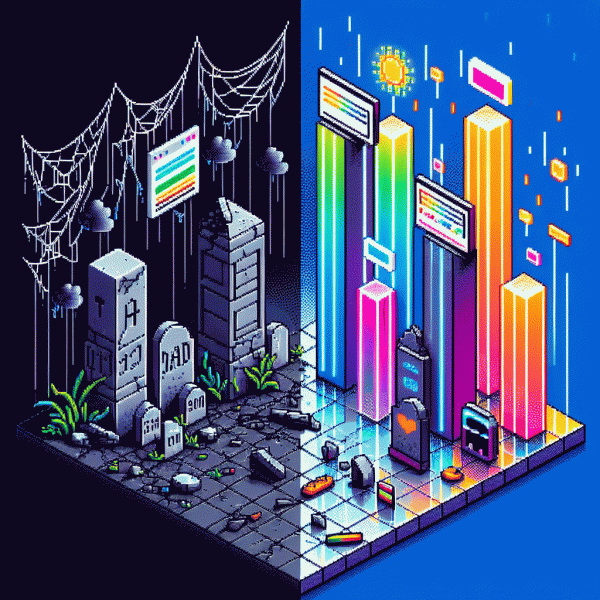
Homepage vs Landing Page: The 5 second attention test
Start the stopwatch: most visitors decide in about five seconds whether they're sticking around. That tiny window exposes the real difference between a homepage and a landing page. The homepage is a welcome mat — it invites exploration, offers multiple paths, and suits browsers. A landing page is a single-lane highway: one clear promise, one desired action. For a quick marketing win, design like a landing page even when you live on your homepage.
Run the 5‑second attention test with this checklist: Headline: can a stranger summarize your offer in one line? Hero: does the visual reinforce the promise or only look pretty? CTA: is there one dominant button above the fold that screams what to do next? Noise: are distracting links, menus, or auto-play removed? Speed: does the page load instantly on mobile? If you fail any of these, your CTR is leaking like a busted pipe.
When you're sending paid traffic, email blasts, or social promos, route people to a dedicated landing page — fewer choices mean higher conversions. Keep the homepage for discovery, brand story, and multi-path journeys. Still, don't treat this as gospel: A/B test headlines, swap images, hide the top nav, and measure. Heatmaps and click maps will tell you if your five seconds are being spent wisely or wasted on fluff.
Here's a quick experiment to try today: split traffic 50/50 between the current homepage and a stripped landing variant for seven days, then compare CTR and first-click time. If the landing wins, celebrate with a coffee and ship the change. Attention is earned in seconds and paid back in conversions — make every one of those seconds earn its keep.
Ad to page match: The conversion duet that still prints money
Think of ads and landing pages as a duet act: the ad is the opening riff and the page is the chorus. When melody, tempo, and lyrics match — headline, offer, visual — the audience stays for the encore. Mirror the exact promise you made in the ad in the hero headline, use the same emotional tone in the imagery, and watch bounce rates drop like a bad remix.
Microcopy is the harmony. Align CTAs, price points, promo codes, and micro benefits so visitors do not experience a cognitive skip. Personalize headlines with dynamic text replacement by source or keyword to preserve intent. Prioritize mobile layout and speed; a flawless duet falters if the stage is slow.
If you want to speed up real world testing, try buy instant real instagram followers as a way to validate social proof and headline resonance quickly. Use that feedback to refine the creative before you pour ad budget into broad scaling.
Measure the performance of the match with UTMs, conversion funnels, and session replays. Track micro conversions like scroll depth, CTA click heat, and time to first interaction. Segment by creative to know which ad actually sings with which page.
Test methodically: change one variable at a time — creative, headline, offer — and run a short, high-traffic test. If two elements are winning separately, combine them and confirm incremental lift. Keep a playbook of winning combos.
Bottom line: ad to page match is not old hat, it is the craft that converts clicks into customers. Tune the messaging, tune the speed, and keep iterating until the duet becomes a chart topper.
When you can skip a landing page: 7 legit exceptions in 2026
In the era of frictionless experiences, a full blown landing page is not always the default weapon of choice. There are seven legit situations where sending people straight to a product card, checkout flow, or in app destination makes more sense: speed beats persuasion, context is already locked, or the user is mid funnel and hates extra clicks. Knowing when to skip saves engineering time, boosts conversion, and keeps your creative lean.
1. Social native checkout: when Instagram, TikTok, or Facebook can complete the sale without an external redirect. 2. App deep links: installs and post install onboarding that land users on the exact screen they need. 3. Returning customers: authenticated users with prefilled carts or one click checkout who want no drama, just the product.
4. Email AMP and single click offers: subscribers act inline without an intermediary page. 5. Flash promotions: time sensitive drops where speed and scarcity trump longform persuasion. 6. QR codes and NFC from offline touchpoints: mobile first flows that should open a purchase path immediately. 7. Branded search clicks: transactional intent where the SERP already did the convincing.
Still, never skip blind. Validate with small A/B tests, confirm tracking and privacy compliance, and ensure the flow loads under two seconds. If any of those checks fail, build a micro landing page instead of the old sprawling template. Treat landing pages like tools in a kit: powerful when used for the right job, useless when overapplied.
AI, personalization, and speed: The 2026 rules for pages that win
Treat every visitor like they arrived on a different planet. AI now stitches intent, context, and speed signals into a single decision: which micro-page to show. The trick is not more blocks, it is smarter defaults—predictive headlines, a call-to-action that already knows the preferred offer, and visuals tailored by last-mile data and frictionless forms for instant signups.
Personalization in 2026 means modular content delivered in milliseconds. Build atomic components that the AI swaps per segment: hero copy, social proof, price, and video thumbnail. Use first- and zero-party signals, privacy-first identity graphs, quick server-side scoring, and simple opt-ins. Keep variations lean; micro-personalization beats broad permutations when you can measure lift quickly.
Speed is not an option, it is the conversion engine. Push rendering to the edge, precompute recommendations, inline critical CSS, and defer heavy JS with progressive hydration. Prefetch critical assets, optimize image formats and font subsets, and instrument FCP and telemetry. Aim for a perceived load under 400–800ms and LCP near one second. Faster pages amplify personalization because viewers actually see the right content.
Execute with a tight loop: hypothesis, fast experiment, data, iterate. Use server-side feature flags and canary releases so AI-driven swaps do not break speed budgets. Track micro-metrics—time to interact, recommendation render time, and segment-level CTR. Automate rollback when a variant slows the page, and build a culture that values speed. That is how pages win: clever AI, crisp personalization, and ruthless speed optimization.
Steal these layouts: Headlines, CTAs, and above the fold that hook fast
Scan behavior first: visitors read the top like headlines on a subway poster. Lead with a tight, benefit-driven line that answers "what's in it for me" in under six words, then follow with a curiosity-rich subhead. Try bold formulas like Benefit + Time ("Get results in 7 days"), Metric + Proof ("200% lift in demo signups"), or Objection + Solution ("No credit card required; cancel anytime"). Treat the headline as a promise and the subhead as the reassurance.
CTAs are micro-conversations, not landmines. Use a bright primary action with a verb-first label — Start My Trial, See Live Demo — and a calmer secondary option for cautious visitors. Add short friction reducers beneath buttons: two words can work wonders (for example, No credit card or Free 7-day trial). Place the primary CTA above the fold and repeat a smaller variant downstream for scrolling readers.
Above the fold is real estate and reputation. Pair the headline with a clear hero visual or 6–8 second loop that demonstrates the product in use; avoid abstract stock photos that slow comprehension. Include two trust cues near the top: logos, a 3-word social proof blurb, or a concise stat. Remove heavy navigation, prioritize load speed, and add a subtle directional cue — arrow, gaze, or motion — that guides eyes to the CTA.
Wireframe to steal: 1) Left-aligned headline, right-side hero video, CTA under subhead; 2) Centered headline, single-column form, tiny trust row above button; 3) Split hero with testimonial carousel under the CTA. A/B test headline tone, CTA verb, and hero media weekly and optimize for click rate before conversion rate. Nail these elements and landing pages will stop being a gamble and start being your best ad spend.