Landing Pages Are Dead in 2025… Or Are They? The Answer Might Double Your Conversions
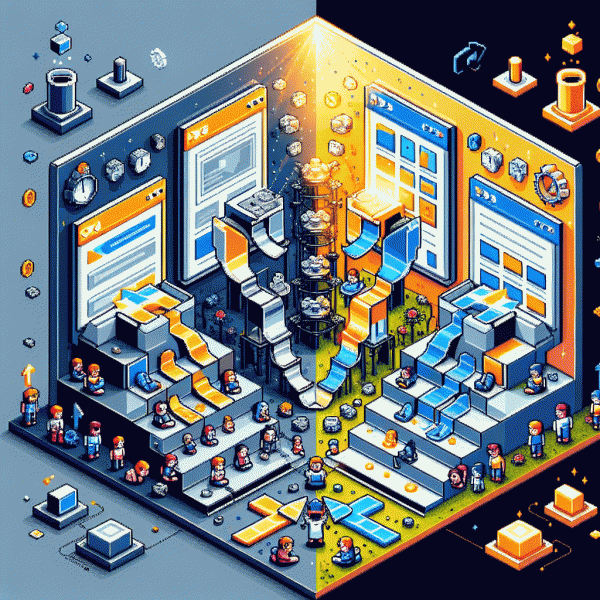
The 7-Second Test: Why Homepages Leak, Landing Pages Convert
The 7 second test is brutally simple: a visitor should know what to do within a few blinks. When they do, they stay and take action. When they do not, they leak away to search, socials, or a competitor. This is why homepages often feel like sieves while landing pages feel like buckets.
Homepages leak because they try to be everything at once. Too many menus, vague value propositions, and competing CTAs create decision paralysis. Visitors glance, search for meaning, and leave. A homepage is a city square; it welcomes several audiences. That can be brilliant for brand, but horrific if your goal is a single conversion.
Landing pages, in contrast, are engineered for a single outcome. They answer three things in under seven seconds: who is this for, what is the promised result, and what is the next step. With focused copy, a single bold CTA, and directional design, landing pages remove friction and channel attention like a funnel.
Want tactics that win the 7 second race? Use a clear headline that states the benefit, a single visible CTA, an immediate credibility cue (micro testimonial or logo strip), a focused hero image, and ruthless visual hierarchy. Speed matters too: shave milliseconds off load time and remove distracting navigation for traffic that comes to convert.
Test relentlessly: use heatmaps, a quick A/B for headline clarity, and track micro conversions like clicks on the CTA. Treat your homepage as a map to experiences, but let landing pages do the heavy lifting. Pass the 7 second test and watch conversions climb.
SEO, Ads, and Algorithms in 2025: Where Dedicated Pages Still Win
Algorithms in 2025 reward clarity and intent, so a purpose-built page often beats a generic site experience. When search models and ad systems parse signals, a dedicated landing gives clean semantic context, precise headings, fast loads and a single conversion path. That clarity is not a fad; it is a reliable signal that multiplies relevance and trust.
Start by mapping intent to content blocks: lead with an outcome, add concise proof, then a single clear action. Optimize schema, H tags, and snippet-friendly answers for AI driven SERPs. Trim JS, prefetch critical resources, and bake Core Web Vitals into your build process so organic visibility does not cost conversions.
For paid channels, alignment is everything. An ad that points to a page with matching headline, offer and visuals boosts Quality Score and lowers CPC. Use variant micro pages for creative tests, then promote the winners. Tie tracking to the page level so revenue per visit becomes your north star instead of impressions.
Treat dedicated pages like experiments not monuments. Launch lean, measure heat maps and session funnels, iterate with real copy and imagery, and scale winners into evergreen templates. Do this and the algorithms will reward you with cheaper clicks and better conversion curves. A/B test CTAs weekly and document learnings across channels.
When You DON'T Need a Landing Page (Yes, Really)
There are times when a full-blown landing page is just friction. If you have a warm audience, a single-purpose ad, or an in-platform checkout, sending people to a minimal inline flow converts faster. Mobile users hate extra taps, and faster paths mean fewer dropoffs. Treat the page as optional, not sacred.
Actionable rule: if the ask is tiny — buy, register, or claim — and trust is already high, skip the page. Replace it with a single-step form, a prefilled payment link, or an in-app modal. Add a real-time support nudge or a guarantee line to remove the last hesitation and watch conversion lift.
Do not confuse skipping a landing page with flying blind. Tag everything with UTMs, send server-side events, and keep pixels firing. Segment traffic by source and test tiny variations in button copy or price. If performance falters, escalate to a focused landing experience, but only after you have optimized simplification.
Want a fast way to practice frictionless funnels on social channels? Try a targeted resource like instagram boost service to drive quality traffic into a single-step funnel — you may find that fast often beats fancy when every second and tap counts.
Swipe These High-Converting Sections: Above-the-Fold to CTA
Above the fold is your handshake: one clear promise, one crisp visual, one bold action. Swipe this: Headline: "Cut lead time in half—without hiring." Subhead: "A 3-step onboarding so smooth your ops will thank you." Visual rule: hero shot plus product-in-context photo or a 3‑second demo GIF that starts on hover. Primary CTA examples: "Get 14‑day access", "See it in action", "Book a 10‑minute demo." Keep the button high-contrast and microcopy beneath it to reduce friction: "No card required • Cancel anytime • Instant access."
Next, stack credibility fast so skeptics convert before they scroll away. Use a single-row social proof band: a bold number, two trust logos, and one sharp testimonial. Swipe lines: Number: "Trusted by 12,430 marketers"; Logo alt: "Used at scale by: [Brand A, Brand B]"; Quote: "Saved us 40% on ad spend—K. Rivera, CMO." Add a compact case-study CTA like "See the 90‑day playbook" and a tiny mobile-optimized badge that says "As seen in [Top Publication]" to seal mid-scroll trust.
In the body, follow problem → symptom → solution in three rapid beats with microcopy that scans. Use microheadlines like: Problem: "Campaigns leak conversions"; Benefit: "Fix funnels in 48 hours"; Proof: "Average lift: +27% conversion." Each module should have one result, one visual (screenshot, chart, or GIF), and one micro-CTA such as "Fix my funnel" or "Show my estimate" to keep momentum. Keep sentences punchy so readers can map value in under 5 seconds.
Finally, close with a high-contrast CTA band that removes doubt: big button + small risk-reversal text. CTA swipes: "Start my free trial", "Show me my lift", "Claim 10 seats free." Add urgency without panic: "Limited onboarding slots this month." Include a tiny analytics cue: "Average users see results in 7 days" and A/B test button color, copy, and one-touch flows; expect top variants to boost conversion by double digits. Swipe, test, iterate—and then tell the team to expect applause, not excuses.
Build Faster: Templates, AI, and A/B Tests that Pay for Themselves
Think of templates as the scaffolding for speed: prebuilt hero sections, social proof modules, and checkout flows that you can drag into a page and customize in minutes. Instead of reinventing layout and copy every campaign, build a small library of battle-tested blocks. When a new offer lands, you should be able to assemble, tweak, and publish a fully productive page in hours rather than days—then focus on learning, not pixel pushing.
Let AI do the heavy lifting that used to eat hours of your copywriter�s day. Use models to generate 10 headline variants, three hero descriptions tuned for different personas, and suggested image concepts. Keep a short prompt library with brand guardrails so outputs stay on voice, then human-edit the best pieces. This is not magic; it is leverage: more variants, faster insights, and less time waiting for creative to come back from review.
Run A/B tests the way a scientist would run lightweight experiments: one hypothesis at a time, clear success metrics, and predetermined stopping rules. Prioritize tests by expected impact and traffic, and treat small wins as compounding interest. Track conversion lift in revenue terms so you can prove tests pay for themselves: a 2% conversion increase on a high-value funnel often covers months of creative and tooling costs within a single campaign.
Combine the three into a pipeline: template library + AI variant generation + prioritized A/B tests, with analytics wiring every step. Automate creating variants, queue the highest-probability winners, and promote proven blocks back into the template library. The result is a ruthless feedback loop: ship fast, fail cheap, and iterate until the math on your conversions looks pleasantly uncomfortable for your competitors. Ship fast, learn faster, and let the numbers decide.