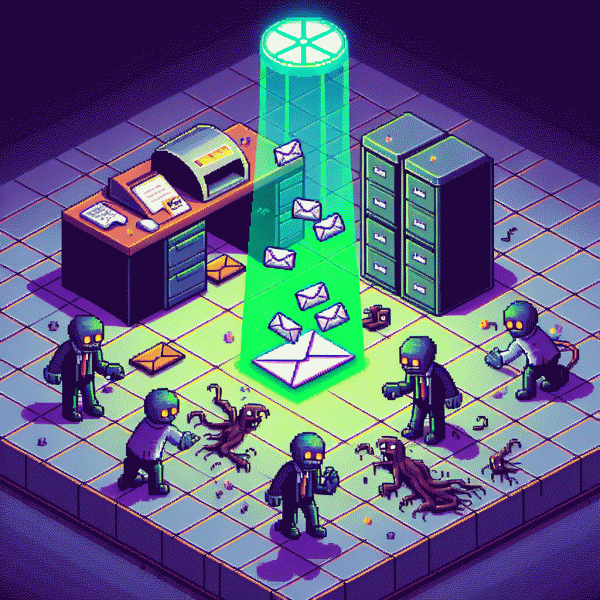
Email Marketing Is Not Dead — You Are Just Sending Zombie Emails
Subject lines that stop thumbs in their tracks
Inbox scrolling is a thumb sport, and your subject line is the first move. Make it short, surprising, and voice-forward — aim for 4–7 words that front-load the reward. On mobile, the first three words win, so drop fluffy lead-ins and start with the benefit. Pretend you are whispering a secret to a stranger who just tapped the screen.
Pull the curiosity gap without cliffhanging into spam: tease something specific but deliverable. Swap vague claims for numbers, timeframes, or tiny personal details. Use personalization sparingly — a name or recent product preference can flip a blink into a tap. Emojis are seasoning, not the main course: one well-chosen glyph can add personality, two can make your message a carnival.
Treat subject lines like micro-copy experiments. Try formulas such as Benefit + Number, Question + Benefit, or Name + Curated Pick and measure. Examples that work better than generic blasts: 3 looks for Friday night, Quick Q about your order, Alex — your new playlist inside. Keep a library of winners you can remix, not recycle.
Then test. A/B headlines, track opens but also downstream clicks and conversions, and watch deliverability signals. Match the preheader to finish the sentence your subject started. If engagement drops, stop the zombie send: prune the list, re-segment, or change cadence. Small tweaks to what you write at the top of the inbox create big life for the whole email.
Segment or spam: the simple math of relevance
Think of relevance as simple arithmetic: fewer irrelevant emails equals fewer yawns and more action. When you send the same message to everyone you trade personalization for convenience. The math is merciless — a small, well-targeted slice of your list can produce as much revenue as a scattergun blast across the whole audience. Targeting scales impact, not just noise.
Turn those words into a formula: expected conversions = list size × open rate × click rate × conversion rate. Example: one campaign to 10,000 with a 15% open, 2% click, 10% conversion gives 10,000×0.15×0.02×0.10=3 orders. Re-targeted segmentation lifting rates to 35% open, 7% click, 15% conversion on 2,000 recipients yields 2,000×0.35×0.07×0.15≈7 orders — more revenue from far fewer sends.
Flip the lens to revenue per send and cost of annoyance. If average order is $50 that unsegmented campaign nets about $150, while the segmented slice returns roughly $350. Plus complaints and unsubscribes dilute future deliverability; sending only to the people who care preserves inbox placement and boosts lifetime value. That is compound interest for your email list.
Practical plan: start with three ruthless segments — buyers in last 90 days, active engagers (opened or clicked in 60 days), and long-dormant contacts. Tailor subject lines and offers: urgency for buyers, education for engagers, reactivation incentives for dormants. Measure lift per segment and extrapolate; small wins in each group add up to a much bigger quarterly lift.
Run A/B tests where the only variable is segmentation. Track revenue per recipient, unsubscribe rate, and complaint rate alongside opens and clicks. If you are still blasting everything to everyone, consider that quantity without relevance is the real zombie epidemic — and segmentation is the exorcism that actually grows your business.
Write like a friend: one promise, one CTA, zero fluff
Write as if you are sending a quick note to a helpful friend, not broadcasting from a corporate podium. Say one concrete thing you will do for them, then show one clear button to get it. Cut everything else. Short sentences, human rhythm, a dash of wit — that combination wakes up inboxes.
Choose a single promise that someone can judge in seconds: a time savings, a clear outcome, or an emotional lift. Replace vague boosters with measures like "save 30 minutes" or "double reply rate." When the benefit is tangible, readers can decide quickly and feel compelled to click — or reply with a question.
Now craft the one CTA. Make the verb obvious, microcopy aligned with the promise, and remove competing links. Prefer action words like Get, Claim, Start and follow them with the specific reward: Get the template, Claim a 10 minute review, Start your audit. Test one CTA color and one placement — that is enough.
- 🆓 Free: Offer an immediate, low friction win so the CTA feels worth it.
- 🚀 Fast: Promise a quick payoff or time estimate to reduce hesitation.
- 💥 Personal: Make language feel bespoke so the email reads like a conversation.
Before you hit send, run a five second test: subject, preview, one promise, one CTA, no fluff. If any line makes someone pause to think, tighten it. Keep voice human, outcomes concrete, and the ask singular — your open rates and replies will thank you.
Set and forget automations that sell while you sleep
You don't need to babysit every send — the real win is building tiny, reliable machines that move people from curious to customer while you snooze. Start by mapping customer moments: opt-in, first purchase, cart hesitations, repeat-buyer love. For each moment, choose one clear objective (welcome = introduce value, cart = recover sales, post-purchase = increase LTV) and one tidy metric to watch.
Next, design the automation: a trigger, 2–4 sequenced messages, and a simple decision split. Personalize with the data you already have — name, recent product, or last action — and write in a human voice. Keep messages tight: subject lines that promise a benefit, preview text that teases, and a single call-to-action. Set sensible timing: don't blast immediately; nudge at 1 hour, 24 hours, and 3 days where it fits.
Measure what matters: opens help diagnose deliverability, clicks show intent, and revenue-per-recipient proves the system is actually selling. A/B test one variable at a time: subject line, offer, or CTA. Use behavioral tags to move people between automations (a clicked email shouldn't get the same sequence again). And don't fear small lists — automation amplifies relevance more than list size ever will.
Finally, add guardrails: a suppression list for angry prospects, frequency caps, and a review cadence (weekly for launches, monthly for evergreen). Export simple templates so every campaign starts from a proven blueprint. When you do this, you stop sending undead, repeat-broadcasts and start sending helpful, timely nudges that convert — warranty: you can absolutely sleep through a sale or two.
Design for the inbox, not a glossy portfolio
Inbox design is more about survival than showmanship. Your gorgeous full-bleed hero might get flattened, images may be blocked, and CSS may be stripped. Start by deciding what must read even if images are off: headline, preheader, and a clear call to action. If those three survive, the email did its job.
Think narrow and humble: 600–700px max, single column, and generous line height. Use inline CSS and swappable system fonts for predictability. Make CTAs real buttons with sufficient padding and contrast so they remain tappable on phones. Place the most important CTA above the fold and repeat it once more toward the end.
- 🆓 Free: include a concise preheader that complements the subject and teases value.
- 🚀 Fast: compress images and prefer SVG icons with good alt text for quick load and clarity.
- 👍 Tested: check dark mode, Outlook, Gmail app, and at least one older client before send.
Accessibility matters: 14px+ base font, clear contrast, and semantic structure. Provide a readable plain-text version and use descriptive link text rather than generic "click here." Small wins here increase engagement and reduce the chance your message becomes invisible clutter.
If you need realistic audience segments to run creative tests, consider partnerships or services that can help scale test lists responsibly, for example real instagram followers fast. Real opens and clicks beat hollow metrics every time.
Prototype in the inbox, iterate based on hard data, and stop designing for a portfolio screenshot. When an email reads well with images off and links clear, you have a message people can act on.