Dark Posts: Still the Secret Weapon Supercharging Social Campaigns?
What Exactly Is a Dark Post (And Why Your Metrics Love It)
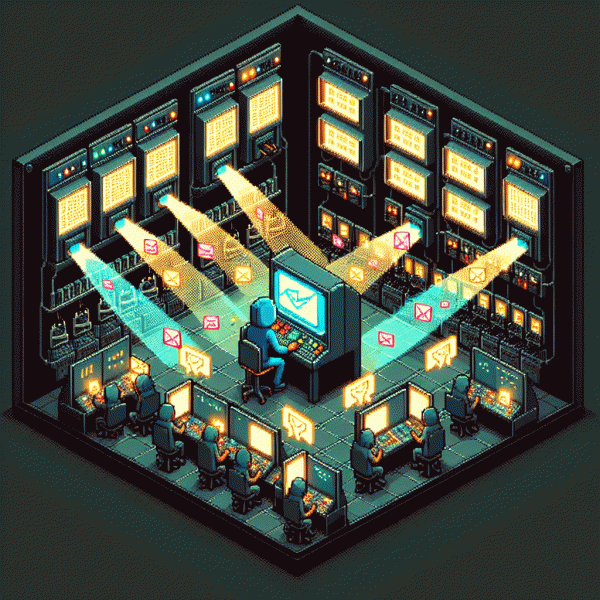
Think of a dark post as an undercover ad: it behaves like a regular social update but never lands on your public timeline. Brands use these unpublished posts to deliver hyper-targeted creative to discrete audience segments without cluttering the main feed or annoying loyal followers. The result is cleaner experiments and ads that feel personal instead of pushy.
Why do metrics light up when you run dark posts? Because audience overlap drops, relevance scores climb, and you can A/B creative, copy, and calls to action without cross-contamination. That means clearer lift measurement, better attribution, and faster optimization loops. A tiny tweak in headline or thumbnail can reveal a big sales bump when you isolate exposures correctly.
If you want to scale testing and amplification without sacrificing control, try a trusted partner for targeted distribution like cheap facebook boosting service. Use small budgets per variant, monitor frequency and CPA, and pause losers early. Outsourcing routine scaling lets you focus creative energy on winners while the platform handles delivery.
Quick, actionable checklist: define two tight segments, build three creative variants, run 7–10 day tests, and track lift with a single conversion pixel. Keep iterations short and data-driven. Do that and your dark posts will stop being secretive and start being seriously profitable.
Targeting Like a Laser: How to Sneak Into the Right Feeds
Sneaking into the right feeds is less cloak-and-dagger and more applied precision: think tiny, super-relevant pockets of attention instead of screaming at a crowd. Use dark posts to deliver messages that match identity signals — recent searches, saved locations, or past interactions — so the ad reads like a whisper to someone who actually cares.
Start by layering signals. Build a core audience from email lists or website visitors, then add behavioral filters like video watchers or cart abandoners. Create narrow exclusions so you do not waste budget on current customers. Spin up a few lookalike sets at different sizes to see where performance peaks, and keep audience overlap under control.
Treat each dark post as a micro-experiment: swap headlines, visuals, and calls to action and serve variations to dedicated segments. Tailor creative to placement — vertical clips for short-form feeds, captions-first for muted autoplay — and set modest frequency caps so your brand stays memorable, not annoying. Measure engagement by segment, not just by campaign.
Actionable starter formula: 1. Test small seed (1–2k). 2. Use lookalikes at 1%, 3%, 5%. 3. Exclude converters and high-frequency viewers. 4. Pause losers within 48 hours. Repeat with creative flips and budget reallocation, and you will find the feeds where your message belongs.
Costs, Risks, and Gotchas: When Dark Posts Backfire
Dark posts are the stealthy ninjas of paid social: precise, targeted, and invisible to the general feed. That stealth can be money-saving magic or a money-burning mystery. Hidden campaigns often escape regular reporting, so a runaway creative or mis-targeted audience can siphon budget for days before anyone notices—leading to surprising month-end bills and hollow ROAS figures.
Common costs aren't just dollars; they're lost learnings. When experiments live only as dark posts, A/B test results fragment, insights don't cascade to organic strategy, and teams repeat mistakes. Financially, mis-segmented dark posts inflate CPMs and conversion costs; operationally, they create blind spots that slow optimization cycles.
The higher-risk stuff is messier: policy violations tucked away in dark ads can trigger account audits, and negative sentiment can fester unseen until it spills into public posts. Add ad fatigue—same creative shown to the same micro-audience—and you'll see engagement drop while costs climb. Quick remedy: enforce frequency caps, rotate creatives, and centralize a lightweight ad library so no campaign operates as a rogue agent.
Governance beats guesswork. Insist on strict naming conventions, version control, and a one-sentence intention for every dark post so audits are fast. Daily dashboards that flag unusual spend spikes and a pre-launch checklist (target sizes, creative burn rate, fallback messaging) turn dark-post risk into manageable operational hygiene.
You can keep the advantages of stealth without the nasty surprises by treating dark posts like mini product launches: plan, measure, and retire. For teams that want a safe, reliable toolkit to augment small-scale experiments, consider a vetted partner—here's an option that focuses on credibility and compliance: safe to buy instagram likes.
Creative That Converts: Stealthy Ad Formats That Win on Facebook
Feed fatigue is real; the easiest way to cut through is not louder creative but stealthier formats that feel native. When paired with dark posts that target tiny audience slices, these ad types act like friendly nudges instead of billboards. The trick is relevance over volume.
Go modular: Carousel: micro stories for product bundles and split testing different hooks. Short looped video: three second loops that build familiarity. Instant Experience: lightweight in‑app landing pages that reduce friction. Image sequences: storyboard a how to or transformation in three frames. These formats let you tell tiny experiments to precisely the people who care.
Tactical rules to apply now: open with a human face or logo free hero in the first three seconds, design for sound off with clear captions, prefer square or vertical crops on mobile, and run three creatives per audience to learn fast. Rotate assets every four to seven days to avoid creative decay and tag winners for scale.
Start small, measure CTR and micro conversions, then scale the format that raises both. The payoff is straightforward: stealthy formats plus granular dark post targeting lower CPMs, increase relevance, and give cleaner insight into what actually converts. Treat creative as a conversion engine, not a poster.
Playbook: A/B Tests, Budgets, and Frequency Without Burning Your Audience
Think of dark posts as your lab for low-risk experiments: run controlled A/B tests off the main feed so your brand voice stays clean while you learn. Start with a crisp hypothesis—"Creative A raises CTR by 15% vs Creative B"—and pick a representative audience slice. Put a modest test budget behind it (aim for roughly 10–20% of the overall campaign) and cap frequency early to 1.5–2 impressions per week to avoid fatigue.
Structure the matrix simply: 3 creatives × 2 audiences × 2 CTAs is plenty to start. Keep one control ad to benchmark baseline performance. Use time-boxed windows of 7–10 days so you avoid timing bias, and prioritize conversion lift and CPA over vanity wins. If a variant clearly wins, don’t instantly pour your full budget into it—scale deliberately and keep monitoring.
Budget pacing and frequency hacks to steal:
- 🆓 Test: Start micro—small daily budgets help you weed out losers fast without overspending.
- 🐢 Slow: Ramp in measured increments (20–40%) to watch CPA behavior; sudden spikes often mean audience exhaustion.
- 🚀 Scale: Once performance stabilizes, shift 60–80% of spend to winners and inject fresh creatives to refresh reach.
When scaling, use a burn-rate rule: double spend only if CPA stays within a 10–15% band and frequency remains healthy. If CPA rises by 20%+, pause, re-test creative variations, or expand audience lookalikes rather than increasing bids. Always keep a control arm running to catch platform drift.
Make reporting simple: a weekly snapshot of CTR, conversion rate, CPA, frequency, and a fatigue flag keeps decisions data-driven. Archive creative flops so you do not repeat mistakes. Dark posts are not about being sneaky—they let you learn fast, protect your main feed, and scale winners without burning your audience.