Dark Posts Exposed: The Stealth Ad Tactic Your Competitors Pray You Never Use
Stealth vs. Spend: When dark posts beat broad targeting
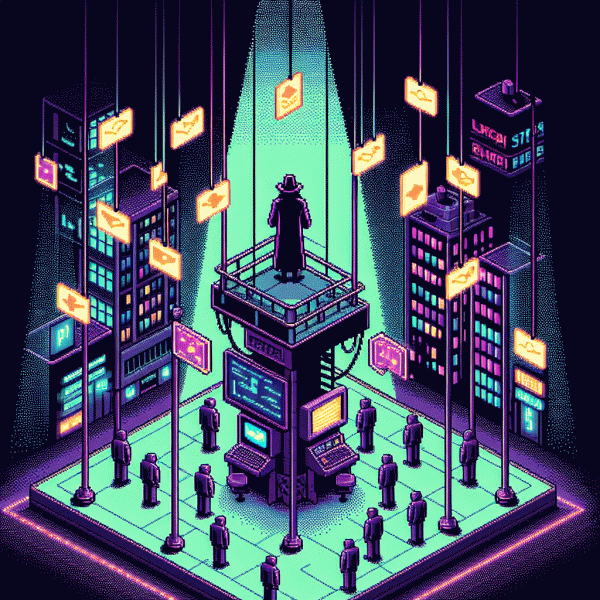
Think of dark posts as whisper marketing — targeted messages that do not clutter your main feed but speak directly to micro-segments. They outperform broad targeting when one-size-fits-all creative dilutes the message or burns impressions on low-intent users. For launches, re-engagement, or premium upsells, these quiet ads let you tailor copy, creative, and offers to the exact people who matter without annoying your general audience.
Reach for stealth when your core audience is under a few hundred thousand, when you have distinct value propositions per segment, or when you need to validate higher-ticket offers. Dark posts are ideal for testing creative hooks, controlling frequency, and collecting conversion-level signals without polluting brand-wide metrics. If conversion lift varies between segments, you have a tactical lever; if not, you avoided wasting budget blasting everyone.
How to run them: allocate 10–30% of your test budget to dark posts, spin up 3–5 creative variants, and keep tests to a 7–14 day window. Measure CPA and incremental lift against a true holdout group — the incremental signal is the point of the exercise. Target tight audiences (past purchasers, cart abandoners, and tiered lookalikes) and match creative to intent so each ad feels bespoke, not generic.
Quick checklist: set frequency caps, isolate dark campaigns from brand boosts, track incremental performance, and scale winners by expanding audiences or increasing budgets gradually. One neat trick is a silent control: run identical creative in a broad campaign versus a dark post to prove the lift. When precision beats reach, dark posts are your tactical edge — test boldly, iterate fast, and let the numbers drive spend.
How to ghost your feed (and still win clicks)
Imagine slipping a tiny billboard into the exact pocket of the feed where conversion naps. Dark posts let you talk to handpicked clusters without plastering the message across your public timeline. The trick is to treat these ads like whispers to select rooms, not megaphones in the town square. When done right, the result is high relevance, low drama, and clicks that feel almost accidental.
Start by carving audiences into very small slices: ad interest, recent site behavior, device type, and time of day. Launch three to five creative variations with one clear hook each — a strong visual, a concise caption, and a single CTA. Set micro budgets so winners show their face without creating social noise. Track every test with UTMs and the pixel, then double down on mappings that beat the baseline. Quick switch tip: change thumbnails and headlines first to save production time.
- 🆓 Free: use a low friction offer to test engagement velocity and cost per click
- 🐢 Slow: run a small audience over longer windows to catch late converters
- 🚀 Fast: scale aggressive creativeaudience pairs quickly once CPA and CTR align
Treat dark posts like a lab. Fail fast, record everything, and surface winners to public channels when they earn it. Keep frequency modest, rotate creatives weekly, and annotate why a variant worked so the next round learns faster. Do this and your feed stays calm while your analytics party hard.
Audience hacks: The quiet way to A/B test like a pro
Dark posts let you whisper experiments into the newsfeed without waking the masses. Instead of blasting a single creative to everyone, quietly seed multiple variants to distinct micro-audiences and watch which hook gains traction before you publicize a winner.
Start small: duplicate your dark post, change one variable — headline, image, CTA — and map each to a unique audience slice. Use interest, behavior, and lookalike tweaks to control overlap, set equal, small, controlled budgets, and run them simultaneously so timing does not bias results.
Measure what matters: pick a single primary KPI, track conversion lift and CPM, and add a tiny holdout that sees no ad for baseline. Let tests run until performance converges or you hit a sensible confidence threshold, then promote the champ to a public post. Log each run so you build a reusable playbook.
- 🆓 Free: test organic-style copy to see if your message lands without paid bias.
- 🚀 Fast: short bursts with higher bid caps to identify winners in 48–72 hours.
- 🔥 Scale: expand the best audience slowly to avoid creative fatigue and rising CPAs.
Treat dark-post A/B testing like a lab: iterate, document the test matrix, log outcomes, and archive losers for reuse. The quiet approach saves budget and reputational risk — and when you finally go loud, you will be armed with proof instead of hunches.
Metrics that matter: What to track when nobody sees the post
Hidden behind audience filters or tucked into a private campaign, these stealth ads don't need a public timeline to move the needle — but they do need a scorecard. Start with the basics you would never ignore for visible ads: impressions and reach tell you how many eyeballs could have seen the creative, frequency reveals whether you're hammering the same people, and CPM shows whether delivery is efficient. Those are your baseline truth-tellers for whether the machine is working, even if the post itself is invisible.
Next, tie engagement to intent. Click-through rate, link clicks, and time-on-landing-page still matter because a hidden ad that gets no action is a money pit. For video, track view-through rate and completion percentage; for lead funnels, focus on click-to-lead and cost-per-lead. Instrument everything with UTM parameters, pixel events, and custom conversions so you can stitch on-platform activity to real-world outcomes. If you don't tag it, you can't prove it.
Move into diagnostics: use audience overlap and frequency distribution to spot wasted spend, and run small holdout groups to measure true incremental lift instead of vanity signals. Watch attribution windows — a stealth ad might seed intent that converts days later, so compare 1-, 7-, and 28-day windows. Don't forget quality signals like negative feedback or relevance score; they predict rising costs before performance tanks.
Make it actionable: name campaigns consistently, version creatives by audience segment, and automate reporting into a single dashboard so insights aren't buried. Run tight experiments, pause losers fast, and scale winners with a phased budget. When nobody sees the post on a feed, your metrics are the only witnesses — learn to interrogate them ruthlessly and you'll outsmart competitors who measure by vanity alone.
Playbook time: 5 copy angles to try before your next ad flight
Think of this as a four-step cheat-sheet for testing five distinct copy angles in stealth ads — short, punchy, and made to live in the shadow feed. Each angle is a swap you can make without changing creative: tweak the headline, tighten the reason, and watch which message wakes up your cold audience.
The Confession: Start with a one-line admission that sounds human — "We totally overcomplicated this product until customers saved us." Follow with a simple benefit and a soft CTA. The Mini Case Study: Lead with a tiny result — "3 customers doubled X in 21 days" — then show the quick steps they took. Pair both with the same creative to isolate copy.
Loss-Reversal: Frame what they'll lose by not acting: "Skip this and waste another month on ads that don't convert." Use a low-friction next step. User-Whisper: DM-style micro-testimonials and one-line objections flipped into proof — quick, conversational copy that reads like a friend telling you about a hack.
Micro-FAQ: Pre-answer the single biggest objection in 15 words and close with a tight CTA. Run these five angles in 1:5 budget splits (small daily cap, 3–5 days) and compare CTR>CPM>CVR rather than vanity metrics. Swap headlines first, then bodies — keep it surgical and iterative.