Dark Posts Exposed: The Invisible Ad Trick Supercharging Social Campaigns
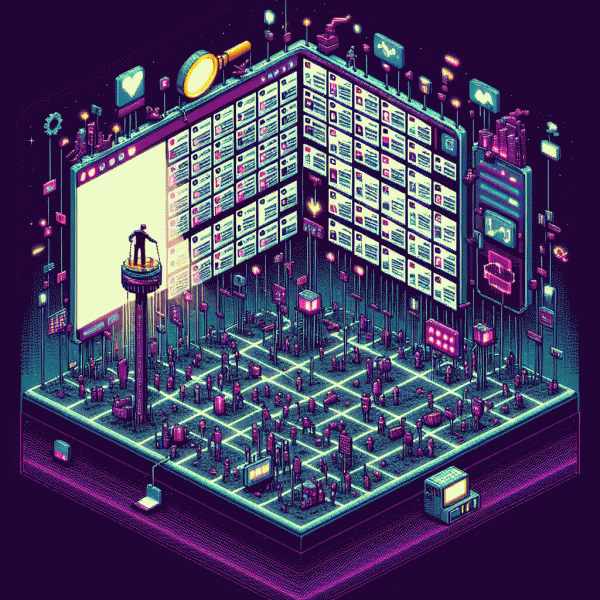
What Exactly Is a Dark Post (And Why Your Feed Never Sees It)
Think of a dark post as an ad that shows up only to the eyes you pick — not a public timeline post. It is unpublished in the sense that it will not clog your brand feed, will not trigger follower comments on the public profile, and lets you run multiple tailored creatives without annoying the general audience. In other words: stealthy, surgical, and oddly democratic.
Why your feed never sees it is simple: platforms treat these as targeted ad objects, not organic posts. They live in the ads manager, addressed to segments via rules, and can be cloned with tiny tweaks. Use them to A/B creative, test hook-copy, or micro-target offers like a marketing sniper:
- 🚀 Targeting: Zero-in on demographics, interests, or lookalikes so only the most relevant users see each variant.
- 👥 Experiment: Run multiple messages simultaneously to learn what actually moves people instead of guessing.
- ⚙️ Scale: Roll winning permutations quietly across audiences without cluttering your organic voice.
Quick wins: start with small audience splits, swap one variable at a time (image, headline, CTA), and pause losers after a short 24–72 hour window. Track cost per action, not just clicks, and use custom conversions to map every dark post to a clear business outcome. Remember: data beats gut feelings every time.
Treat dark posts like your lab for messaging — safe, private, and fine-tuned. Once you graduate a winner, publish a tailored organic version that amplifies the ad’s momentum and keeps your feed feeling human instead of assembly-line.
Still a Secret Weapon? Data-Backed Reasons They Keep Crushing Targets
Marketers keep slipping dark posts under the radar because they deliver surgical control that public ads rarely offer. Granular segmenting, hidden creative sets, and strict incrementality testing mean fewer guesswork dollars and more true signal. Put another way, teams that treat stealth ads as experiments see cleaner lifts, faster optimizations, and lower wasted spend.
- 🆓 Data: Clean A/B splits and lift studies produce attribution clarity so budget moves are based on causation, not correlation.
- 🚀 Target: Microaudiences get bespoke messaging without polluting the main timeline, preserving overall brand health while boosting conversions.
- 🤖 Creative: Rotate and test tailored creative blocks at scale, isolate winners, and avoid creative fatigue that kills momentum.
Actionable setup is simple. Define a control cohort, run parallel dark post cells, cap frequency, and measure CPA and incremental revenue rather than vanity spikes. Use dynamic creative to push variants to the best performing slices and scale only after lift exceeds cost thresholds. Log everything and treat each dark post like a repeatable experiment.
If target crushing feels like a mystery, make it routine. Start small, trust the data, and iterate quickly. When stealth meets science, campaigns stop guessing and start hitting goals with surgical precision.
When to Deploy: Scenarios Where Dark Beats Broad Every Time
Think of dark posts as the cloaked operative of your ad stack: not for every mission, but perfect when the objective needs precision. Use them for narrow launches aimed at high value niches, for stealth testing creative and offers without cluttering the brand feed, or to quietly control messaging during sensitive PR moments.
Watch for signal thresholds that should trigger a dark approach. If cost per acquisition climbs more than 20% while organic engagement stays stagnant, or if a new product has limited inventory and needs a targeted drip, flip the toggle. Other green lights include competitor bids spiking around your keywords or a partnership that requires private amplification.
Set up the campaign like a lab experiment: isolate the creative, exclude existing customers, and target defined cohorts with clear intent signals. Keep naming conventions tidy so results are traceable, apply conversion pixels and UTM tags from the start, and limit the window to avoid overlap with broad campaigns. Think surgical, not shotgun.
Iterate fast. Run no more than two to three creative variants per audience and measure conversions and lift rather than vanity metrics. Use short flight times of three to seven days to gather clear performance data, then either scale the winning creative into a broader buy or retire it and try the next hypothesis.
If you see the right signals, deploy with confidence: spin up one focused dark creative, monitor CPA and conversion lift, and be ready to either scale or pull fast. In the hands of a smart operator, dark posts turn tactical moments into measurable wins.
How to Build One That Converts: Targeting, Creative, and Budget Hacks
Think of your dark post as a stealthy salesperson: unseen by competitors, unseen by your mom, but whispering directly into the right ears. To turn that stealth into sales, focus on three things that actually move needles: tight targeting, thumb-stopping creative, and budget rules that force winners to surface.
Targeting is where most campaigns leak. Start with layered audiences: a 1–2% lookalike from your top customers, nested exclusions for recent converters, and separate high-intent retargeting windows (7, 14, 30 days). Keep seed sizes healthy — small seeds = noisy lookalikes — and test interest stacks instead of single interests.
Creative wins eyeballs. Front-load the benefit in the first three seconds, use captions for sound-off feeds, and create a strong single CTA. Run UGC-style and polished variants side-by-side, and test format as a variable — short vertical video, single image, and carousel — each tells a different micro-story.
Budget hacks aren't glamorous but they're ruthless. Use a 70/20/10 spend split (core winners / exploration / wild bets), start small with $5–$20 micro-tests per creative, then scale winners by +20–30% daily. Apply bid caps to stop runaway CPMs and daypart when your analytics show peak conversion windows.
Stitch it together with fast measurement: one primary KPI (CPA or ROAS), daily prune of losers, and an automated rule or playbook for scaling. Do that and your invisible ads won't just lurk — they'll convert, quietly, profitably, and repeatedly.
Red Flags to Avoid: Frequency, Fatigue, and Compliance Gotchas
Dark posts are brilliant at stealth-targeting, but their stealth can mask trouble. The biggest red flag is frequency: when the same creative keeps resurfacing to the same audience, irritation, ad blindness, rising CPC and negative feedback follow fast. Treat rising frequency plus falling CTR as a tripwire that forces creative rotation or audience rest.
Be actionable: set a sensible frequency cap (for many campaigns 1.5–3 impressions per user per week is a practical start), monitor unique reach, and refresh creative every 3–5 days if engagement softens. Swap headlines, thumbnails and CTAs rather than only tweaking copy. Automate rules to pause segments when frequency exceeds limits and CTR drops 20% versus baseline.
Compliance slipups hide in plain sight — PII in creative or DMs, unverified health or political claims, or landing pages that contradict ad copy all invite platform penalties. Check platform-specific policies, keep disclosures clear, avoid banned targeting signals, and archive approvals and creative versions so you can prove compliance in an audit.
Quick checklist: cap frequency, rotate assets often, watch negative feedback, align landing pages with ads, and log approvals. Think of dark posts like mood lighting — subtle and flattering when controlled, maddening when left on full blast.