Clickbait vs Value: The Sweet Spot That Stops the Scroll—and Starts Conversions
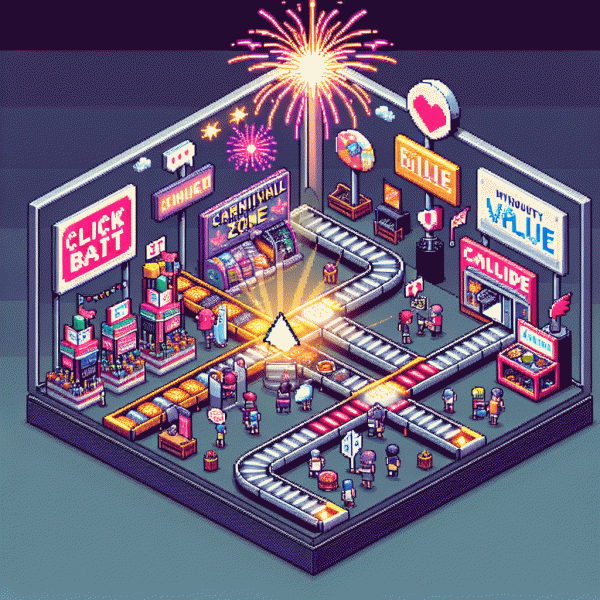
Curiosity Without the Cringe: Teasers That Don't Betray Trust
Curiosity shouldn't feel like a bait-and-switch. The best teasers act like a good friend: they hint at something useful, give a clear next step, and don't leave people feeling duped. Make your lead sentence promise a benefit, not a mystery—then deliver within the first swipe or scroll.
Use three simple moves every time: Promise: say what the reader will gain; Preview: tease the format or proof; Deliver: show a quick result or next action. Try short scaffolds like "How we cut X by Y in 3 steps" or "One tweak that doubled open rates"—specific beats vague every time.
Swap cringe for credibility by dropping hyperbole and adding micro-proof. Replace "You won't believe this!" with "Cut costs 18% with this inbox tweak" and follow with a one-line case or stat. Those tiny anchors of trust make curiosity feel earned, not exploited.
Want to test this voice on social where attention is currency? Start small, measure lifts, and iterate—platforms reward clarity. For hands-on trials and promo tools, check out instagram boosting to experiment responsibly and scale what actually converts.
Make the Click Worth It: Front-Load Value in 8 Seconds
Treat the first moments like an elevator pitch for a miracle. In eight seconds the viewer decides whether to keep scrolling. Front load the reward: promise a benefit and prove it fast. This is not about tricking people; it is about respecting time. Swap clever puzzles for clear gains and you will stop more thumbs.
Start with a one line value hook that answers What, Why, and How. Example: Save 2 hours on billing with a two minute setup. Make that hook scannable for someone on mute and avoid jargon. Follow immediately with proof: a stat, a quick screenshot, or a user quote. That combo creates rapid trust and justifies the click.
Visuals must do heavy lifting. Use a close face, before and after, or a single frame demo so the brain reads the promise in a glance. Keep text minimal, contrast high, and motion intentional. Short motion loops and clear focal points speed comprehension and reduce cognitive load.
Microcopy is tiny but mighty. Replace vague CTAs with specific outcomes like See sample invoice or Claim 10 minute audit. Use action first verbs and remove friction words such as lengthy signup cues. Each line should shave a second off the decision timer and set an expectation the next step will deliver.
Implement this in an afternoon: craft the one sentence hook, capture one proof visual, write a single outcome CTA, and test two variants. Run A/B tests that swap proof types and measure click quality, not just clicks. If the next page keeps the promise, conversions will follow. Be fast, be honest, and make every early second earn its place.
The Headline Sandwich: Setup, Sizzle, Substance
Think of a headline as a tiny narrative: you set the scene, add a little heat, then deliver the goods. Start by naming the audience and the pain point in one crisp line so readers feel seen. The setup is not filler; it is the permission slip that lets someone keep scrolling because they recognize you understand them.
Now turn up the sizzle. Use a concrete number, an unusual adjective, or a tension word to inject urgency and curiosity. Swap vague boosters for specific triggers: 3-minute, surprising, before you buy. The goal is not to trick but to make the promise irresistible enough that the first click feels logical, not manipulative.
Finally, back it with substance. The preview should hint at a tangible takeaway so the reader trusts the followthrough. Tease a quick win, a specific example, or a micro case study. If your body copy cannot deliver the promise in the headline, rewrite the headline. Trust is the conversion currency.
Try this quick formula: setup (who and pain) + sizzle (number or tension) + substance cue (what they get). For example: Busy founders + 3 simple scripts + to close more leads today. Test two variants, measure CTR and time on page, then iterate until the headline both stops the scroll and earns the click.
Metrics That Matter: CTR is Cute, Conversions Pay the Bills
Clicks are a dopamine hit: they make dashboards light up, give teams a reason to cheer, and look great in weekly reports. But a blinking CTR bar won't buy coffee for the office. The smart marketer treats CTR as the opening act — the moment you earned attention — and then asks: did that attention turn into action worth paying for? That curiosity-to-clarity pivot is where real ROI lives.
Translate that pivot into numbers. Replace vanity chasing with a funnel map: impressions → clicks → micro-conversions (email signups, add-to-cart) → purchases. For each step, track conversion rate and value per conversion. A tiny bump in post-click conversion rate often multiplies revenue far more than a flashy CTR increase. Benchmark conversion lift, not just click volume, and set tests with a clear revenue hypothesis.
Practical moves you can implement this week: tighten your ad-to-landing-page message match, remove one form field, test a single, bold CTA, and price-test bundles to nudge AOV. Use cohort windows long enough to capture delayed purchases and attribute properly to the original touch. Treat copy changes as experiments with expected revenue impact — that's how curiosity-driven creative becomes a conversion machine.
Finally, prioritize experiments by expected revenue per hour, not by how pretty the creative is. Monitor Cost Per Conversion and Lifetime Value by channel; stop pouring budget into high-CTR sources that produce low-value buyers. When CTR helps lower acquisition costs or lifts qualified traffic, it's cute and useful. Otherwise, let conversions pay the bills and make clicks earn their keep.
Copy-Paste Toolkit: 9 Ethical Hooks You Can Use Today
These nine ethical hooks are short, swipe-ready lines that balance curiosity with concrete value. Drop them into subject lines, social captions, or ad headlines, then tweak one word to match your voice. They are honest magnets—built to grab attention and immediately reward the reader with something useful, not just a bait-and-switch.
Hook 1: "What everyone misses about X (and one simple fix you can apply today)" — uses curiosity plus a ready action. Hook 2: "How to get 3x more opens by changing one word in your subject line" — specific promise tied to a tiny tweak. Hook 3: "1,200 customers used this 2-step play to increase conversions" — social proof framed as an accessible method. Hook 4: "Limited to 50 spots so we can actually help you — apply now" — urgent but honest about capacity.
Hook 5: "Free 5-minute checklist to stop churn before it starts" — value-first, no gatekeeping. Hook 6: "From zero to 10k users: the three actions that moved the needle" — micro-case study with clear steps. Hook 7: "Why 73% of buyers ignore this page — and how to be in the 27% they remember" — bold stat with a how-to. Hook 8: "Still losing customers after checkout? Try this one-tap fix" — speaks directly to a pain point. Hook 9: "Reply READY and get three fixes you can apply in under an hour" — a clear, low-friction next step.
Use these as starting points: A/B two at a time, keep the promise in the copy and the experience, and measure micro-conversions (clicks, replies, short-term lifts). If a headline wins but the page underdelivers, stop using it. The sweet spot is simple—catch attention ethically, then give value fast enough to convert that attention into trust and action.