Clickbait vs Value: The Shockingly Simple Formula to Make People Click—and Stay
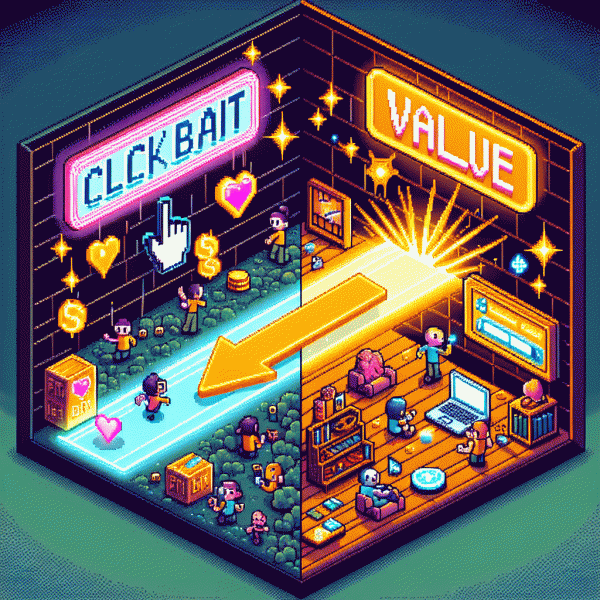
Hook Them Without Hype: Headlines that Spark Clicks and Keep Trust
Headlines are tiny promises that either earn a click or cost you credibility. Think of them as the handshake before the conversation: firm, honest, and interesting. Start by deciding what the reader will gain in the next 30 seconds, then translate that gain into a headline that is compact and curious, not screamed from a billboard. The goal is to invite attention without tricking the person who trusted you enough to click.
Use a simple formula: Benefit + Specificity + Timeframe + Constraint. For example, a headline like \"Increase newsletter opens 27% in 14 days with one subject line change\" carries a clear benefit, a number, a deadline, and a limiting action. Swap the pieces to match your content: numbers convert, short timeframes feel doable, and constraints make the promise tangible. Keep verbs active and avoid fluffy adjectives that inflate expectations.
To keep trust, pair curiosity with deliverability. Tease a gap but immediately follow with a clear lede that fulfills the promise; if the headline implies a method, show the method early. Avoid absolute words such as always or never, and skip doom language that forces clicks through panic. Measure success by both click-through rate and time on page or scroll depth. A headline that drives clicks but generates fast bounces is a vanity win and a branding loss.
Make headline testing lightweight: write three variants, swap one element at a time, and run each for a fixed sample. Track CTR, on-page engagement, and social shares to see which phrasing attracts the right people who actually stay. Repeat monthly and collect winning formula fragments into a swipe file. Over time the best headlines will be the ones that spark curiosity, promise value, and keep the reader smiling instead of furious.
Curiosity to Conversion: The 3 Step Story Arc that Sells
Start with curiosity but do not leave people hanging — translate intrigue into intent. The three beats are simple: spark a question, lean into a mini-story that proves value, then hand over an obvious next step. Nail these and clicks become customers.
Hook: open with a single line that makes readers tilt their heads. Use a surprising fact, a tiny contradiction, or a very specific promise. Keep it short, concrete, and make the cost of ignoring it feel real so curiosity converts into attention.
- 🆓 Hook: One surprising line that creates a gap they want closed.
- 🐢 Hold: A micro-story or example that reduces doubt quickly.
- 🚀 Convert: One clear, irresistible next action with minimal friction.
Hold: deliver immediate value in the middle act. Show proof — a quick result, a before/after, a user quote — and answer the biggest doubt. Each sentence should push them closer to believing the promised payoff.
Convert: make the next step tiny and obvious. Use a button with a benefit, a prefilled form, or a one-click offer. When you want to test paid social lift, try buy instagram followers for fast experiments that validate the arc.
Measure three things: curiosity (click rate), micro-conversion (email or signup), and retention (return visits). If curiosity spikes but conversions lag, tighten the payoff. Iterate fast: small tests, quick wins, repeat.
Stop the Bounce: Deliver Value in the First 8 Seconds
You have eight seconds to prove you are worth a scroll. Start with a single, bold benefit line — no jargon, no setup, no fluff. Lead with results: a percent, minutes saved, or a clear before/after. Keep the visual quiet and the text loud: one short sentence that promises a specific payoff right now.
Sound and motion decide attention fast. Open with movement, a human face looking at camera or product, or a quick caption that names the win. If audio helps, use a recognizable hook under two seconds. If not, use crisp subtitles and a visual pivot so viewers understand value even on mute and on tiny screens.
Proof matters more than hype. Drop one microtestimony or a tiny stat in frame one and back it up with immediate context — what happened next, in one line. If you need fast visibility while you optimize openings, consider a trusted boost like safe tiktok boosting service to get a sample audience and real signals.
Three tiny actions to commit right now: state the benefit in one line, show a human or product in motion in frame one, and display a measurable number or short quote as microproof. Test these swaps fast, keep the variant that converts in those first eight seconds, and refine from there.
Metrics that Matter: When CTR Misleads and What to Track Instead
CTR will make you feel brilliant overnight. A flashy headline delivers clicks, likes those dopamine hits, and then the applause dies when users bounce five seconds later. Clicks are the spark, not the fire. If you want lasting engagement you have to chase signals that prove real interest instead of celebrating raw arrival numbers.
High click volume can mask three problems: weak on‑page value, mismatch between headline and content, and low intent traffic. Those issues create pogo‑sticking users who leave angry and never return. That pattern inflates short term vanity while eroding trust and long term conversion, so treat CTR as a warning light, not the destination.
Track metrics that reveal time and intent: average attention time, scroll depth, engaged sessions, micro conversion rates like signups or downloads, cohort retention, and downstream conversion value. Pair these with event signals such as time to first meaningful action and repeat visit rate. These show whether a click turned into value, not just noise.
Instrumenting this is simple and actionable. Add event tracking for key micro‑actions, measure session engagement windows, and watch post‑click funnels by cohort instead of raw traffic slots. Use heatmaps and session replay samples to verify why users drop. Run headline A/B tests but measure post‑click behavior as the winner criterion.
One last checklist: stop optimizing headlines for CTR alone, A/B headlines with engagement as the metric, assign a business value weight to attention, and kill creative that drives clicks without retention. Focus on building curiosity that converts into time and action, and those clicks will start meaning something.
Steal These: 5 Ethical Headline Templates for Instant Testing
Think like a scientist and write like a friend. Below are five swipeable headline formulas that give readers something useful up front and a nudge to click; they are ethical because they promise what they deliver. Copy a formula, plug in your angle, and run a quick test to see which phrasing actually keeps people reading.
Try these five headline frames as starting points: How To — "How to [Result] without [Pain]"; Numbered — "[7] Ways to [Outcome] for [Audience]"; Curiosity — "What [X] taught me about [Y]"; Urgency — "Before you [Event], do this to [Gain]"; Social Proof — "[X] did this and gained [Result]". Swap in your product, audience, and benefit and you have five fast hypotheses for A/B testing.
- 🆓 Free: Use this when the offer or insight is genuinely no cost to the reader and delivers immediate value.
- 🚀 Fast: Perfect when results are quick; set a realistic time frame and avoid overpromising.
- 💥 Proof: Lead with a number, case, or name to make the claim believable and test social credibility.
Action plan: pick two templates, keep the body identical, change only the headline, and run them against the same audience for 24 to 72 hours. Track CTR plus a simple engagement metric like time on page or retention at 30 seconds. If a winner emerges, scale it and iterate on subheads and opening lines. Most important: do not trick people — deliver on the headline and your clicks will convert into trust.