Clickbait vs Value: The Conversion Sweet Spot You Are Probably Missing
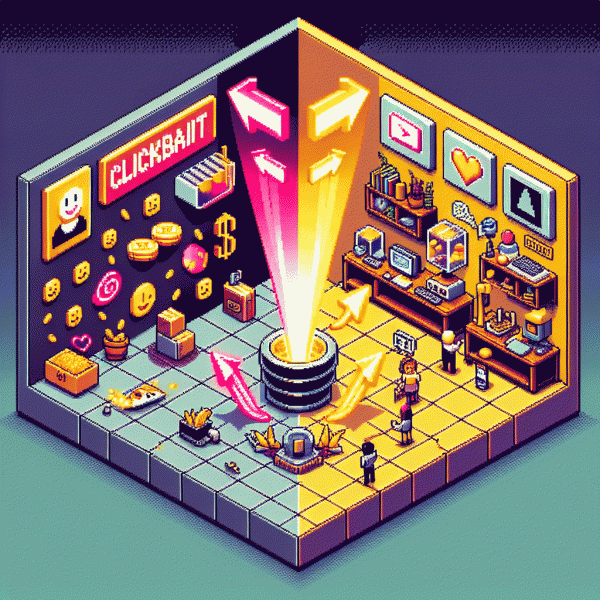
Hook Without Hype: How to Earn the Click and Keep the Trust
Stop chasing cheap shocks and start asking a better question: how do you make a headline that actually earns both the click and the customer trust? Treat your hook like an invitation, not a trap. Lead with a crisp promise, show why it matters in one line, then hint at immediate value — concrete benefit, not vague intrigue. That tiny clarity separates an honest magnet from a manipulative click.
Here are three hook formats that win without the hype:
- 🆓 Free: Offer a genuinely useful snippet so readers feel rewarded before they commit — a checklist, a micro-template, or a mini-tool that solves a single friction point.
- 🐢 Slow: Use a believable story or specific metric: "How our onboarding cut churn 12% in 30 days" builds credibility and curiosity without sensationalism.
- 🚀 Fast: Promise a rapid, actionable gain and deliver the first step immediately: "Three lines to boost open rates today" plus the one-line tactic in the opener.
Match delivery to promise: open with a one-sentence payoff, show the steps or evidence, then give a micro-action the reader can take in five minutes. Sprinkle social proof or a concrete stat close to the top so the hook is supported, not contradicted. If your intro promises practical gain, the first paragraph must deliver it — otherwise trust evaporates.
Finally, measure beyond clicks: track time on page, scroll depth, and the first micro-conversion. Iterate headlines that raise both CTR and retention; when a hook brings traffic but not trust, tone down the swagger and double down on utility. Be playful, be honest, and make value obvious from the first line.
The 3 Second Test: Would You Click This or Close the Tab
Give yourself three seconds: that is the time window for a stranger to decide whether to click, scroll, or close the tab. In that flash the headline, the visual promise and the perceived payoff must align. If your first impression screams mystery without reward, curiosity will lose to suspicion. If it screams desperation, you will lose to overload.
Run the three second test like a speed interview. Ask: can someone instantly answer "what is this" and "what is in it for me"? Check the headline for a clear benefit, the layout for a single focal point, and the CTA for an obvious next step. Remove competing distractions and replace hype with a single concrete promise so attention does not fracture.
Small edits create big lifts. Swap vague adjectives for specific outcomes, add a one-line microproof, pare back chrome that does not help conversion, and shorten the headline to a single crisp idea. Replace "best ever" with "increase X by 23% in 7 days" or a similarly believable metric. That balance of intrigue and deliverable value is what keeps clicks from turning into bounces.
Make the test actionable: show the page to five strangers for three seconds, run a plain A/B with two headline variants, or use a quick usability tool to capture first impressions. If the three second reaction is confusion, iterate until the answer is instantaneous and attractive. That is where click magnets meet real value and conversions follow.
Headline Math: Balance Curiosity, Clarity, and Payoff
Headlines are not a mystery so much as a negotiation: lure enough curiosity to pull a reader in, but pay them back immediately with clarity and a hint of real value. Too coy and you get clicks that bounce; too blunt and you lose the spark that entices a click in the first place.
Think in three parts: a curiosity hook, a clear promise, and a measurable payoff. Try a simple formula: Hook (3–6 words) + Benefit (4–8 words) + Signal of payoff (2–4 words). Example: change "This One Trick" to "3 Quick Email Tweaks That Double Opens". The second converts because it shows result.
Micro copy choices matter: numbers beat adjectives, verbs beat nouns, and specificity beats mystery. Aim for 6 to 12 words but test length by channel. If you drive traffic, measure CTR versus downstream conversion rate, not headline CTR alone. A high CTR with low conversion means curiosity was not matched by payoff.
Want a live lab to try better headlines? Use real offers with real social proof and track the funnel. For fast experiments on platform signal, consider a small boost to test creative impact like buy instagram followers fast and watch whether curiosity turns into sustained action.
From Tease to Substance: Landing Pages That Deliver on the Promise
Think of your landing page as the curtain rise after a flashy teaser: if the performance is thin, applause turns to a fast exit. Your first mission is to confirm the promise the ad made with one crisp benefit sentence, then immediately back that promise with something tangible so curiosity feels rewarded, not cheated.
Build trust at first glance: a one-line social proof nugget, a concise stat, or a micro-testimonial do wonders. Use short, scannable copy and bold the single most important outcome with laser focus. Repeat a clear call-to-action in context — not shouty, just unavoidable — and trim any copy that adds jargon or hesitation.
Attention to fundamentals converts: speed up load time, prioritize above-the-fold clarity, and minimize form fields to cut friction. Add microcopy that preempts objections about price, privacy, and delivery, and design for mobile first so the experience is consistent across devices. If information is lengthy, break it into progressive steps rather than one intimidating wall of text.
Finally, treat the page like an experiment: instrument every step, identify where people drop off, and run tiny A/B tests to improve one element at a time. Match headline, tone and imagery to the original tease so visitors feel continuity — that alignment is where clever curiosity turns into real, measurable conversions.
Templates and Taboos: Swipe These Lines, Skip These Traps
Think of your subject lines and CTAs like outfits for a first date: a little intrigue can charm, but empty promises leave you ghosted. Below are swipe-ready openings that steer curiosity toward actual value — not cheap thrills. Try: "Three tweaks that double opens"; Try: "Quick audit: 60s to fix your checkout leaks"; Try: "How your last post lost sales (and the 2-step fix)"; Try: "A simple test that beat our control by 23% on day one."
When to use which tone: lead with curiosity when the prospect is cold but pair it with a concrete payoff in the body; use plain value when the reader already knows you and just needs a reason to act. A practical split: for every 5 emails, send 2 curiosity-led hooks and 3 value-first messages. Always run A/Bs over a small segment first and measure not just opens but the next step — clicks, replies, conversions.
Taboos to skip like expired coupons: Don’t promise miracles you can’t prove; Don’t rely on vague cliffhangers ("You won’t believe this…") without immediate relevance; Don’t scream in ALL CAPS or suffocate subject lines with emojis; Don’t bury the benefit behind jargon. These cheap tricks spike opens but crush long-term trust and deliverability.
Quick checklist before you hit send: 1) Does the line state a clear benefit? 2) Can you prove it in the first 10 seconds? 3) Is the CTA a logical next step? 4) Did you test a curiosity vs value variant? Swipe one of the lines above, adapt the metric or timeframe to your audience, and track the lift — little swaps compound into big conversion wins.