Automate This, Write That: The No-Fluff Guide to Marketing Automation You Will Wish You Started Yesterday
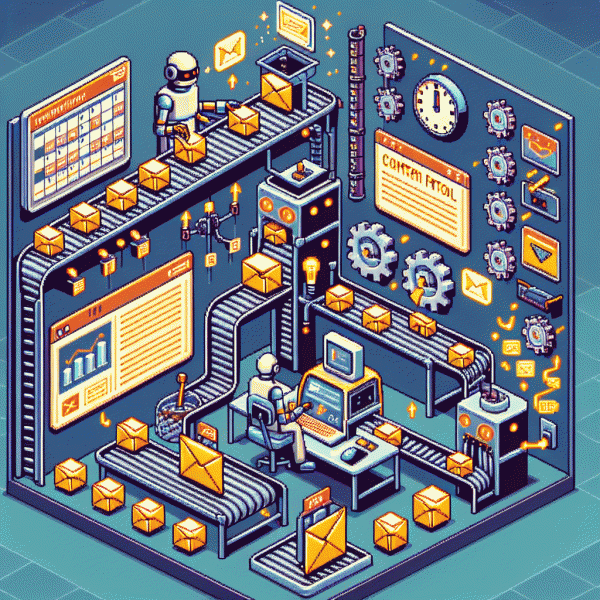
Automation All-Stars: Drips, Sequenced Nudges, and Triggers That Earn While You Sleep
Think of drips, sequenced nudges, and event triggers as the three members of your sleep-shift marketing trio: each plays a different part, but together they cover all bases from hello to checkout. Start by mapping the customer journey like a subway map — entry points, transfer moments, and final stations — then assign an automation type to each stop. The goal is simple: reduce friction, increase relevance, and let your system handle the repetitive charm so your human time is reserved for strategy, not babysitting follow ups.
- 🆓 Welcome: Send an immediate greeting with a clear next step and a small promise that builds value over time.
- 🐢 Nurture: Pace content to match interest signals; slow sequences increase trust without fatigue.
- 🚀 Trigger: Convert intent into action with rules that fire on clicks, cart adds, or page views.
Practical setup beats perfect planning. Segment by behavior, not by guesswork; pick three triggers to automate first; write three microcopy variations for each; and measure open, click, and conversion rates. If you want to accelerate reach while your automations learn, try a lightweight boost to get momentum: get instagram followers fast. One quick win can supply the engagement data your sequences need to personalize more confidently.
Final checklist before flipping the switch: tags and lists clean, templates tested, throttles set, and a rollback path for anything that goes sideways. Then A/B one element at a time — subject, timing, CTA — so you build wins that scale. Automation is not a magic wand, it is a force multiplier: set it up thoughtfully, monitor for the first week, and then enjoy the slow drip of results that truly do earn while you sleep.
Keep It Human: Moments Where Your Brand Voice Must Take the Pen
Automated flows save time, but people remember how you spoke to them more than how fast you replied. Treat automation like a helpful sous-chef — it plates the dish, but your brand voice must sign the note. Reserve human-crafted copy for moments that shape perception: apologies, milestone celebrations, complex onboarding, and when a customer signals emotion. When in doubt, default to warmth, clarity, and tiny personality flourishes that make a template feel handwritten.
Map those hot spots and design soft stops in your workflows where automation pauses and hands the pen to a person. For example, flag refunds or complaints with a high-priority tag and route them to a specialist; after a freemium-to-paid upgrade, send a personalized welcome from an account owner; when you announce changes that affect billing or features, use human-approved copy. Create short, modular notes your team can adapt in under two minutes.
Keep microcopy rules simple: use first person, say the user's name, explain next steps, and close with an optional human sign-off. Avoid corporate soup — swap we are committed to... for I'll take care of this. Build a handful of pre-approved voice snippets (empathetic opener, brief apology, celebratory line) so humans never start from scratch. Train agents to inject one specific detail that proves they read the case.
Operationally, add tags, escalate thresholds, and a clear handoff workflow in your automation platform. Monitor handoffs with a weekly audit and two KPIs: resolution time after handoff and customer sentiment change. Iterate copy based on real transcripts, not guesses. The result: faster automation without sounding like a robot, and a brand voice that shows up exactly when it matters.
The 80/20 Split: A Simple Formula to Decide Bot vs. Brain
Think of the 80/20 split as your marketing automation seatbelt: automate the 80 percent of tasks that are routine, repeat often, and do not require judgment; save the 20 percent for human creativity, relationship-building, and crisis decisions that actually move the brand.
Start with a short audit: list tasks, frequency, time per task, and impact. Score each task for repeatability and consequence. If it is high frequency and low consequence, it is a prime bot candidate. If it is one-off or high consequence, mark it human-only.
Concrete thresholds speed decisions. For example, automate anything that runs more than five times a week, takes under 20 minutes per occurrence, and has clear success metrics. Add a safety multiplier for legal or brand-risk items so you do not automate the wrong thing.
Keep humans where nuance matters: tone-sensitive messages, negotiations, influencer outreach, creative ideation, and customer complaints that require empathy. These are where brand voice and long-term trust live, and where automation can do harm if left unsupervised.
Deploy bots with guardrails: automated drafts for review, escalation triggers when sentiment drops, and A/B tests to measure lift. Use clear KPIs, log every handoff, and schedule a 30-day review to tune thresholds before scaling.
If you need a low friction way to volume-test distribution while you refine automation, consider get free instagram followers, likes and views to feed experiments and see where bots actually win. Then shift budget from manual tactics to polished automation.
Personalization That Scales: Make Templates Feel Handwritten
Personalization at scale is choreography, not chaos. Instead of drafting a thousand bespoke notes, design templates that read like a single thoughtful message. Do the small human things that matter: call out a real behavior, use a gentle bit of humor, and time the send to match intent. Those micro choices create the illusion of a handwritten note while letting automation handle the heavy lifting.
Begin by mapping a tiny grammar of data points: first name, company, last product, city, recent action. Build clear fallbacks so missing fields never break the tone. Layer conditional blocks for behavior signals, rotate short signature variants, and send in the recipient time zone. This is where rules beat randomness: simple, reliable swaps produce believable variety without bloating your template set.
- 💁 Variable: Put tokens like {{first_name}} and {{product}} in the opener to earn attention fast.
- 🤖 Conditional: Use if/else snippets to reference recent activity when present, otherwise lead with a timeless benefit.
- 🔥 Humanize: Add one quirky touch — an emoji, a PS, or a specific compliment — so the message feels crafted.
Here is a lean recipe you can copy: Hey {{first_name}}, noticed you checked out {{product}} — {{#if last_purchase}}congrats on your recent order of {{last_purchase}}!{{else}}we updated a feature you might like.{{/if}} If you want a quick tip, reply and I will share one. Cheers, {{team_name}}. Keep snippets short, use plain language, and prefer active verbs to keep the voice alive.
Before full rollout run three micro experiments: subject line A/B, personalization depth (name only vs behavior), and send-time windows. Measure reply rate, click lift, and downstream conversions. Prune variables that add noise and automate the small wins. Do that and your templates will read like notes, not templates.
Quick Wins: Five Workflows You Can Launch Before Lunch
Launch five tiny automations that feel like an unfair advantage. In under a morning you can rig up predictable touchpoints that pull leads closer, rescue lost carts, and turn casual buyers into repeat customers. These are not grand transformations but practical, measurable plays built with no code or basic automation tools, ready to show ROI in days rather than quarters.
Start with a two step welcome workflow that fires the moment someone signs up: an immediate friendly hello with one clear value proposition and a follow up 48 hours later that offers social proof or a light incentive. Personalize with first name and the product category they viewed, and use subject lines that tease help not hype, for example New here Try this or Quick tip inside. Next, implement cart abandonment: email at 30 minutes, reminder at 24 hours, and a concise SMS at 48 hours if available. Use dynamic images of the exact product, a bold CTA, and a soft discount only if conversion stalls.
For dormant subscribers create a re engagement sequence after 30 days of silence that experiments with curiosity driven lines and a small time limited offer to win attention back. Segment by past purchase value and engagement to avoid blasting the wrong people. Pair that with a post purchase cross sell workflow that triggers 3 to 7 days after delivery, recommending a complementary item based on the original order and highlighting one simple benefit so the message feels helpful, not salesy.
Finish with an automated review and referral prompt seven days after delivery: thank the customer, ask for one quick star rating, and offer a small referral bonus for sharing. To really launch before lunch use this checklist: pick your automation platform, draft three short templates for each workflow, wire triggers and timing, send internal tests, then flip the switch. Track opens, CTR, conversion rate, and revenue per recipient to iterate fast and prove the wins.