Automate This, Not That: The Marketing Playbook Your Competitors Hope You Never Read
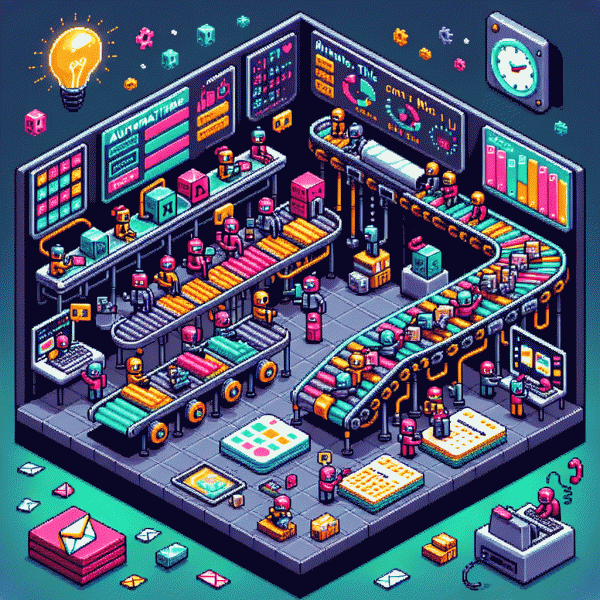
Set-and-forget gold: workflows that scale while you sleep
Think of automations as tiny, dependable employees that don't gossip. Start by mapping the customer moment you can fully own — welcome, cart rescue, repeat-buyer surprise — and then design a single tidy workflow. Keep it to three moves: a trigger, a conditional split, and an action. That constraint forces efficiency; fewer branches equal fewer brittle parts that break at 2 a.m. Use templates and variables so each message feels handcrafted even when it's not.
Make segmentation the secret sauce: put people into meaningful buckets (intent, spend, recency) and attach different cadences. Time windows matter — nudge within the zone when replies are likely — and throttle volume so deliverability doesn't implode. Invest in dynamic fields and modular content blocks so one workflow can personalize across languages, channels, and customer tiers without duplicating the logic. Also keep voice consistent across blocks so customers trust the message.
Fail-safes keep your sleeping beauty campaign from crashing: build retries with exponential backoff, route bounced contacts to re-verify flows, and add a human handoff for sticky exceptions. Queue actions to respect API rate limits and batch heavy jobs overnight. Add lightweight monitoring — a rolling error count and a weekly digest — so you get woken only when something really needs human cleverness, and set alert severity levels so on-call knows what's urgent.
Ship fast, iterate faster: test the cheapest hypothesis, measure lift, then fold winners into the library. Aim to automate the task that eats the most of your team's time first; the ROI will fund better tracking and smarter campaigns. In practice this means one reproducible workflow, documented playbook, and a dashboard that answers: is this saving hours, lifting revenue, or both? Then rinse, scale, and celebrate small wins publicly so the team keeps automating.
Human-only moments: the messages you should always write yourself
Automation should be your ratchet wrench for repetitive work, not the surgeon's scalpel for delicate moments. Some messages need the wobble, timing and tiny imperfections that make them human: they carry reputation, mend relationships, or steer money. When tone, trust or consequence matters, resist the urge to hit 'send' via a bot—your audience can tell when a note was manufactured.
Flag these as human-only: sincere apologies, product recalls or safety notices, layoffs and other HR communications, contract or pricing changes, first-time investor or partner replies, delicate customer disputes, and founder notes after a crisis. For each, prioritize context and specificity over cleverness; a mistake corrected with clarity builds trust faster than a slick, impersonal statement.
Use a simple Formula to write faster without losing humanity: 1) Context — what happened and why it matters, 2) Impact — how people are affected, 3) Next step — clear, reasonable action, 4) Sign-off — your name and a line that connects. Mention prior interactions, use real names, and state what you'll do next. That combination reads like a real person taking responsibility.
Quick checklist before you automate: would you be comfortable if this message were quoted in a headline? If yes, template it; if no, write it yourself. Keep templates for structure, never for soul. While competitors keep scheduling every reply into oblivion, your thoughtful notes will do the heavy lifting they can't.
Smart triggers that matter: from lead scoring to lifecycle nudges
Think of triggers as tiny decision engines: they should wake the right action only when the signal is unmistakable. Instead of firing emails for every click, choose triggers that combine intent, fit and recency. A strong rule of thumb: require two corroborating signals (e.g., product pricing page + repeated demo request) before escalating to a sales touch—that's how you cut noise and keep prospects from ghosting you.
When you build a lead scoring model, weight behaviors and firmographics differently and bake in decay. Pageviews are loud but forgettable; demo requests and pricing views are louder and stickier. Create score bands tied to actions: 40–69 = nurture flow, 70+ = sales alert. Add a cooldown so prospects aren't pinged every time their score ticks up by five points, and use progressive profiling to deepen context before you hand a lead off.
Lifecycle nudges need timing, not volume. Design micro-plays for onboarding, activation and churn prevention: a quick tutorial at day 1, a feature nudge at day 7, a personalized offer at day 30 of inactivity. Match channel to intent—use in-app nudges for activation, email for education, SMS for urgent conversion—but always test: A/B your triggers, not just the message, and measure lift by behavior, not opens.
Implementation checklist: instrument clean events, start with a few high-impact triggers, add guardrails (cooldowns, frequency caps), and tie every automation to a single success metric. Iterate weekly until your automations feel like a thoughtful teammate, not a desperate salesperson—automate the right signal, and the rest becomes background noise.
AI drafts, you approve: faster copy without losing your voice
Think of AI as your draft partner: fast, tireless, and blessedly free of writer's block. Feed it a short brief, a few signature phrases, and the tone you never want to lose, then let it spit out several raw options. You skim for the ones that sound closest to your brand, edit or swap lines, and keep the parts only humans can do best — nuance, context, and personality.
To speed the loop even further, build a tiny toolkit: a two-sentence brand voice guide, three prompt templates, and a folder of approved phrases. Need inspiration? Check this best instagram boosting service — it shows how precise inputs yield predictable outputs you can tweak instead of rewriting.
- 🤖 Draft: Generate multiple short variants (headline + two body options) so you can pick the rhythm that feels right.
- ⚙️ Refine: Replace placeholders with real names, tighten the CTA, and make one emotional edit to humanize the piece.
- 🚀 Ship: Publish the fastest version that passed your edit pass, then iterate based on performance, not perfection.
Add guardrails: a 'never-say' list, a preferred vocabulary file, and a single-sentence audience prompt for every brief. Timebox your first edit pass to five minutes — most drafts only need tempo and a line that proves a human wrote them. Save common fixes as an "edit checklist" so you stop repeating the same tweaks.
Measure what speeds up and what loses conversion: drafts per hour, approval time, and lift from published variants. Run a simple A/B where one arm is human-only and the other is AI-draft-plus-edit — you'll quickly see which content types can be automated and which deserve a human guardian. Do that, and you get faster copy without sounding like a robot.
The 30-minute automation audit: keep machines sharp, not spammy
Set a kitchen timer for thirty minutes, open your automation dashboard, and promise yourself you won't fall into the rabbit hole of feature porn. This sprint is surgical: surface the messages that annoy people, the workflows that loop forever, and the triggers firing at 3 a.m. when your audience is asleep. Bring two things only: your metrics and a sense of mercy.
Minute 0–10: scan triggers and entry criteria. Ask: does every signup, cart abandon, or webinar no-show deserve an automated series? Tighten rules so only the right people enter. Minute 10–20: inspect audience splits and suppression lists — merge tiny microsegments that create duplicate sends and add exclusion rules for customers who already converted. Minute 20–25: preview content blocks; swap awkward pronouns for personalization tokens and kill any message with broken images or stale offers.
Minute 25–28: throttle and timing — reduce send frequency for repeat engagers, add smart wait steps, and move high-risk messages into softer channels (push instead of email). Minute 28–30: safety checks — add an ‘‘off’’ toggle, validate unsubscribe paths, and flag automations for A/B testing. Finish with a one-line rationale in the workflow notes so your future self doesn't launch a Frankenstein campaign.
Do this audit weekly until your machines sound like humans, not spambots. Track a handful of KPIs (open-to-conversion, unsubscribe rate, time to first purchase) and celebrate tiny wins. Automations should earn attention, not steal it — and thirty focused minutes will keep them sharp, relevant, and revenue-friendly.