Automate It or Write It? The One Rule That Can 10x Your Marketing in Weeks
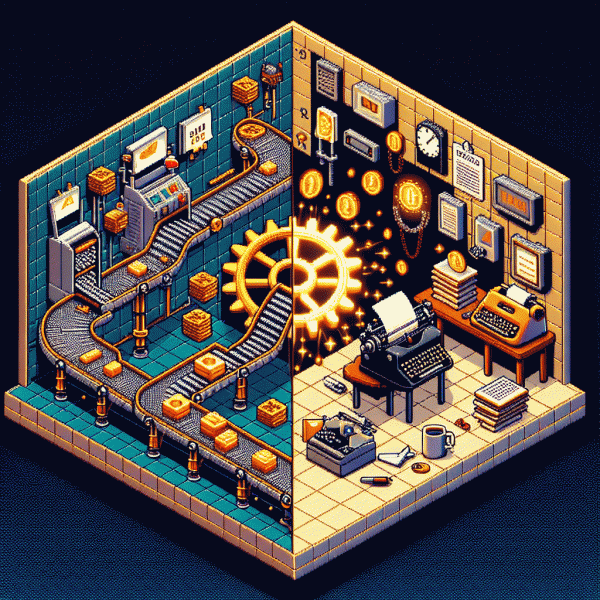
The 80/20 Rule: Automate Repetition, Write the Moments That Matter
Think of marketing like a stage show: the chorus repeats the same reliable moves while the soloist gets the spotlight. Automate the chorus. Use templates, scheduled queues, and simple rules to handle the posts, reports, and follow-ups that chew up time but not traction. Set guardrails—tone, CTAs, and brand phrases—so automation never sounds robotic. This frees bandwidth without going faceless.
Now spend that freed bandwidth writing the solos: the launch email, the video hook, the founder letter, the hero blog. Those are the moments where nuance and voice convert curiosity into commitment. Block deep-focus slots and protect them. Even a single high-quality paragraph or a 30-second hook moved by a real human will outperform three auto-generated drafts.
Hit it with a quick playbook: audit two weeks of activity, mark repetitive items for automation, and tag moments that need bespoke copy. Build tiny templates—subject lines, social frames, reply snippets—then route exceptions to people. Keep a short style guide so automations stay on brand, and measure by outcome not output: engagement spikes, click-throughs, or revenue per campaign, not number of posts.
The 80/20 isn't a moral judgment, it's a workflow. Let machines hum the routine and reserve your writer's brain for the scenes that persuade, delight, or rescue a deal. Treat every saved hour like seed money for creative bets, and you'll watch impact compound far faster than another round of busywork.
Email Mastery: Automate Triggers and Timing, Handcraft the Headlines
Think of automation as your reliable stage crew: it sets the lights, cues the entrance, and keeps the show running. Use it for the predictable stuff — behavioral triggers (cart abandon, welcome, post-purchase), time-zone sends, and content personalization tokens — so nothing slips through the cracks. Action: map your 3–5 highest-value journeys and assign one trigger and a sensible delay to each (immediate, 1 hour, 48 hours).
Timing is the secret sauce automation handles best. Set send windows (no 3 AM surprises), apply quiet-hours suppression, and implement throttling so your list doesn’t get spam-bombed after a product launch. Use smart-delay logic: if someone converts, cancel the next message. And automate body personalization (name, last product viewed, loyalty tier) but let the subject line remain deliberately human.
That human touch lives in the headline. Spend your creative energy there: test tight formulas like Curiosity: “What you left behind might surprise you,” Benefit: “Save 20% on the shoes that fit,” and Urgency: “Only 6 hours left to claim your gift.” Don’t automate subject-line copywriting — automate the test instead. Run two subject A/Bs per flow, measure open-to-clicks, and retire the loser after a clear statistical signal.
Quick checklist to implement today: 1) prioritize top flows and assign triggers, 2) enforce send windows and cancel-on-convert rules, 3) automate personalization tokens, 4) handcraft three subject-line variants and A/B them weekly. Automate the mechanics, write the first impression — that split is where you get the biggest lift with the least effort.
SEO and Social: Schedule the Machine, Author the Message
Treat your content as a two‑part engine: a timing machine that seeds the web and a human voice that converts. The scheduler handles repetition, SEO signals and consistent publishing; your job is to write the pieces that people and search engines actually care about. When scheduling, think distribution first—where will this post land, who will see it, and what metric matters?
Start with one SEO pillar—long‑form, keyword‑rich, intent‑solving content—and chop it into microcontent: tweets, reels, captions, and linkable snippets. Each micropiece should carry a single micro‑intent (brand lift, click, save) and a clear hook. Plant your target phrases in headlines and the first lines so search engines pick up signals even when the rest reads social‑first.
Automate the drudgery: batch‑write, schedule, and queue evergreen posts with a content calendar. But don't automate the voice. Use quick manual passes to humanize openings, tweak CTAs, and drop timely references. Think of the scheduler as your sous‑chef (🤖) and your edits as the signature seasoning (✍️).
Tailor assets per platform—short caption plus bold thumbnail for Instagram, SEO‑friendly title and description for YouTube, conversation starters for Twitter/Threads. Repurpose smartly: one pillar becomes ten platform‑specific angles, each optimized for native norms and search phrasing so every post pulls double duty.
Measure both slow and fast wins: organic rankings and evergreen traffic versus immediate social engagement and saves. Feed those insights back into the calendar weekly: double down on winners, prune what flops, and keep the machine humming while your authored voice stays unmistakable.
Data Jobs for Robots, Story Jobs for Humans
Think of marketing as a two-player game: one player is a tireless spreadsheet robot that hates ambiguity and loves rules, the other is a soulful storyteller who delights in nuance. Let the robot do what it does best—crunch, classify, predict—so the human can do what humans do best—care, connect, and craft meaning. When teams split work sensibly, speed and depth move together instead of fighting for attention.
Start by inventorying repetitive, ruleable processes and automating them into habits. Examples to move off the human desk and into automation include audience segmentation, send-time optimization, attribution tagging, and routine reporting. A simple rule of thumb: if a task answers a question with numbers, it is a candidate for automation. If it answers a question about motive or meaning, keep a human in the loop.
- 🤖 Data: Clean and enrich sources, power dynamic segments, and trigger campaigns when signal thresholds are met.
- 💁 Ops: Schedule multichannel spins, reconcile ad spend, and auto-generate performance snapshots for fast decisions.
- 🚀 Scale: Run experiments at breadth, not at soul, using templates that mappers, not poets, can maintain.
Human work becomes a higher-value craft: one strong narrative per customer journey, three emotional beats per campaign, and a short playbook for exceptions. Test the split for two weeks: automate one data stream, then publish one human story that uses that stream. Measure conversion lift, time saved, and quality of engagement. Repeat, refine, and keep the humans writing the parts that make people feel seen.
Your 7-Day Action Plan: What to Automate Now, What to Write This Week
Think of this week as a marketing sprint where automation handles the busywork and your writing does the heavy lifting. Start by listing the repetitive bits that steal time every day, then choose the smallest automation that wins back an hour. That tiny win keeps momentum high and stress low.
Days 1–2: automate the scaffolding. Batch-schedule your social calendar, create 3 reusable caption templates, wire up an email drip for new leads, and set simple comment filters so you stop babysitting replies. Focus on tools that plug in under an hour and give measurable time back—no sprawling projects yet.
Days 3–4: write your signal pieces. Draft one long-form asset that can anchor promotions (a blog post, video script, or guide), then spin out three punchy social posts and five micro-snippets for stories and tweets. While you write, prepare a single repurposing plan so each line of copy multiplies across channels. If you want a quick boost to distribution, consider boost instagram as part of day 5 planning.
Day 5: automate measurement and experiment. Add UTM tags, set up a basic dashboard, and create two running A/B tests: headline and CTA. Turn results into rules: if post A outperforms by 20 percent, promote it automatically; if not, pause and iterate. Treat data as a shortcut to better content, not a spreadsheet graveyard.
Days 6–7: scale what worked. Convert the top-performing post into a template, build a short SOP for repurposing, and delegate distribution tasks you automated earlier. Use this weekend to schedule the next week from templates so Monday is creative, not administrative.
Final micro checklist: automate three tasks now (scheduling, inbox filters, analytics), write one deep piece plus five snippets, schedule everything, and review results weekly. Small automations liberate big creative wins—so automate the grind and write with intention.