Automate 80% of Your Marketing: What to Hand to Bots—and What Only You Should Write
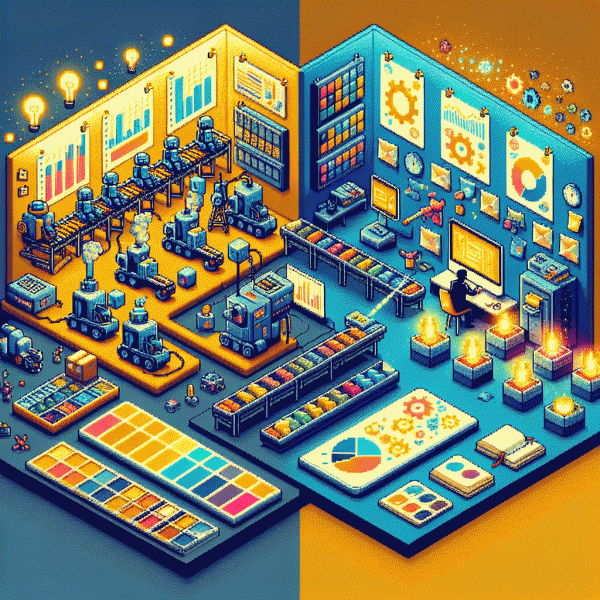
The Low-Hanging Gold: Emails, segments, and triggers you should automate now
Start with the emails that pay rent: welcome sequences, cart-abandonment nudges, and post-purchase thank-you flows. These are predictable interactions with high conversion potential, so wire them to automation first—set clear goals (open rate, conversion, next-purchase rate), pick sane throttles, and let the bots handle the repetitive delivery while you monitor and optimize.
Here are three immediate automations that deliver outsized ROI without drama:
- 🆓 Welcome: Onboard new subscribers with a friendly intro, value proposition, and one low-friction ask (follow, set preferences, or shop a starter kit).
- 🚀 Abandonment: Follow up on carts or incomplete signups with a short reminder, a social proof line, and a clear CTA within 24 hours.
- 🤖 Reactivation: Nudge dormant users with segmented offers or exclusive content timed to their inactivity window (30/60/90 days).
Segment like a detective: behavior (pages viewed, items browsed), value (LTV tiers), engagement recency, and campaign response. Triggers should be simple booleans—"opened X in Y days," "spent > $Z," or "visited product A twice"—so you can test, iterate, and scale without creating Frankenstein logic. Add dynamic content blocks to personalize without hand-writing each variant.
Finally, reserve the human ink for nuance: flagship campaign narratives, sensitive outreach, and creative subject lines that define brand voice. Automate the scaffolding; write the headlines and stories. Measure, tweak, and let the 80% of tactical messaging run on autopilot while you focus on the 20% that builds loyalty and distinctiveness.
Keep the Pen: Brand voice, big ideas, and high-stakes copy you must write yourself
There are pieces of your marketing that should never be handed to a robot on autopilot: the sentence that makes a customer cry, the thesis that refocuses your whole category, the launch email that signs a six-figure deal. Those elements hinge on personality, moral choices, humor calibration and timing — nuance that models simulate but don't own. Treat the AI as a brilliant sous-chef, not the head chef: it can prep the mise en place, but you do the plating.
Keep the pen for anything with emotional stakes, regulatory risk, or strategic consequence. That includes your brand manifesto, positioning pivots, core taglines, founder letters, high-ticket sales pages and crisis responses. Why? Because these need deep context, true intent and an ethical compass: jokes that land, silence that's deliberate, metaphors that honor company history. Use AI to draft options; write the final lines yourself.
Make the handoff process explicit so automation doesn't leak personality. Ask AI to gather audience language, generate ten rough angles, and map competitive claims — then prune to two, rewrite in your voice, and legal-check. A simple workflow: generate -> prune -> humanize -> legal-check -> test. Keep a living swipe file of approved phrases and banned terms to make future automations obey the rules you set.
If you automate 80% of the work, let the remaining 20% be the parts that make humans choose you. Treat high-stakes copy like a performance: rehearse it, read it aloud, and get a colleague's gut reaction before it ships. Bots scale reach; humans scale meaning. The win comes from smart delegation plus stubborn ownership of the sentences that define your brand.
The 10-Second Test: A quick decision matrix for bot vs. human
In a blink you can weed out tasks worthy of automation and those that need a living brain. Think of this as a pocket decision matrix: fast signals, not a moral jury. If an item is predictable, repeatable and measured, it is primo bot material—especially when scale, speed and clear metrics matter.
Start the clock: ask three rapid questions and tally yes answers. Bots win when responses cluster on efficiency and repeatability; humans win when nuance, brand voice or reputation are at stake. For borderline work, pair templates with a short human review to keep things authentic without burning time.
Quick 10-second checklist:
- 🤖 Routine: Repetitive, rule-based work with clear inputs and outputs — automate with monitoring.
- 💁 Empathy: Requires emotional judgment, cultural sensitivity or tailored tone — keep human-led.
- 🚀 Risk: Affects brand perception, legal compliance, or high-stakes customer moments — human-first.
Decision rule: two or more Routine yes answers = automate and measure impact. Any Empathy or Risk yes = human or human-in-the-loop. Then slot tasks into your 80/20 plan: bulk the Routine pile, design fast handoffs for the rest, and reassess after a couple of cycles to capture honest time savings.
Scale Without Sounding Robotic: Templates, snippets, and AI-first drafts that work
Think of templates and snippets as your marketing understudies: they learn the lines, hit the cues, and free you to do the improv. Start by carving out repeatable moments—welcome emails, webinar follow-ups, product launch teasers—and write a small set of high-signal templates that capture your tone and guardrails.
Build templates with replaceable slots: {product}, {audience}, {discount}. Include a short brand style note at the top of each template — voice, taboo words, character limit — so AI and teammates generate consistent output. Keep templates modular: subject, opener, body, CTA.
Snippets are microplays you can recombine: three subject lines, two lead hooks, four CTAs. Store them in a snippet library and tag by intent (convert, educate, retain). Use versioned names (e.g., subject_v3) so A/B test history isn't lost and rollback feels like hitting undo instead of reinventing.
Treat AI-first drafts like draft whiskey: efficient but needing refinement. Run three quick edits — 1) voice calibration (make it sound human), 2) fact check (numbers, links, claims), 3) conversion polish (one crisp CTA). Save the revised copy back to the template as a best-practice example.
Automate distribution but never automate approval: wire templates into your CMS and scheduling tools, but require a human sign-off for campaign-first sends. If you need quick, platform-specific assets, check cheap instagram boosting service as an example of packaging copy+creative for a single channel.
Finally, set transparent guardrails: a short misuse policy, a feedback loop for bad outputs, and a quarterly audit of top-performing templates. When done well, templates let you scale 80% of the work and keep the 20% that needs real human sparkle exactly where it belongs.
Measure and Tweak: Metrics that prove automation is helping (not hurting)
Start by treating automation like a new hire: give it clear targets and measure what matters. Replace vanity counters with outcome metrics that map to business goals — think conversion rate, cost per acquisition, and revenue per user — while keeping an eye on engagement signals like CTR and open rate as early warnings. Establish a baseline over a fortnight or month so any change from automation has context.
Track both leading and lagging indicators. Leading: CTR, reply rate, deliverability, and demo requests. Lagging: purchase rate, average order value, churn, and lifetime value. Use cohort comparisons (pre-automation vs post-automation) and control groups when you can; if automation boosts opens but not purchases, it is amplifying noise, not creating value.
Put operational guardrails in place: set a stop-loss threshold for negative signals (spike in unsubscribes, complaint rates, or falling deliverability), run periodic human audits on randomized messages, and monitor content fatigue by tracking engagement decay over time. Allow short A/B windows for copy changes and longer windows for funnel shifts so you do not overreact to normal variance.
Actionable checklist: define a primary metric, collect a 2–4 week baseline, run a controlled rollout, monitor both micro and macro KPIs, and document learnings. Automation is a multiplier when measured properly; if metrics start to wobble, treat the machine like a pilot with a dashboard — you can let it fly, but keep the controls handy.