AI in Ads: Let the Robots Handle the Boring Stuff—You Won't Believe How Much Time You Get Back
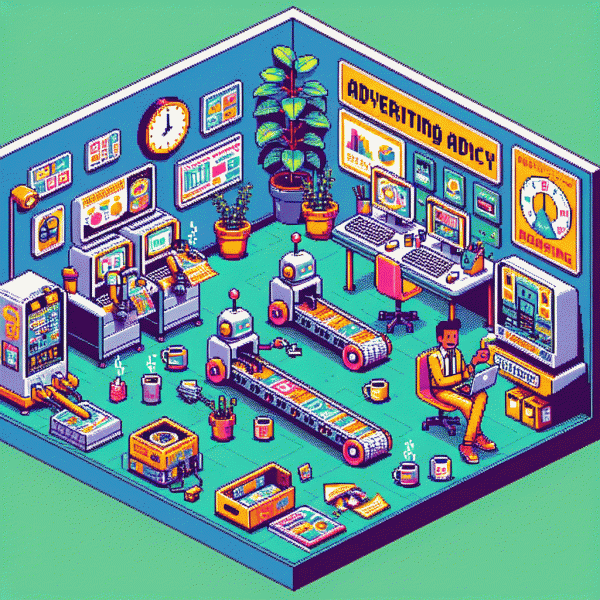
Automation That Actually Works: Bids, Budgets, and A/Bs on Autopilot
Stop babysitting campaigns — let algorithms do the tedium and you do the fun stuff (strategy, coffee, victory dances). Modern ad automation handles the tiny, repetitive moves that eat time: micro-bid tweaks, daypart budget shifts, and rotating winners out of sleepy creative pools. The result is fewer dashboards to check and more hours to spend on creative direction.
Good automation is surgical: it raises a bid where conversion probability spikes, throttles spend if CPAs drift up, and auto-shelves losing A/B variants while amplifying winners. Set guardrails — target CPA, daily caps, creative groups — then watch rules and ML take over. You keep control of goals and constraints; the system handles the messy math and split-testing grind.
Pick a cadence and confidence level that fits your brand:
- 🤖 Automated: lets the system shift bids, budgets, and creatives in real time with minimal input.
- ⚙️ Conservative: applies small incremental changes so human teams can audit results.
- 🚀 Aggressive: pushes budget to top performers fast for rapid scaling.
Want to stop tweaking spreadsheets and start compounding wins? Try a hands-off experiment: plug in clear KPIs, give the system a two-week runway, and monitor lift. When you are ready to amplify reach, order real instagram followers or explore other growth tools to pair with automated bidding.
Creative Without the Chaos: Prompts to Produce Scroll-Stopping Variants
Think of AI as the intern who does the grunt work so you can sketch bolder experiments. Begin every batch by naming a clear objective, the target audience, and one playful constraint — a color palette, a celebrity archetype, or a narrative beat. Clear goals make variants useful, not noisy.
Prompt Formula: Goal + Visual + Hook + CTA + Constraint. Prompt 1: Generate six social captions for a spring sale targeted at 25-34 year olds, visual vibe sunrise coffee, tone witty, each 15 to 20 words. Prompt 2: Rewrite the main product benefit as three micro-stories starring a busy parent, concise and emotional. Prompt 3: Produce five hooks that use surprise, social proof, and a time-based CTA.
Iteration beats perfection. Ask for variants in one pass, then request focused mutations: louder headline, softer emotional pull, or shorter copy for story format. Include negatives to avoid bland buzzwords and seed two brand voice examples so output matches your personality.
Scale by batching prompts and naming outputs clearly: variant_A_01, variant_A_02, etc. Track prompt, variant, predicted KPI, and audience in a simple spreadsheet so winners can be retried and optimized. Small metadata habits pay huge dividends.
Treat AI drafts as raw material. Pick the top three, human polish them for nuance, then A/B test. Save winning prompt templates to a swipe file and watch how many hours you reclaim when robots handle the boring bits.
Stop Drowning in Dashboards: AI Insights That Tell You What to Do Next
Every morning your ad dashboards scream for attention — impressions, CPMs, conversion rate, audience overlaps — and none of that heat tells you the one move that actually wins the day. AI can do that triage: it reads cross-channel signals, detects trends and anomalies, and translates them into plain-English next steps. Think of it as a smart assistant that turns noise into a prioritized to-do list so you stop reacting and start executing.
Instead of thirteen metrics and zero confidence, you get three concrete plays: pause low-velocity creatives, scale the top-performing audience by a defined percentage, or reallocate leftover budget to last-click winners. Each recommendation includes the why (statistical lift), the how (exact targeting or budget change), and the risk (estimated downside and confidence score). Run the suggested change as a short experiment, monitor the flagged KPI, and let the system learn from the result — you still approve the move, but the heavy thinking is automated and auditable.
A simple triage interface your team will actually use looks like this:
- 🆓 Quick: Pause underperformers for 48–72 hours to stop waste and surface true signal.
- 🐢 Scale: Increase bids or audience size by 15–25% on top converters to harvest momentum.
- 🚀 Test: Launch a 3-day creative swap with a single KPI and a clear success threshold.
Proof lives in small loops: pick one campaign, apply the AI suggested priority, and measure within two business cycles. Add simple guardrails — max budget shift, holdout group, alert thresholds — so automation accelerates but does not surprise. In a few weeks you will free time to craft strategy instead of staring at charts; the robots handle the tedious stuff, and you get the part that actually moves the needle.
Targeting That Finds You Customers While You Sleep (No Crystal Ball Required)
Imagine your campaigns waking up with a fresh list of buyers because the system learned overnight. Modern ad engines quietly scan hundreds of behavior signals — page views, micro-conversions, session depth, content types — and stitch them into warm audiences while you sleep. Less guesswork, more real people clicking.
Start clean: feed first-party events (adds, checkouts, time on page), pick a single high-value conversion, and seed the model with your best customers. Make sure pixels and server events are consistent across platforms; data hygiene prevents the algorithm from learning bad habits. Small fixes unlock big gains.
Then let automated bidding and predictive scoring shoulder the scale work. Test multiple lookalike radii, stagger budgets to let each model learn, and run simultaneous creative variants so the algorithm matches message to audience. Treat it like an experiment: controls, cohorts, and patient budgets.
Keep the system honest by rotating creatives every 10–14 days, excluding recent converters, capping frequency, and adding rule-based alerts for sudden CPA jumps. When performance shifts, audit audience overlap, attribution windows, and event integrity before slashing spend. Prevent fire drills with simple guardrails.
The payoff is time reclaimed for strategy, better creatives, and smarter offers. AI handles the tedious matching and scaling; you focus on the human stuff customers actually respond to. Quick checklist to copy into your next sprint: events, seed audiences, conversion focus, bidding plan, monitoring rules.
Guardrails On, Panic Off: How to Keep Control While the Bots Grind
Think of AI like an eager junior copywriter who never sleeps — delightful until it starts spending the ad budget. You don't banish the intern; you set boundaries. Start by defining explicit scopes: which accounts, audiences, and creative types the model can touch, plus strict daily spend and bid caps so experiments aren't surprises.
Next, lock down data access. Create role-based permissions, anonymize sensitive feeds, and set model input filters so it never sees private IDs or proprietary offers. Treat the system like a faucet: strong valves prevent floods. Freeze destructive actions—no automatic budget increases or account-level changes without human sign-off.
Design human-in-the-loop checkpoints that are fast and friction-light: batch approvals, smart defaults, and a one-click reject. Use templates for tone, brand voice, and legal phrasing so generated copy doesn't wander off-brand. Keep a clear escalation path — if the model flags ambiguity, it should ping a named human, not shout into the void.
Test like an engineer: run canary campaigns on 1–5% of your traffic, compare lift vs. control, and bake rollback triggers into policies. Instrument everything with dashboards and simple alerts tied to KPI thresholds — CPA, CTR, and spend spikes. Maintain immutable audit logs and versioned prompts so you can rewind to a known-good configuration and explain decisions to stakeholders.
Finally, codify your learnings into playbooks and run periodic dry-runs so teams know how to respond when the AI gets creative. Reward restraint as much as wins; a model that avoids costly mistakes is a winner. Do this and you'll end up with less firefighting, better performance, and enough reclaimed time to actually enjoy a coffee while the bots grind.