AI in Ads: Let the Robots Handle the Boring Stuff (While You Sip Coffee and Watch ROAS Climb)
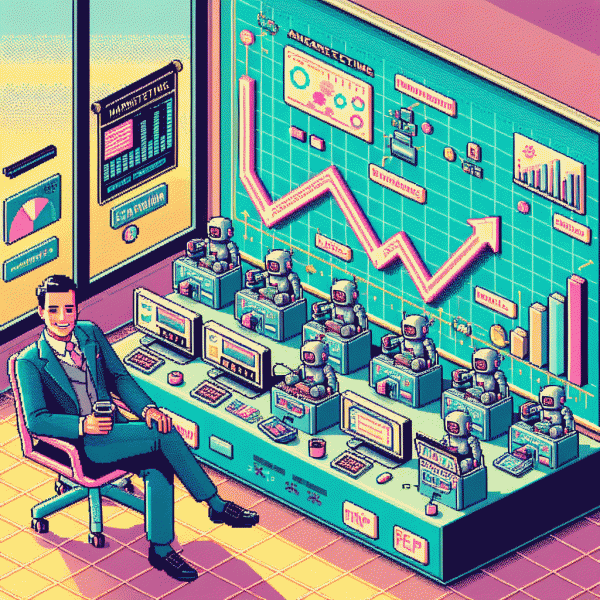
From Manual Mayhem to Autopilot: Quick Wins You Can Switch On Today
Advertising does not have to feel like a never-ending spreadsheet horror show. Start by flipping a few smart switches: let bid strategies handle CPC targets, hand creative permutations to the engine, and automate basic rules so you do strategy, not babysitting. These are the tiny changes that free hours and reduce dumb mistakes.
Practical flips that pay off fast include enabling automated bidding on low-performing ad sets to reallocate spend, turning on dynamic creative to let the system combine headlines and images, and activating audience expansion to discover pockets of conversion you did not target manually. Add simple automated rules that pause ads under a CPA threshold and you get immediate cleanup without logging into the dashboard every hour.
If you need a jumpstart for testing or want quick social proof for new creatives, consider this option: best instagram boosting service. Use it as a controlled boost to seed engagement, then let your automated campaigns learn and scale—the goal is to hand over control, not to hand over your brand forever.
Flip these settings, set a weekly check-in, and treat AI as your ops intern that never sleeps. You will reclaim time, improve signal quality, and yes, enjoy that coffee while the numbers inch in the right direction.
Creative That Clicks: Use AI to Test 100 Ideas Before Lunch
Think of AI as your creative intern who never sleeps: in one morning you can generate a hundred headline + image + CTA permutations, filter the duds, and promote the sleepers into paid experiments. Start with templates for voice, length, and offer type, then batch-generate variations so you are testing structural ideas as much as visual ones. The scale removes guesswork and surfaces patterns fast.
Set experiments to test single variables first—headline, then image, then CTA—so you know what actually moves the needle. Use automated creative scoring to rank candidates by predicted CTR and engagement, then run short burst tests to validate. Implement early-stopping rules so budget moves away from losers and into promising variants without manual babysitting.
When winners emerge, automate creative swaps into live rotations and widen audience segments incrementally. Track micro-conversions and CPA, not just clicks, and layer in frequency controls to avoid fatigue. If you need a quick scaling channel after a winner pops, try buy facebook boosting to push top performers into broader reach while the model keeps refining.
Practical guardrails matter: keep a human review for brand safety, rotate assets to prevent ad fatigue, and keep a running creative backlog so the pipeline never runs dry. With the routine testing handled by AI, you get to sip your coffee while the metrics tick up and the boring bits stay automated.
Smarter Targeting, Less Guessing: How Machines Find Your Buy-Ready Crowd
Imagine handing off the guesswork to a system that reads tiny behaviors and turns them into a shortlist of buyers — not just broad demographics, but people who clicked your product twice, lingered on shipping, and almost checked out. That's what modern ad AI does: it ingests signals across visits, searches, past purchases and ad interactions, then surfaces micro‑audiences that are primed to convert. The result is less spray-and-pray and more surgical outreach — so campaigns stop burning budget and start closing deals.
Under the hood you'll find techniques like predictive scoring, high-resolution lookalikes, sequence-aware models and real-time bidding that reward intent. These systems weight micro-conversions (add-to-cart, product view depth, repeat visits), map cross-device patterns, and refresh audience definitions as fresh signals arrive. The magic isn't mystic; it's math that prioritizes buyers by likelihood instead of hoping audience labels do the trick.
Make it practical: instrument meaningful events, centralize first‑party data, and seed your AI with a clean conversion signal (purchase value or meaningful micro-conversion). Run parallel experiments: one arm with human-crafted audiences and one driven by the model, then compare lift. Budget tip: allocate a modest test pool for autonomous exploration so the algorithm can learn without mortgaging your whole media spend — you'll still have time to sip coffee while it optimizes.
Watch the right numbers: ROAS, CPA, LTV and incremental lift from holdouts — not vanity reach. Keep an eye on creative resonance too, since better targeting surfaces the ads to people who actually see them. And respect privacy: lean into consented first‑party signals and modeled outcomes rather than sketchy third‑party tricks. When you combine tidy data, smart objectives and a little patience, machines find your buy-ready crowd — and your campaign inbox starts sending good news.
Budget on Beast Mode: Let Algorithms Pace, You Take the Credit
Think of the ad budget as a race car and the algorithm as the driver who knows the track better than you. Instead of frantically swapping lanes every hour, give the machine a clear map: goals, constraints, and a safety harness. Feed it clean signals, then step back—your job becomes choosing which races to enter, not driving the lap times manually.
Start lean: allocate modest seed budgets while the model learns, then set budget-scaling rules that reward consistent winners. Use bid caps and ROAS floors to keep experiments from blowing up, and employ time-based pacing so spend matches demand. The algorithm needs predictable inputs; unpredictable hand-tweaks break learning curves faster than you can say "pause."
Design an explore-and-exploit cycle: let some campaigns explore new audiences while the rest exploit proven pockets. Automate reallocation with simple rules—move X% from underperformers to top quartile after Y days—and schedule creative refreshes to avoid ad fatigue. Small, systematic nudges beat reactive panic every time.
Monitor smartly: build alerts for trend shifts, not every hourly blip. Track conversion velocity, cost per conversion by cohort, and lifetime value signals so the algorithm optimizes what matters. Set a weekly review cadence that focuses on strategy, not tiny bid tweaks, and capture lessons as reproducible rules the AI can follow.
When the numbers climb, craft a crisp story: efficiency improved, cost per action fell, and scale became predictable—leave the math to dashboards and keep the credit for strategic choices. Bonus: you get to drink coffee while dashboards hum, because that's the modern marketing flex—design the rules, cheer the results, and let the algorithms earn their keep.
Dashboards Without Tears: Set It, Alert It, Forget It (Until It Pings You)
Think of your ad dashboard as a dutiful intern who actually reads the numbers: configure the right KPIs, teach a little machine learning sense, and it will surface the meaningful blips while muting the noise. You get a ping when profit patterns change, not a firehose of metrics you scroll past while pouring your morning coffee. That is automation that pays for itself.
Start small and iterate. Pick the top three metrics that map directly to ROAS, set sensible baselines, and attach context to every alert (trend direction, magnitude, likely cause). Use anomaly detection to catch behavioral shifts and simple rules for black and white issues. Route notifications to the right channels and include suggested actions so a human can move from ping to fix in minutes instead of hours.
Here are three alert flavors to build first:
- 🆓 Free: Daily summary digest that highlights winners and losers with one line takeaways and easy labels.
- 🐢 Slow: Trend change alerts for gradual performance drift, thresholded to avoid spam and tuned by percent shift.
- 🚀 Fast: Real time break glass warnings for sudden spend spikes or conversion collapse, including top affected ad sets.
Keep maintenance light: review rules weekly, retrain models monthly, and prune noisy alerts as campaign mixes change. Measure the uplift from reduced reaction time and fewer false positives. The result is less busywork, faster fixes, and more time to design experiments that move ROAS—while you watch the important numbers, not the noise.