AI in Ads: Let the Robots Handle the Boring Stuff (And Watch Your ROAS Spike)
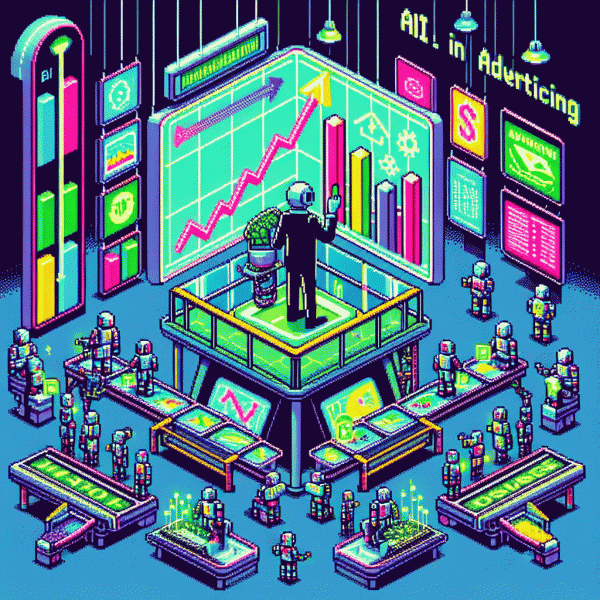
From Guesswork to Smart Work: How AI Targets While You Sleep
Imagine waking up to campaigns that learned from last night while you drank your coffee. AI turns noisy clickstreams into clear buying signals, spotting micro-moments and rising intent that humans can miss. Instead of tossing darts at broad audiences, your ads begin to aim where conversion probability is highest, automatically prioritizing users who are most likely to act.
Under the hood the work is elegantly geeky: probabilistic scoring, lookalike generation, and continuous creative testing combine with real-time bidding to optimize for value, not vanity metrics. Algorithms reweight bids by predicted lifetime value, shift budget to winning cohorts, and swap creatives that underperform. The result is smarter spend allocation and fewer sleepless nights spent chasing trends.
Make it practical in four steps: pick a platform or tool with built in automation, feed it clean first party events, run a focused A/B test with a modest budget, and set performance guardrails so the system explores without overspending. Add automated creative rotations and frequency caps to prevent ad fatigue. Track conversion rate, cost per acquisition, and margin adjusted ROAS to judge impact.
The payoff is measurable and fast: fewer manual tweaks, more profitable scaling, and time reclaimed for higher level strategy. Let the machines handle repetitive optimization while you refine messaging and audience insight. Start small, watch the signals, and scale what the data rewards.
Prompts That Print Money: Feed Your Ad Bots the Right Inputs
Think of prompts as recipes for a kitchen staffed by very literal robots. If you hand AI a vague scrap of paper that reads "write an ad," expect something bland and safe. Instead, write the recipe: the dish you want, who will eat it, what flavors to avoid, and how fast it must be served. Start each prompt with a clear outcome, add a short persona, and finish with constraints like length, format, and banned words. This little discipline turns generative chaos into repeatable ROAS wins.
Use a tight, reusable prompt template so you can scale without losing flavor. For example: Objective: grow conversions 20 percent in 30 days. Audience: price sensitive urban parents aged 28 to 40. Tone: witty but reassuring. Assets: 15 second video, two headlines, one CTA. Then ask the model for 6 headline variants, 3 meta descriptions, and a CTA that fits in 30 characters. This gives you a batch of immediate testable creative instead of a single hopeful guess.
Automate variation generation and tagging so your ad platform can rotate winners fast. Tell the model to output JSON or CSV rows for direct import, and to score each idea on clarity, emotion, and novelty. When you do that you can hook the output into campaign rules and let systems scale optimization while you focus on strategy. If you want a quick demo of promotion endpoints try instagram boosting as a sandbox for delivery speed and creative throughput.
Finally, set guardrails: ban jargon, cap headline length, and require three calls to action ranked by urgency. Measure ideas by lift in CTR and CPA, not by how clever they read. Feed the bot better inputs, run fast tests, and let automation handle the boredom while humans harvest the signal.
Creative on Autopilot: Spin Up Variations, Test Fast, Scale Faster
Think of your ad account as a lab and AI as the industrious intern who never sleeps: sketching headlines, swapping images, remixing CTAs and generating fifty micro-variants in the time it takes you to brew coffee. Instead of obsessing over one perfect creative, let algorithms explore the messy, lucrative fringes of performance so you can harvest winners while the rest die quietly and cheaply.
Start by seeding the engine with your brand voice, a handful of top-performing assets, and simple constraints (tone, colors, legal copy). Then automate variant logic: A/B headlines, carousel permutations, short vs long captions, and localized swaps. Hook these variations into fast sequencing—measure clicks, conversion rate, and early ROAS signals at 24–72 hours—so decisions are data-driven, not gut-driven.
- 🆓 Prototype: rapid low-cost drafts to surface surprising concepts without blowing budget.
- ⚙️ Test: automated multivariate testing that kills flops and boosts winners.
- 🚀 Scale: rules-based ramping of winning variants into broader audiences.
Keep a human in the loop for brand guardrails and creative refreshes, but let automation handle the grind. Pair frequent creative churn with strict metrics, set escalation rules for high-ROAS creatives, and you'll shorten learning cycles, cut creative waste, and multiply scalable winners—turning creative chaos into compounding ad dollars.
Set It and Almost Forget It: The 20-Minute Optimization Ritual
Think of this as a 20 minute meditation for your ad account. In a single short ritual you confirm that AI rules are humming, top creatives are being boosted, and wasted spend is being clipped. That small, regular attention compounds: tiny daily fixes prevent big leaks and let the machine learning actually optimize toward higher ROAS.
Run a concise, timed checklist. 3 minutes — scan overall spend, CPM and conversion pace for anomalies. 5 minutes — review the top three creatives by CTR and conversion rate and promote clear winners. 5 minutes — trim or exclude low performing audiences and placements. 4 minutes — inspect automated rules, bid caps and scaling thresholds. 3 minutes — snapshot key metrics for the dashboard and note any trends. Use automated rules to scale winners by fixed percentages and to pause losers without manual drama.
Let AI handle the granular grunt work like hourly bid tweaks, creative rotation and audience expansion while you set thresholds and guardrails. Bake lightweight A/B tests into the ritual so the system gets fresh signals. Keep naming conventions consistent so dashboards and rules can find winners fast and avoid human scrolling hell.
Do this every workday or at minimum three times a week. The payoff is predictable: robots do the boring optimization, you get the strategic wins and more time to craft big creative ideas. Schedule one deeper weekly review and then let the bots do the boring heavy lifting.
Beyond Clicks: Let AI Crunch the Data While You Focus on Strategy
Think of AI as the number cruncher that never drinks the office coffee. It ingests impressions, micro conversions, view time and post engagement, then surfaces signals humans miss, like small brand lift studies and retention cohort patterns. Instead of obsessing over last click reports, let models map which touchpoints actually nudge conversions and which ones are wasted ad spend, even in a cookieless world.
Behind the scenes algorithms do the heavy lifting: automated bidding tuned to margin, creative multivariate tests that find winning frames, cross channel attribution across paid and organic, and predictive LTV models that prioritize high value cohorts. Privacy safe modeling and anomaly detection flag issues before they bleed budget, freeing teams from manual bid spreadsheets and hourly panic. The result is smarter spend and fewer late night dashboard stares.
That slack lets strategists focus on storytelling, not spreadsheets. Set clear KPIs, feed clean first party data, and define guardrails so AI suggestions stay on brand. Design an experimentation roadmap, pair human intuition with model insights, set a review cadence to audit model decisions, and treat outputs as hypothesis leads to be validated with controlled tests, not gospel to be followed blindly.
Start small: pick one channel, run a controlled test, and measure incremental lift. Celebrate when the machine finds patterns that humans missed, then scale what works. Iterate creative and targeting combos, keep a human in the loop for exceptions, and watch the boring math get handled while your team spends time on the big ideas that actually move ROAS.